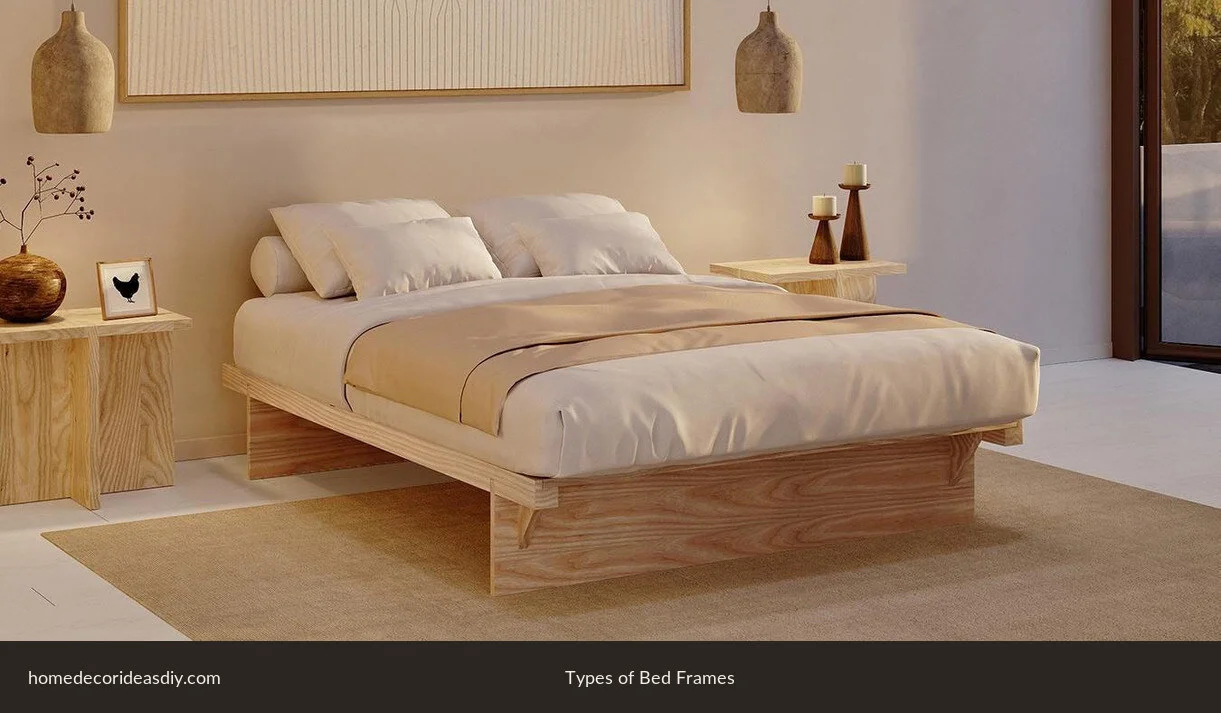
When you start looking at all the types of bed frames out there, it’s easy to pick the one that looks nice in the picture. But the frame you pick decides a lot more than looks, like whether you need a box spring, if you get any storage under the bed, how high up you sit, and even how long your mattress holds up, since a mattress on a weak base starts to sag way sooner.
Below are the 8 kinds you’ll run into most when you shop, what I like and don’t like about each one, and a few things to check before you pay. First, let’s look at the type I think most people should consider.
Bed Frame Types At A Glance
| Platform | No | Modern rooms, smaller budgets |
| Panel | Sometimes | Classic bedrooms |
| Storage | No | Small rooms, not enough closet space |
| Upholstered | Usually no | People who read or watch TV in bed |
| Canopy / four-poster | Sometimes | Big rooms with tall ceilings |
| Floating | No | Really modern rooms |
| Adjustable | No | Sitting up in bed |
| Daybed / trundle | No | Guest rooms, kids’ rooms, studios |
The 8 Types Of Bed Frames
1. Platform Bed Frame
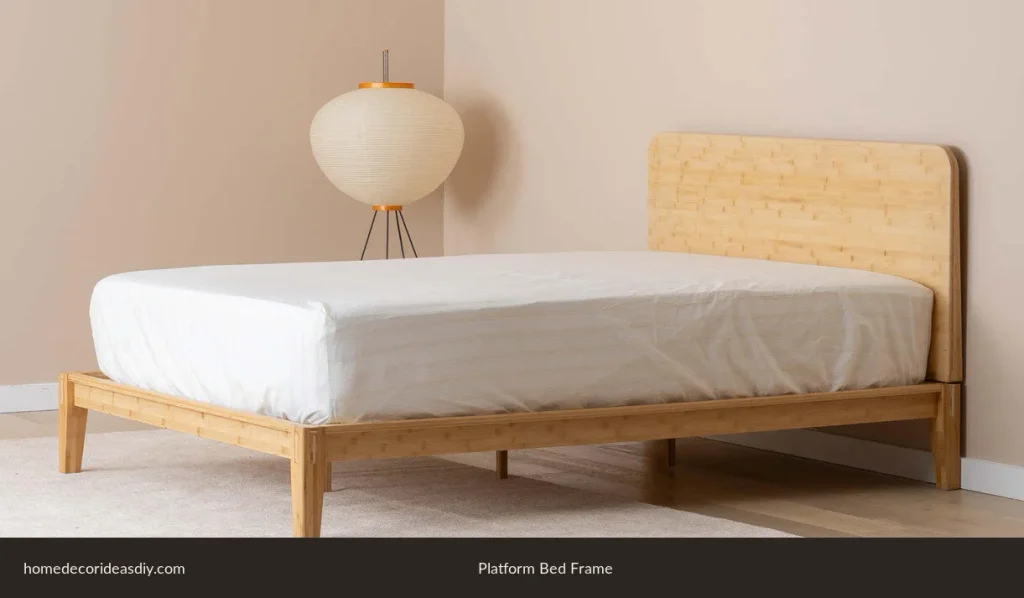
If you asked me which one to look at first, I’d say this one. A platform bed has a flat base or a row of wood slats that hold your mattress up on their own, so you don’t need a box spring at all, and that alone saves you a good bit of money. Most of them sit pretty low and look simple and modern.
Low can be a problem, though if you have bad knees, because getting up from a bed that’s close to the floor gets old fast. And check how far apart the slats are. Many foam mattress companies want them about 3 inches apart or closer, and if they’re too far apart, it can mess with your mattress warranty, so it’s worth a quick look at the warranty page before you order.
2. Panel Bed Frame
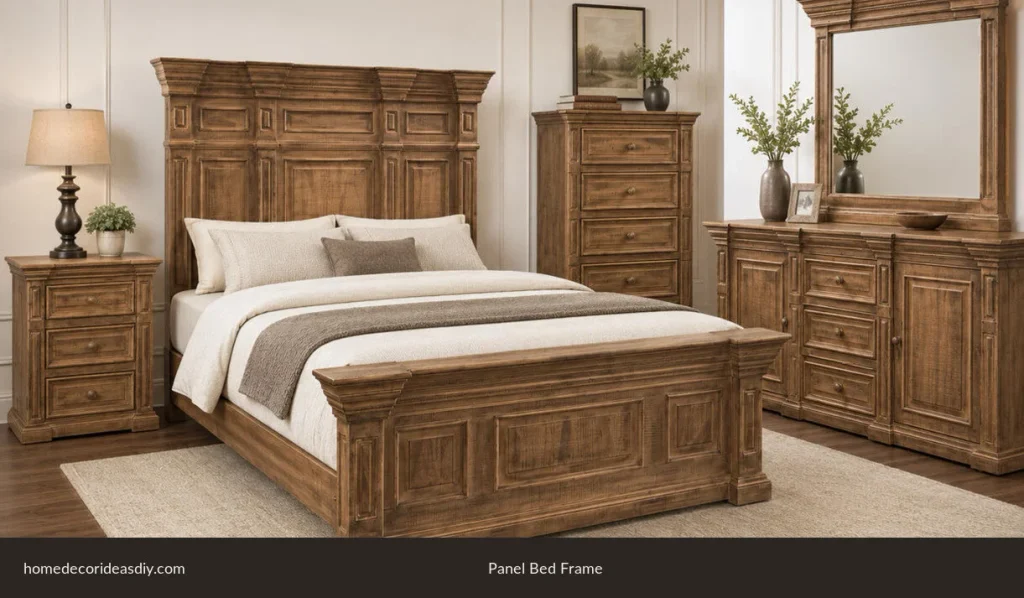
This is the classic one most of us grew up with: a wood headboard and a matching footboard with flat panels. Some come with slats, and some are made to sit on a box spring, and the listing doesn’t always make that super clear, so read the details.
I like these in traditional bedrooms, and older ones can be built really well. If you ever poke around antique shops, you’ll see a lot of solid wood panel beds for less than a new one. The only thing that bugs me is the footboard. It eats up floor space, and if you’re tall, your feet will probably hit it.
3. Storage Bed Frame
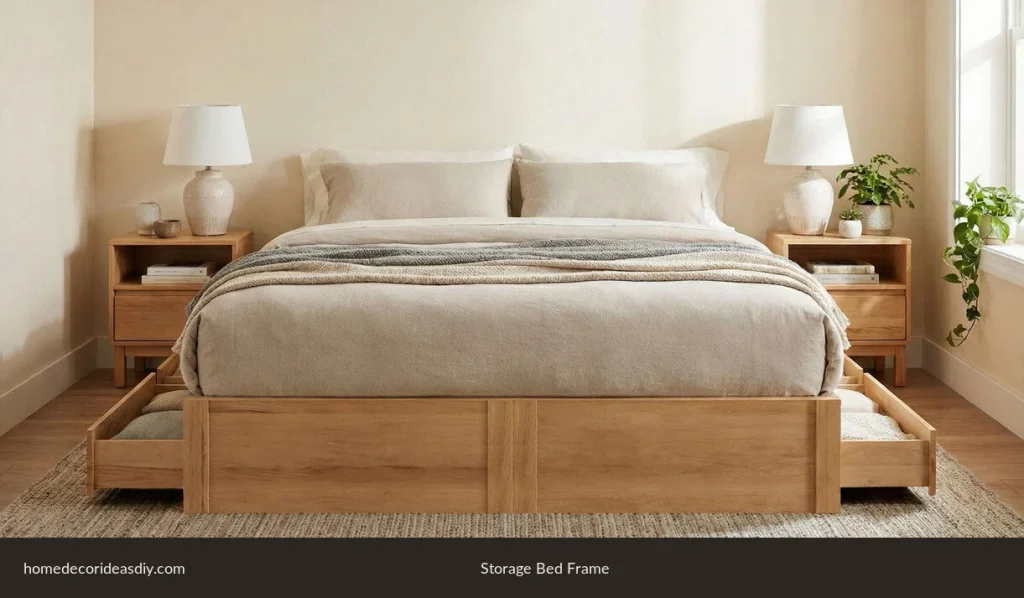
Small bedroom? Closet stuffed? Then honestly, look at this one first. It’s a natural next step if you need extra room without giving up function.
There are two kinds. One has drawers built into the sides or the end of the bed. The other is a lift-up bed, sometimes called an ottoman or hydraulic bed, where the whole mattress lifts on a hinge, and there’s a big open space underneath.
Drawers are easier if you need stuff every day, but you need room beside the bed to pull them out. The lift-up kind holds way more, though you won’t want to lift your mattress every morning, so it’s better for things like winter blankets and suitcases. Both kinds are heavy, so moving day isn’t fun.
4. Upholstered Bed Frame
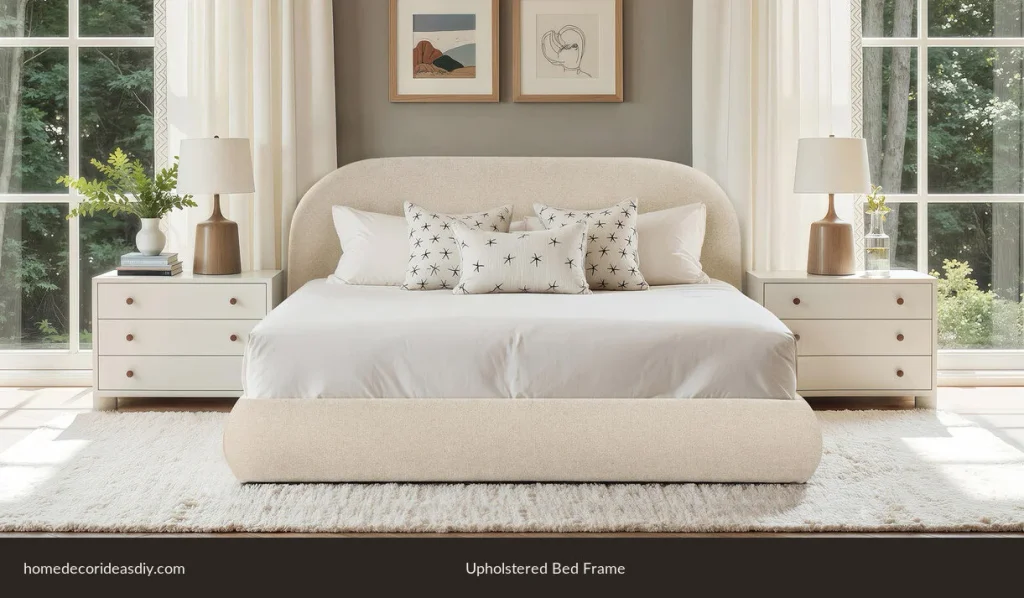
These have a padded headboard, and sometimes the whole frame is wrapped in fabric like linen, velvet or fake leather. If you sit up in bed a lot to read or scroll your phone or watch a show, this is the comfy one, because you’re leaning back on padding and not hard wood.
Cleaning is the trade-off. Fabric grabs dust and pet hair, and a light linen headboard will show a dark spot where your head rests pretty quickly. Got pets or kids? I’d pick a darker color or a fabric you can spot-clean.
5. Canopy Or Four-Poster Bed Frame
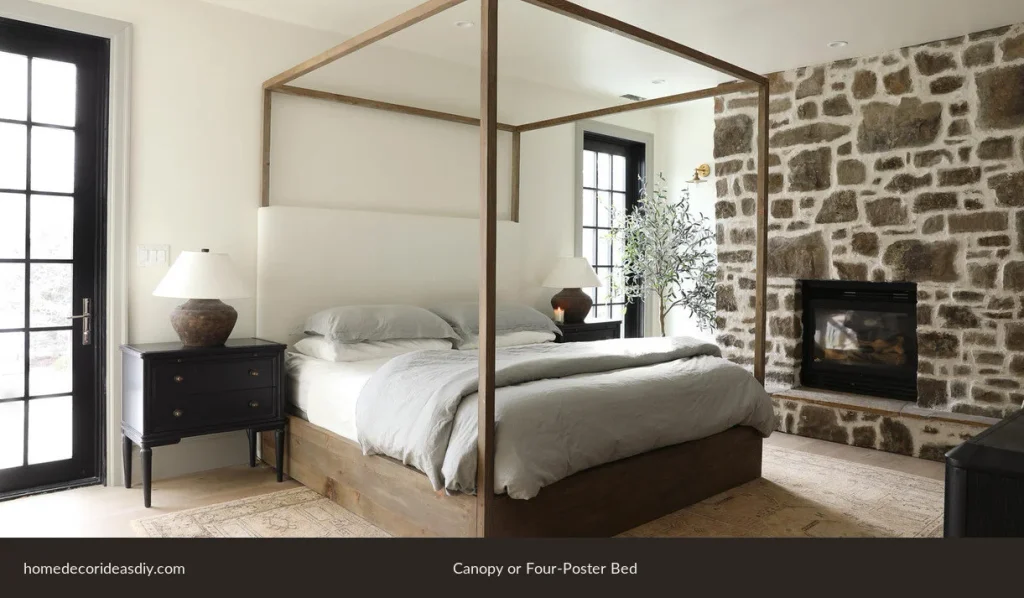
A four-poster bed has a tall post on each corner. A canopy bed is pretty much the same thing, plus a frame across the top so you can hang curtains or sheer fabric from it.
They look amazing, kind of like that fancy hotel feel people try to get with luxury home decor, but you need a big room for it. In a small room or one with a low ceiling, those posts make the whole space feel squished. I wouldn’t go for one unless the ceiling is at least 9 feet, and I’d still measure the posts before ordering.
6. Floating Bed Frame
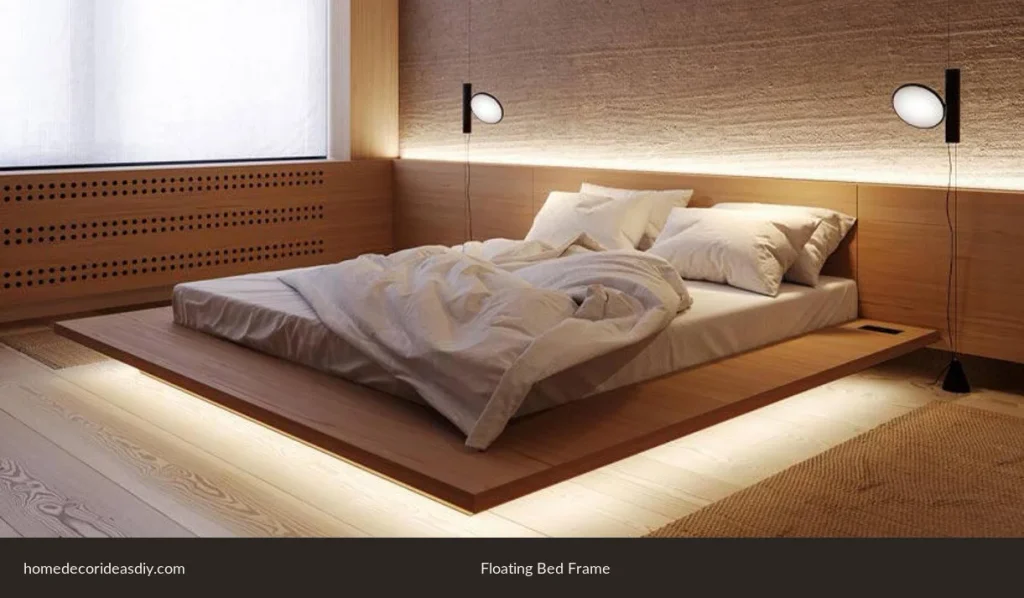
The legs on a floating bed are tucked way back under the frame, so from the side it looks like the bed is hovering a few inches off the floor. Lots of them also have LED strip lights underneath, which makes it look even cooler at night.
It fits best in a clean, modern room. No storage under it, though, and some cheaper ones feel a bit wobbly when you sit on the very edge, so I’d read the reviews before buying.
7. Adjustable Bed Frame
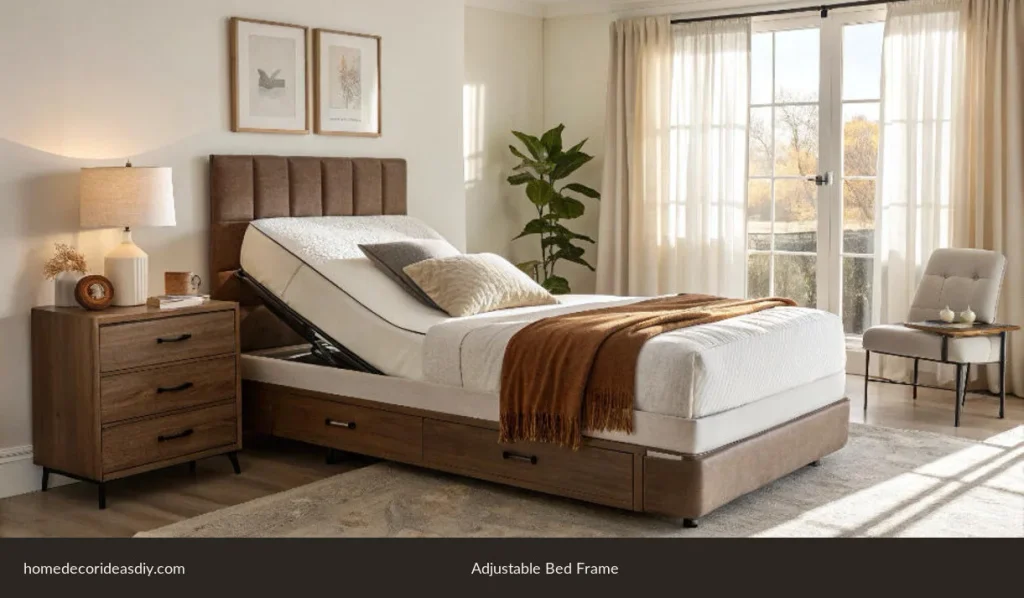
This one has a motor, and you use a remote to raise the head end, the foot end, or both. It’s great for sitting up to work on a laptop or watch TV, and some people like the head raised a little at night, like if they snore. If you’ve got back problems, I’d ask your doctor what position helps before spending the money, because these aren’t cheap.
Also, not every mattress bends. Most foam and hybrid mattresses are fine, but an older, stiff spring mattress usually won’t work.
8. Daybed Or Trundle Bed Frame
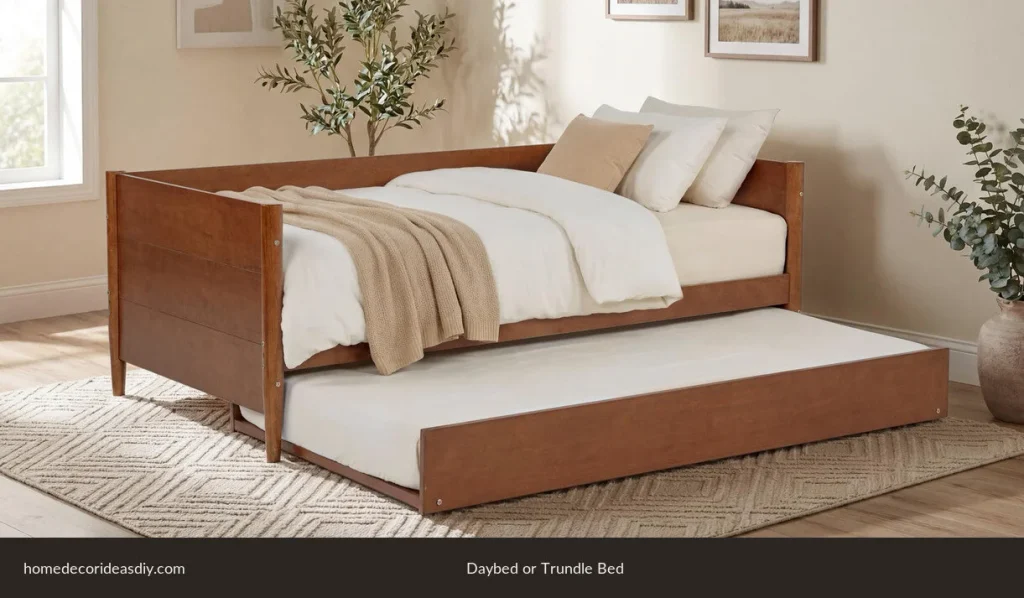
A daybed looks like a small couch, with a back and two sides, but it holds a twin mattress so someone can sleep on it at night. A trundle is a second mattress on a low frame that rolls out from under the main bed, which kids love for sleepovers.
Both are super handy in a guest room, a kids’ room, or a studio apartment where one piece of furniture has to do two jobs. Just keep in mind they’re almost always twin size, so they’re fine for a guest but not something most adults want to sleep on every night.
Wood, Metal Or Upholstered?
What the frame is made of matters almost as much as the type.
Solid wood is usually the quietest and lasts the longest, but it costs more, and it’s heavy to move. Metal frames are cheap and light, and they’re fine, but they tend to start squeaking after a while as the bolts work loose. Tightening them every few months usually fixes it. Upholstered frames are the comfiest to lean on, but you’ll have to vacuum them now and then or the dust builds up.
What To Check Before You Buy A Bed Frame
- Your room size. A low platform or storage bed keeps a small room feeling open. A big room can handle a canopy or a tall padded headboard.
- Your mattress. Do you need a box spring with this frame? Are the slats close enough for your warranty? If it’s an adjustable frame, will your mattress bend?
- The weight limit. It should be on the product page. For queen and king sizes, look for a center support leg, because frames without one sag and squeak sooner.
- How long you’ll keep it. Moving next year? A cheap metal frame is totally fine. If it’s your bed for the next ten years, I’d spend a little more on solid wood.
For most people, I’d go with a plain, solid-wood platform bed. You skip the box spring, and it’ll probably outlast your next two mattresses. But your room and how you use your bed matter more than what I like. If you’re choosing between platform and storage, think about what best fits your room and routine.