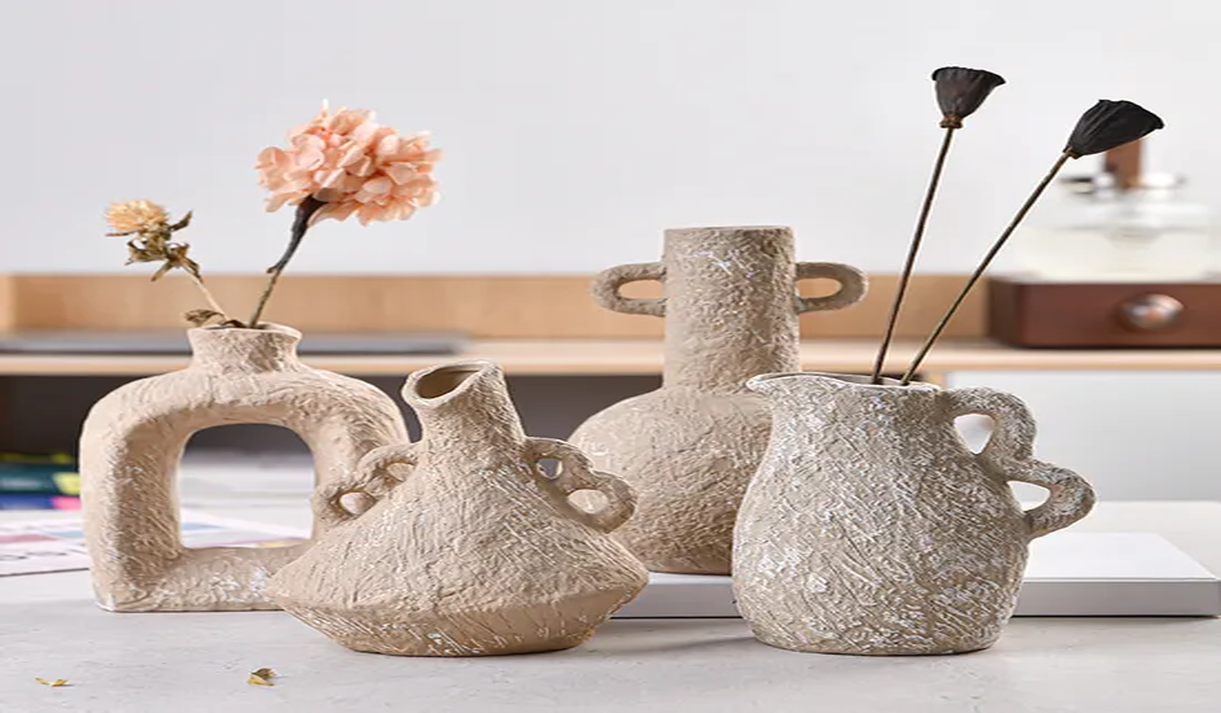
Last spring I ordered three stoneware vases from an Etsy shop. I pictured someone at a wheel shaping each pot, fingerprints in the clay, every piece a bit different from the next. The listing said home decor items handmade to order, and the photos looked perfect a linen backdrop, dried grass, that warm golden light that makes everything look like it came from a cottage in Portugal.
The box arrived. I pulled out the first vase. Nice weight, decent glaze. Then the second one. I stared at it. Then the third.
Two of them were the same vase. Not similar. The same. Same slight lean to the left. The same pinprick bubble in the glaze, exactly one inch from the base. Same side of the pot, same everything. I stood on my stair landing holding them up to the window like I was checking a forgery, which in a way I was.
Here’s the part that took me a while to accept: the seller never actually lied to me.
What “Handmade” Really Means on Etsy
Etsy sorts home decor items handmade into four separate categories, and those four little phrases do an enormous amount of work.
- Made by the seller: A real human physically made this object by hand.
- Designed by the seller: The seller created the design, but someone else produces it. That someone is called a production partner.
- Handpicked by the seller: They found it and curated it.
- Sourced by the seller: They bought it from somewhere and resold it.
Only the first one means a person threw that pot or carved that bowl. A seller designs the second one covers an original design produced elsewhere. That production partner can be a single artisan working from a shed or a massive automated factory. Etsy allows both. The seller has to name the partner on the listing and in the shop’s About section, plus disclose where the item actually ships from.
So my vases technically counted. Someone designed them. A studio poured them into molds, fired them, and shipped them. The disclosure was sitting right there on the listing, tucked under a details heading I had never once opened.
I’m not calling it a scandal. Plenty of beautiful work happens this way. But it does mean the word on the label isn’t what you’re checking.
How to Spot the Real Thing Before You Buy
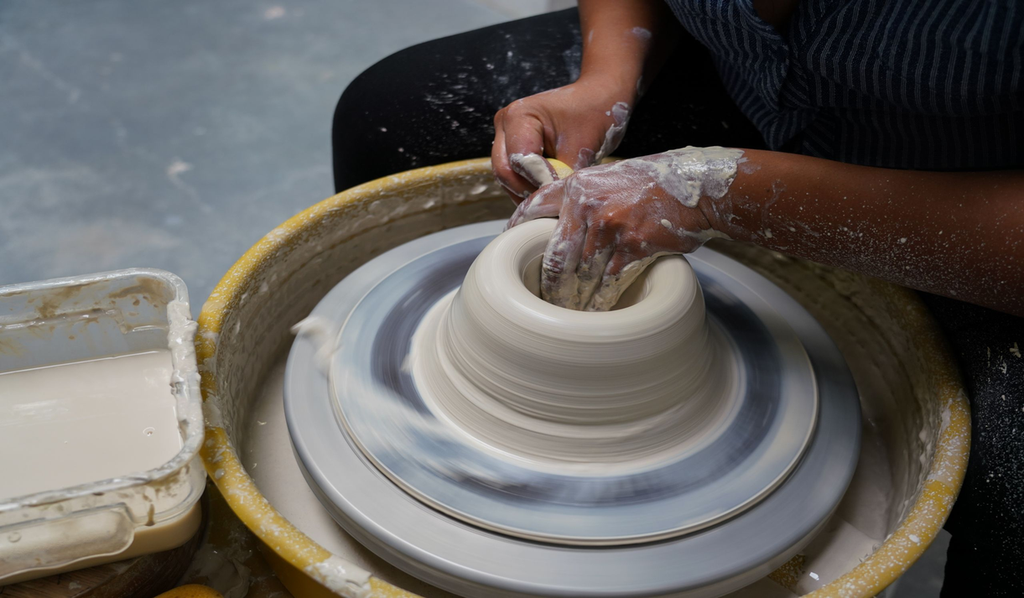
Listing photos are shot to look artisanal. Linen, dried grass, warm light, maybe a thumbprint somewhere in frame. What actually gives the game away is much duller:
Check the About section: Production partners get listed here by name and location. Empty or vague is a signal in itself. If you’re browsing our budget decor guides, you already know I always say: read the fine print before you fall for the photo.
Check where it ships from: If the origin is a city the seller has never mentioned, that piece is probably drop-shipped straight from the maker’s floor.
Count the photos: One perfect studio shot and no others usually means they photographed one sample and the rest are copies.
Message the seller: Ask what varies between two pieces from the same batch. A real potter will tell you about height differences, glaze pooling, a wonky handle they almost binned. A reseller answers in marketing language.
That last one has never failed me. The answer to “how much do two of these differ?” is the whole test.
The Words That Actually Mean Something
Handcrafted. Artisan. Hand-finished. Small-batch. Here’s the truth: none of these are regulated terms. None of them promise you anything specific. They sound nice, but they’re decorations for the listing.
Hand-thrown. Wheel-thrown. Hand-built. Coil-built. Hand-carved. Block-printed. These words describe something a person actually did with their hands. A seller who uses them tends to keep using them because it’s just how they talk about their day.
If you’re holding a ceramic pot, look inside the neck for faint spirals throwing rings you can feel with a fingertip. Check the base for a trimmed foot ring and a bit of kiln grit. Slip-cast pieces give themselves away with a hairline seam running down two sides and wall thickness that never varies. Real handmade pottery has fingerprints. Machines don’t.
That “Not for Food Use” Label Is There for a Reason
This one catches people off guard. I once served olives out of a flea market bowl. Looked vintage, looked handmade, looked perfect. Then I flipped it over.
Lead is still used in some ceramic glazes and decals, and it leaches into food. The FDA requires ornamental and decorative ceramicware to carry a warning under 21 CFR 109.16. The rule is specific: a stick-on label plus a permanent statement molded, fired, or painted onto the base, in letters at least 3.2 millimeters tall. The wording is set to some version of “Not for Food Use, Glaze Contains Lead.” The only alternative the regulation allows is drilling a hole through any surface that could hold liquid, which tells you how seriously they take it.
New York City’s health department warns specifically about traditional or handmade ceramics brought back from abroad, plus anything with a crude or irregular finish, anything damaged, or anything bought where it isn’t clear who made it.
None of that makes a decorative piece bad. It makes it decorative. A hand-painted plate from a market in Marrakesh can live on a wall for thirty years and hurt nobody. It just shouldn’t hold your lemons. Same caution applies to most older glazed pieces people inherit, where the glaze predates anyone testing for this at all.
Why Real Handmade Home Decor Items Cost What They Cost
A thrown mug gets centered, shaped, dried to leather-hard, trimmed, handled, dried again, bisque fired, glazed, and fired a second time—two firings, both slow, both expensive to run. Along the way, a percentage of the batch cracks, warps, or comes out with glaze crawl. Those pieces get sold cheap as seconds or smashed. Every potter I’ve bought from talks about the kiln like it’s a temperamental relative.
I’ve paid somewhere between twenty-five and forty dollars for a small hand-thrown vase. A shelf equivalent from a big box store runs about six bucks. The gap isn’t craftsmanship mysticism. It’s two firings, breakage, and an entire afternoon of one person’s time.
If you’re trying to build a collection of artisan home decor without going broke, my advice is the same as what we cover: buy fewer pieces, but buy real ones. One authentic ceramic vase beats five factory-made ones that look the part.
One Good Piece Beats Six Average Ones
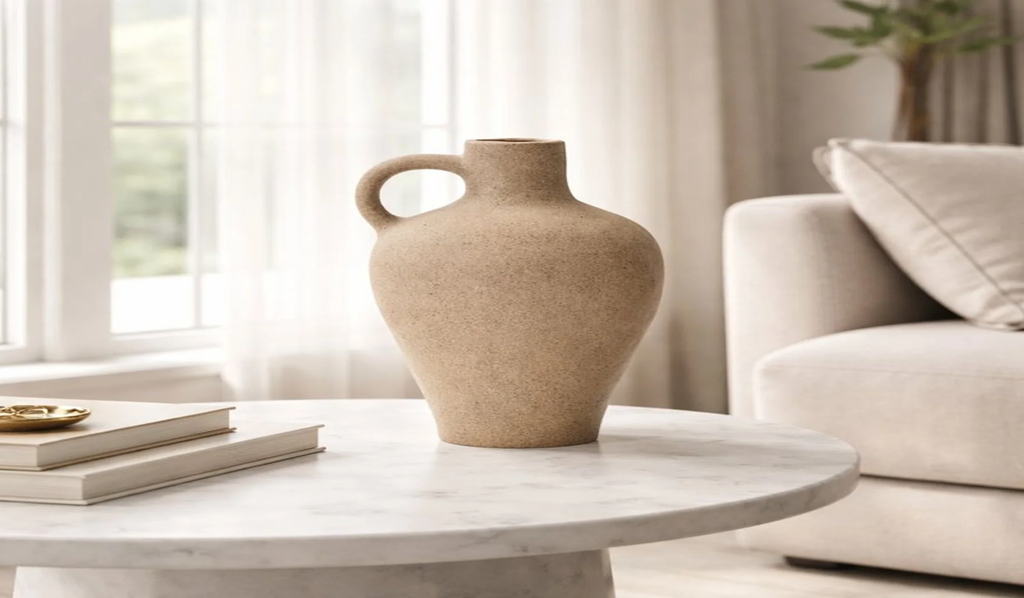
This is where the decorating side actually matters. A hand-thrown pot only reads as special next to things that aren’t. Put it on a plain painted shelf beside a flat-fronted cabinet, and the irregularity in the rim becomes exactly where your eye lands. Fill that same shelf with eight objects that all look “artisan,” and they cancel each other out. The room starts feeling like a gift shop.
I learned this the slow way. A showpiece needs more space around it than company. The same rule holds for pots: one heavy ceramic pot with real weight anchors a corner in a way that three plastic ones never can.
One shelf. One good object. Let the rest be boring.
My Honest Take on Buying Handmade
Buy less of this stuff than you want to. I’d rather own two pieces I can name the maker of than a room full of things a listing algorithm calls artisan. I say that as someone who absolutely fell for the vases and still has all three on the landing, because two of them are honestly quite nice.
The hunt for unique home accessories is half the fun. The other half is knowing what you’re actually bringing home.
If you want more honest breakdowns like this, check out our main blog, where we talk about real budget home decor, actual weekend projects, and the mistakes I’ve made so you don’t have to.