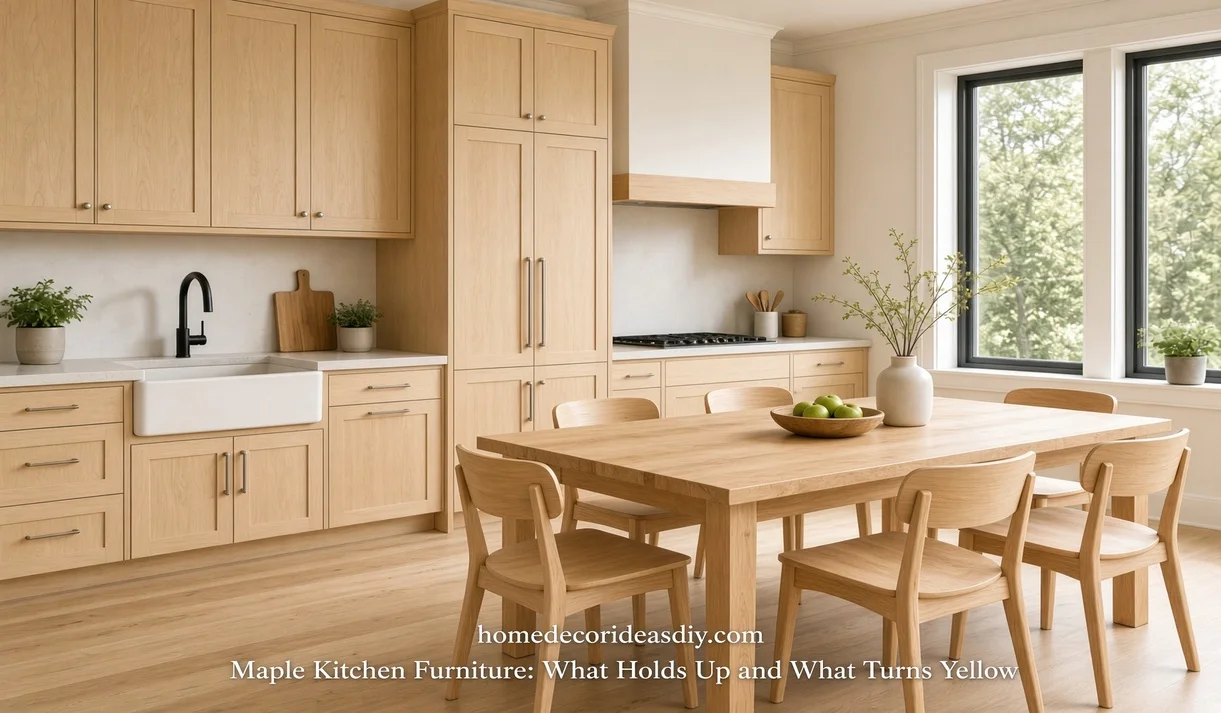
Most people buy maple kitchen furniture for one reason. It looks clean. Pale wood, tight grain, nothing loud fighting with your backsplash, and that part is easy to see in a showroom. What you can’t see is whether the piece is hard maple or soft maple, or how much darker it’ll be in a few years, and those two things decide if you still like it later.
So that’s where I’m starting, not with style ideas.
Hard Maple Is Harder Than Oak, Soft Maple Isn’t
Wood hardness is measured with the Janka test. A steel ball gets pressed into a board, and the force it takes to sink it halfway is the score. Higher number, fewer dents. This is how maple lines up against the woods sitting next to it in most furniture stores:
| Wood | Janka (lbf) | Good fit for |
| Hard maple | 1,450 | Kitchen tables, chairs, butcher block |
| White oak | about 1,360 | Heavy tables, cabinets |
| Red oak | 1,290 | Cabinets, budget tables |
| Soft maple | 950 | Cabinet doors, light-use pieces |
| Cherry | 950 | Dining pieces that get gentle use |
People assume oak beats maple. Against hard maple, it doesn’t. The tree behind hard maple is the sugar maple, the same one most maple syrup comes from, and its wood also goes into bowling pins and the basketball courts the NBA plays on. If it survives bowling balls, your cast iron pan is not much of a threat.
The trouble is that plenty of furniture labeled “maple” is the soft kind. Amish shops usually call it brown maple, which at least tells you what it is.
How do you know which one you’re buying?
Ask the seller for the species. A shop that builds in solid wood will tell you straight away. If you get a vague “it’s maple,” assume soft maple or a maple veneer over something cheaper.
Soft maple isn’t junk, to be fair. At 950, it’s still way harder than pine, which comes in around 380. For cabinet doors that rarely get hit, it’s fine. For a table where four chairs scrape across it every night, and somebody’s kid does homework with a ballpoint pen pressed down hard, I’d pay the extra for hard maple.
Maple Kitchen Furniture Turns Amber in Sunlight

This is the one nobody mentions in the store. Natural maple shifts color with heat and UV light. Cream goes to honey, and honey goes toward a yellow-orange that some people love and some people really don’t.
You’ll notice it if you ever lift a placemat that sat in one spot for months. There’s a paler patch underneath, the color the whole table used to be.
Oak goes yellow too, so swapping to oak won’t fix anything. If you already know you can’t stand that warm, orangey tone, skip natural maple completely. Paint it, or pick a whitewash. The color sits on top, so you never really see the wood change underneath.
Dark Stain on Maple Usually Comes Out Blotchy
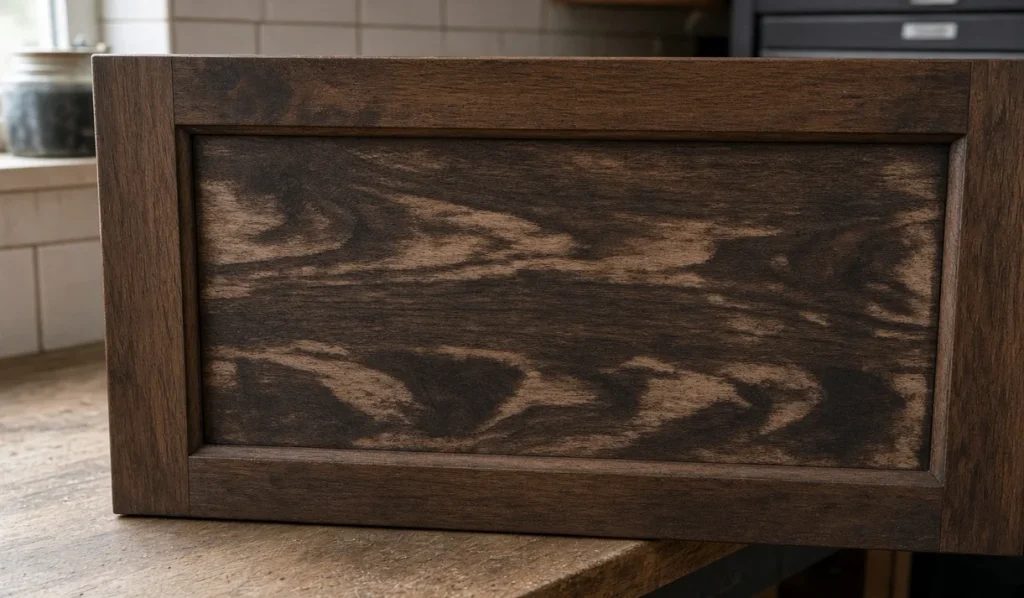
Maple’s grain is tight. Great for a smooth look, bad news for stain. Stain goes in wherever it wants, so some patches drink it up, and others barely take any, and with a dark color like espresso you can end up with a door that’s half dark and half muddy. It can still turn out nice. That depends on the shop and how much maple they’ve stained before. Before you order, get them to show you a real finished door, because a printed color chip tells you nothing.
Paint is a different story. Maple takes paint really well because there’s no open grain showing through, which is why so many painted cabinet lines use it.
If you’re stuck with old maple doors that have already gone blotchy or too yellow, repainting costs far less than replacing them. Our guide on how to upcycle kitchen cabinets starts with the worst door next to the oven, and honestly, that’s the right one to test on before you commit to the whole kitchen.
Which Maple Pieces Are Worth Paying For
Cabinets
Maple cabinets cost a bit more than oak. Kitchen Cabinet Kings puts it like this for a standard 10×10 kitchen:
- Maple: $2,500 to $6,000
- Oak: $2,000 to $5,000
For that gap, you get a surface that takes knocks well and holds paint cleanly. Worth it if you’re painting. Less clear if you’re keeping a natural finish and your kitchen gets afternoon sun.
Kitchen Table and Chairs
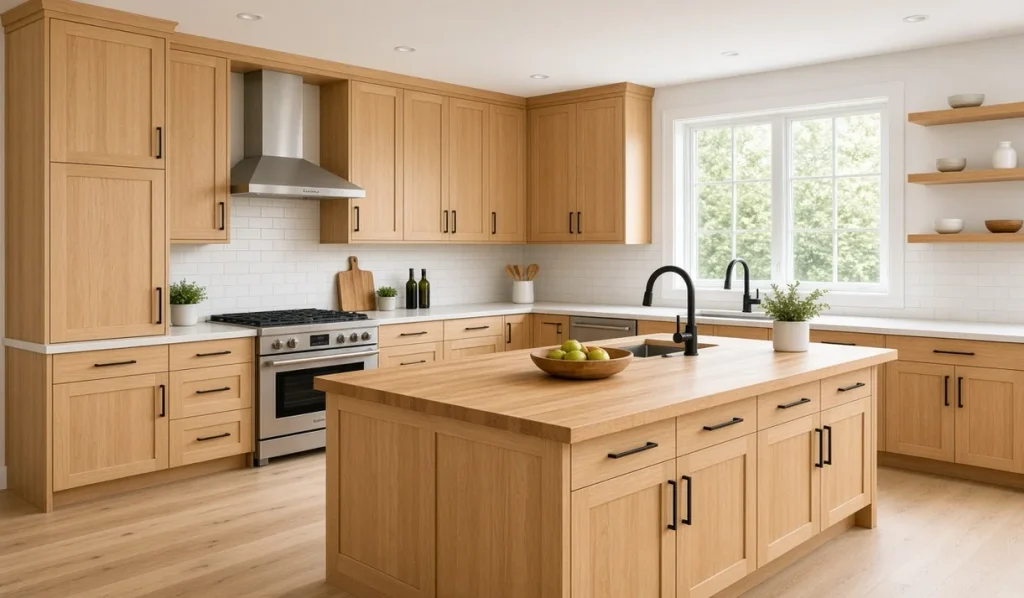
This is where hard maple earns its price. Chairs get shoved back hard from the table, day after day, and maple handles that kind of shock without the joints loosening as fast as softer woods. Tabletops take the most abuse in any kitchen, more than cabinets ever will.
The finish matters almost as much as the wood, though. Many Amish builders use a catalyzed conversion varnish, a hard, waterproof coat that won’t leave white rings from a cold glass. Ask for it by name. A soft oil finish looks lovely and needs babying.
Short on floor space? A round table with a leaf in hard maple stays small for weeknights and opens up when family comes over, and maple’s light color keeps it from looking heavy in a tight room.
Island and Butcher Block
Hard maple is the classic butcher block wood for a reason. Its closed, dense grain makes it a solid choice for a prep surface, and you’ll see it in commercial kitchens doing the same job. If you’re adding an island, a maple top over a painted base is one of the easier ways to get the look without a full remodel.
Maple or Oak Cabinets Comes Down to the Grain
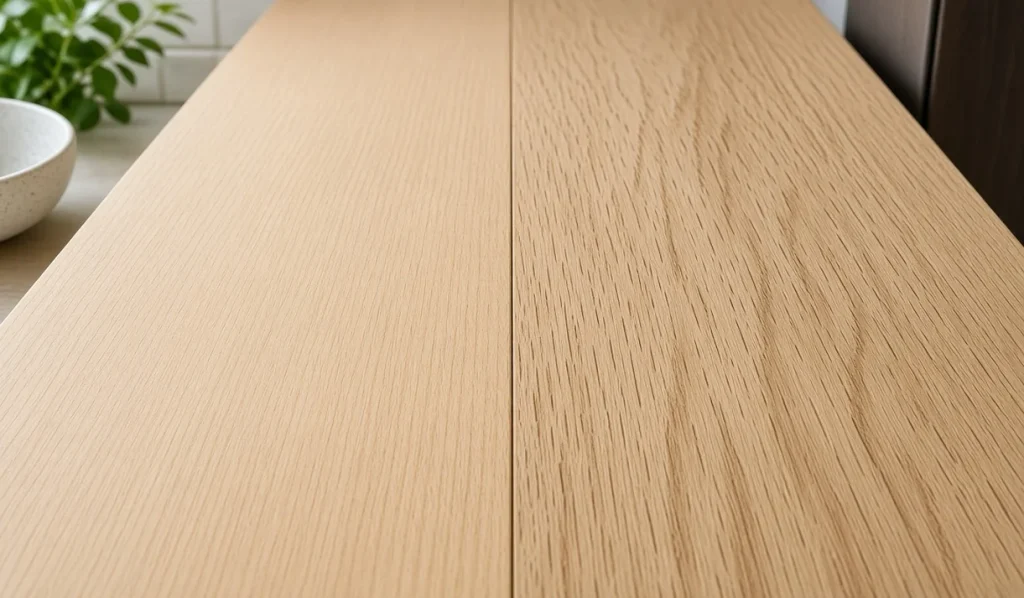
Oak has a loud grain pattern that can show right through paint. Maple has almost none. That’s really the whole decision for most people if you want to see the wood, oak gives you more to look at for a little less money. If you want a smooth painted or modern look, maple wins easily.
My own bias is maple for anything painted and anything you eat at. I’ll admit I couldn’t find anyone tracking how soft maple tables hold up over twenty years of family dinners. Hence, the Janka number is the best guide we’ve got, and that’s a lab test, not a kitchen.