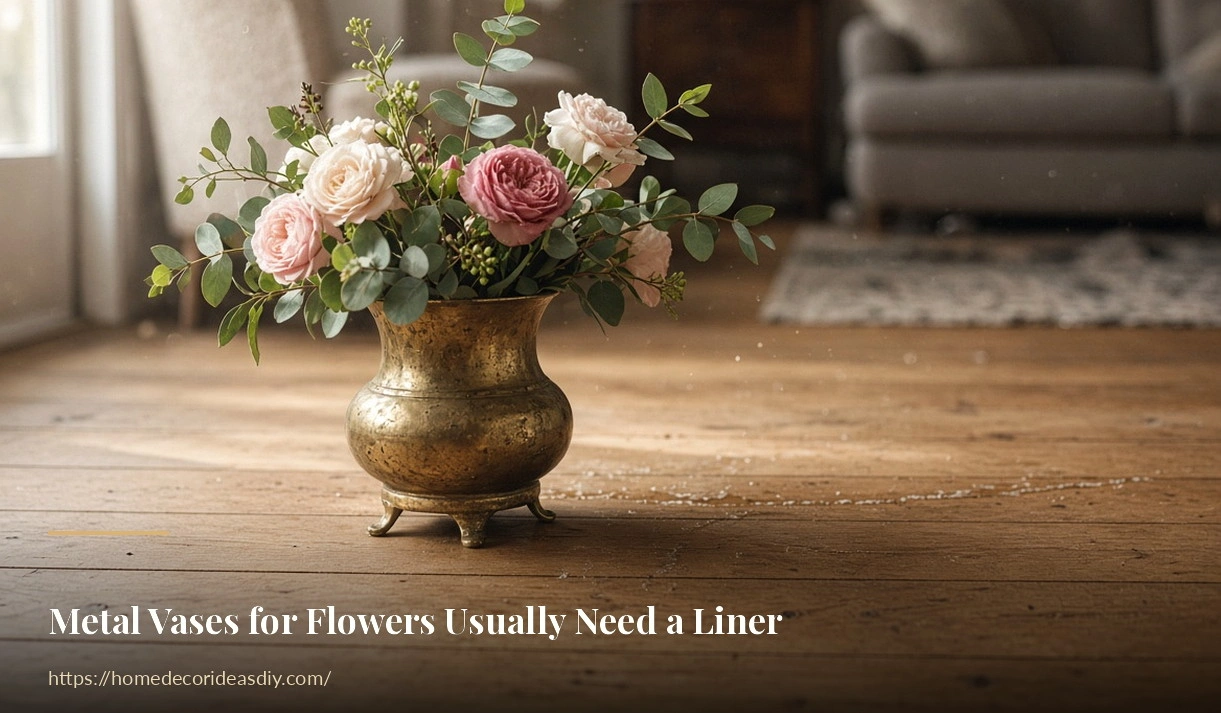
I filled a brass vase at the kitchen sink, carried it to the front room, and by the time I set it down, a thin wet line marked the floorboards behind me. Not a puddle. Just enough to notice. That is the part hardly anyone mentions about metal vases for flowers: they are made as objects first and water containers second. The base seam is where that shows up. Most decorative metal vases are not fully watertight. The fix is a liner, not a better vase.
Why most metal vases for flowers leak at the seam
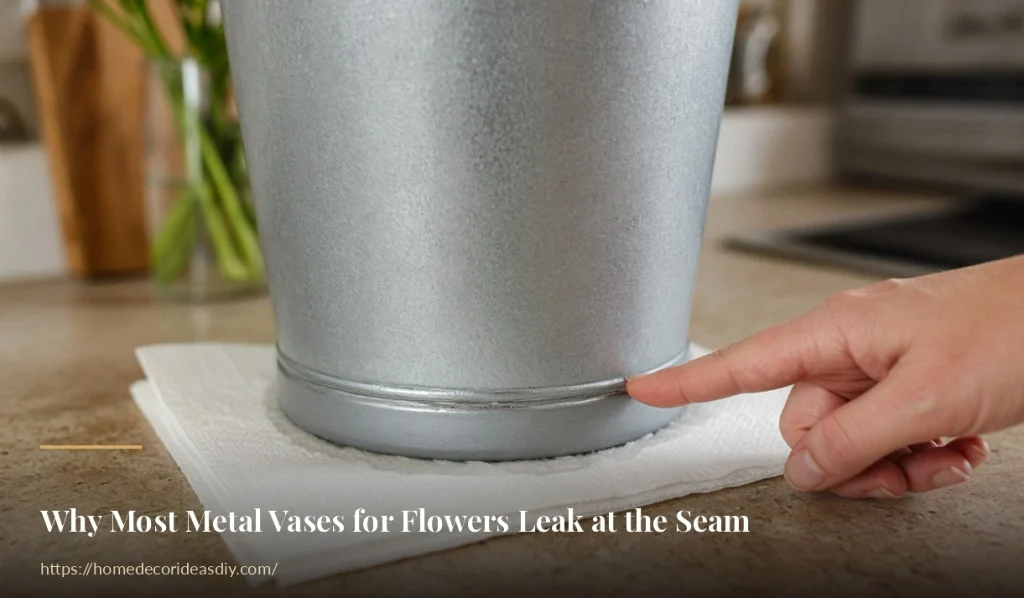
The leak is at the joint, not through the metal. Sheet metal is rolled and joined at the bottom. Solder, a crimp, or glue sits under a powder coat that looks solid from the outside. Wholesalers are honest about this in their own copy. One San Diego floral supplier notes on a galvanized container that it is not fully sealed and may leak, and that a liner or sealant is recommended. Another says the same about an 18-inch galvanized bucket. These are the people selling them to florists.
Testing one at home takes an hour:
- Fill it to the level you would actually use, not to the brim.
- Stand it on a folded sheet of kitchen paper.
- Leave it an hour, check, then leave it another two.
- Read the paper, not the vase. A slow seep shows as a damp ring long before a drop runs down the outside.
If it seeps, you have three options. A glass jam jar dropped inside costs nothing and can be lifted out for washing. Plastic florist liners are made for this and cost a couple of dollars. Silicone sealant around the inside base works, but you are then committed; if it fails, you cannot get at it easily. The jar or the liner is the one worth doing.
Water Care Inside Metal Vases For Flowers
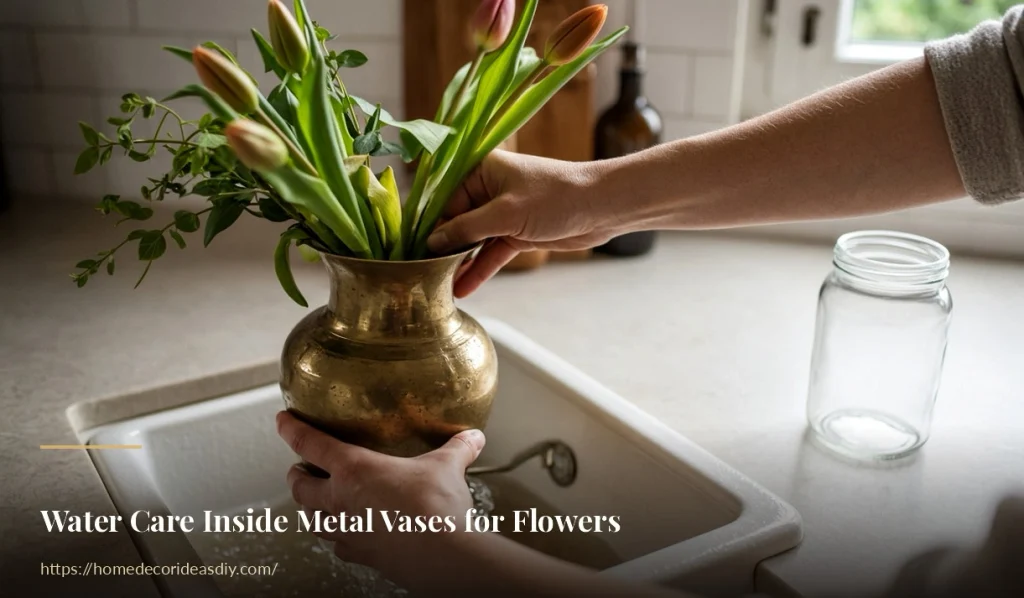
A glass vase tells you everything. Cloudy water, slime on the stems, the level dropping because a bunch of tulips drinks more than people think. Metal tells you none of that. A bouquet can sit in something foul while the outside still looks like a magazine shot. That is the trade for the finish.
UMass Amherst’s cut-flower guidance is blunt: bacteria multiply and clog the water-conducting vessels in the stems. The flowers wilt while surrounded by water they can no longer drink. The fix is a clean container, foliage kept above the water line, and a preservative that carries sugar, an acidifier, and a biocide.
Change the water every two days in a metal vase and top it up in between. That is shorter than the three- or four-day habit most people use with glass, simply because you will never catch the problem by eye. Learn what the vase weighs when it is full. Lift it on day two. If it feels light, it is light.
Brass, copper, and galvanized all behave differently
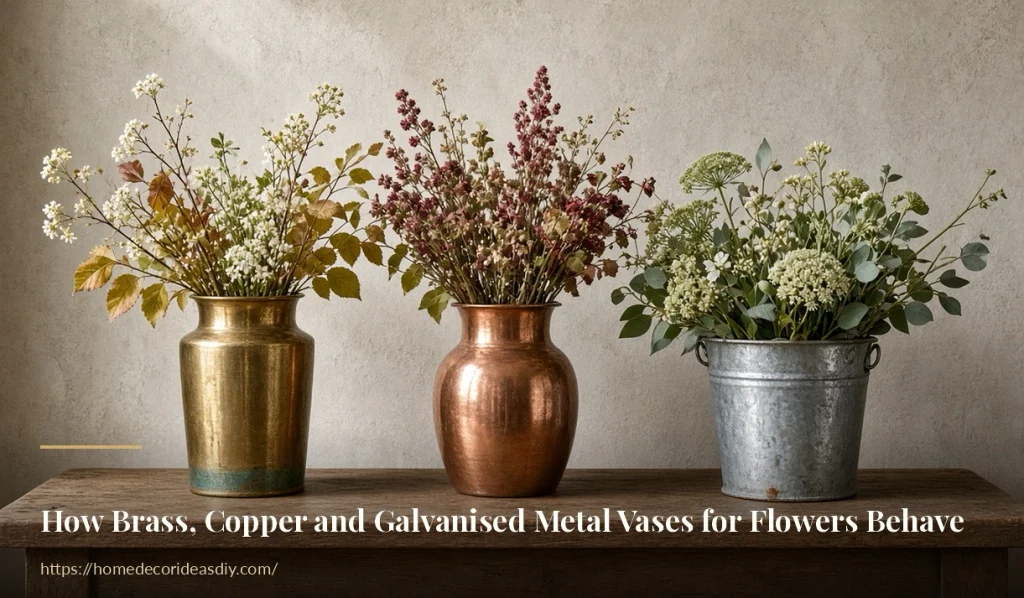
Copper has a reputation from the old penny trick. Copper does have antimicrobial properties, but a copper vessel is not a substitute for flower food. US pennies minted after 1982 are mostly zinc with a thin copper plating, so the coin version barely applies. Use the copper vase because it is beautiful, not because you think it is doing the chemistry for you.
Galvanized is what people get wrong. The zinc coating protects the steel underneath until something scratches it stem cutters, a scouring pad, grit in the bottom. Once the coating breaks, you get rust spots at the waterline and they come back. Rustic metal flower buckets are often thin gauge and scratch easily, which is why the trade sells liners for them by the case.
Brass splits into two things that look the same on a shelf. Lacquered brass keeps its shine and will not patina. Unlacquered brass goes dark and greenish around the waterline within a few weeks of steady use. Neither is wrong; decide which you want before you buy. Aluminum does not rust, which is why cheap aluminum decor survives around water better than its price suggests. Whatever finish you choose gold, nickel, hammered brass it only looks deliberate if the same metal shows up somewhere else in the room.
Opening width decides whether the arrangement holds
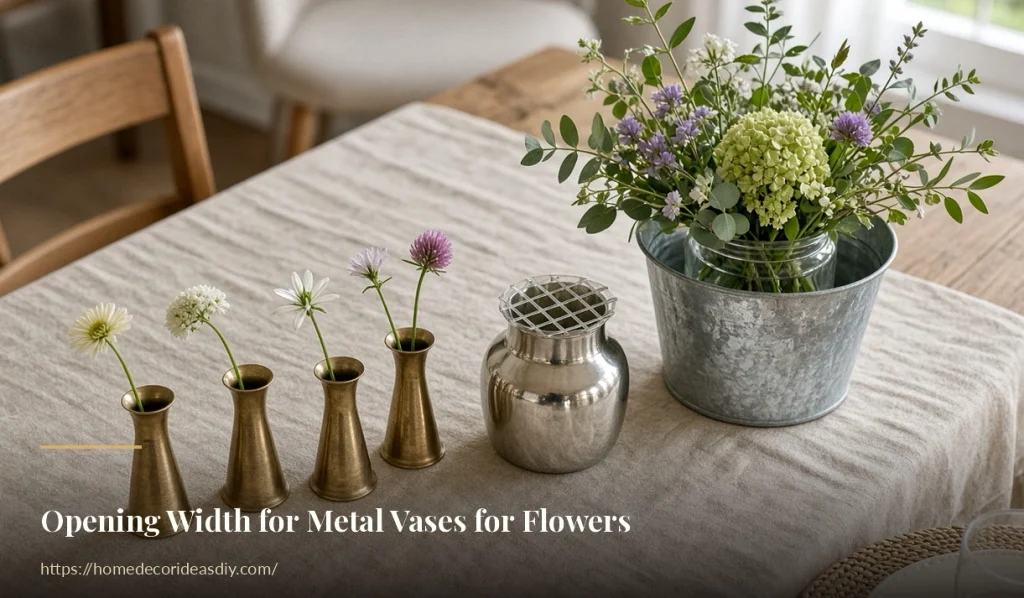
Metal hides this worse than glass because you cannot see the stems crossing inside. A neck of one to two inches is a bud vase and takes one to three stems. Small metal bud vases in a row down a table usually beat one big arrangement. Three to four inches is the awkward middle wide enough that stems fall outward against the rim, narrow enough that you feel silly adding support. Add the support anyway a tape grid across the mouth, a pin frog, or a scrunched ball of chicken wire.
Anything wider is a container, not a vase. It needs either a lot of stems or a smaller liner inside it.
Tall metal vases for centerpieces have a separate problem: they are light. Steel and aluminum at that thickness weigh almost nothing. The arrangement sits high, a sleeve catches it, and the whole thing goes over. Sand or river stones in the base, under the liner, sorts it out for about a dollar.
What to check when you buy secondhand
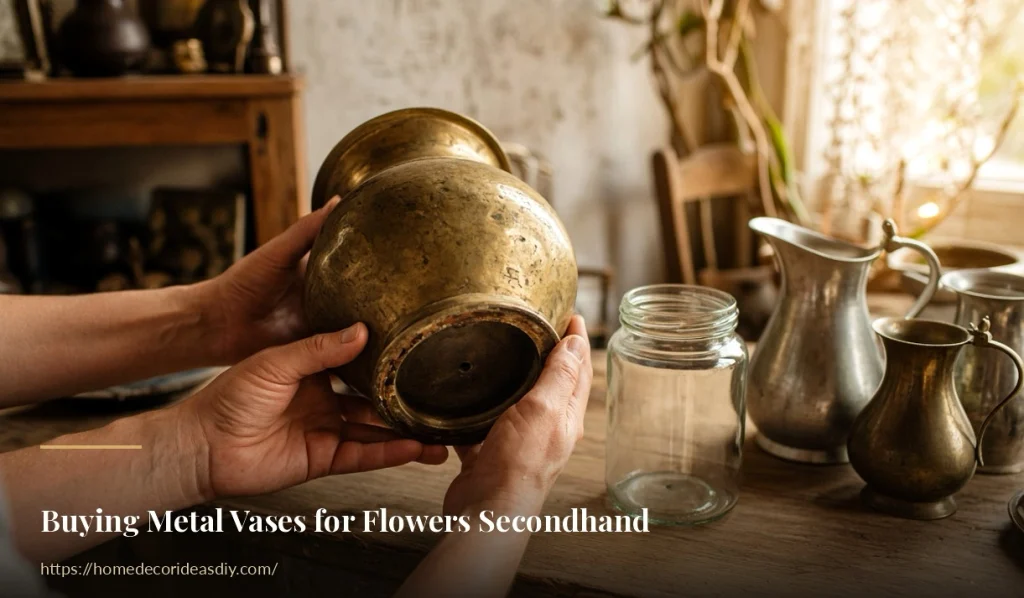
Turn it over first, always. Then run a finger round the inside of the base seam and look at your finger. Rust flaking, soil staining, a drilled drainage hole in the bottom because somebody used it as a planter for six years, all of that is normal in thrift bins and all of it is findable in ten seconds. Same habit that governs everything else in thrift store home decor, really.
I’d rather have a plain glass jar hidden inside a heavy old brass vase than any of the modern sealed ones I’ve handled. The sealed ones are usually thin steel wearing a good finish, and they still stain at the water line within a season. So yes, I’m telling you to buy a decorative object and then hide a jam jar inside it. That’s exactly what I’m telling you.