Last winter I lost my car keys for two days. Two days, in a house with three small rooms and a kitchen. They were in the pocket of a coat hanging behind the bedroom door, which tells you how well my system was working.
That’s more or less when I got serious about how to organize a small house. I’d been saying “I’ll sort it out this weekend” for about a year, and every weekend something else came up. So I finally started, badly at first, and I’m going to tell you the parts that worked and the parts that didn’t.
Get Rid of Stuff Before You Buy Anything
I’ll be honest, my first move was to go shopping. I came home with a set of clear plastic boxes and felt very productive. Then I realised I’d just put the same mess into neater containers, and the shelf was still full.
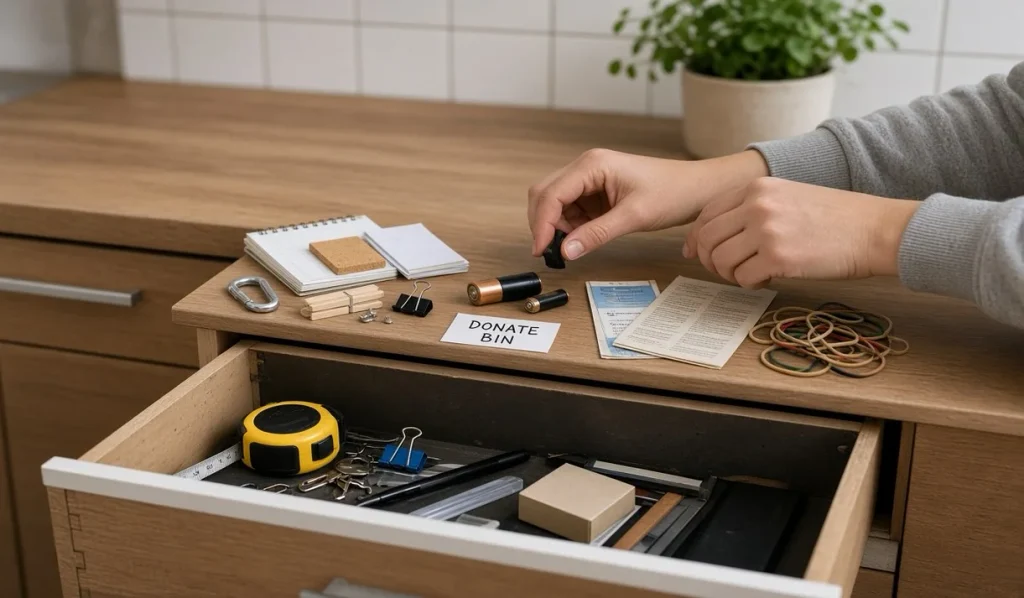
So I tried again, starting with one drawer. The kitchen junk drawer, the one everybody has. Out came dead batteries, three takeaway menus, a measuring tape I didn’t know I owned, and a pile of rubber bands. About half of it went in the bin. It took maybe twenty minutes, and I felt oddly proud afterwards.
If you want a bit of background on this way of thinking, Marie Kondo is the name most people know, and her Wikipedia page gives a fair summary. I don’t follow her rules exactly (I’m not thanking my socks), but the main idea stuck with me: keep what you actually use.
My rule now is simple. If I haven’t touched it in a year and I can’t think of a good reason, it goes. Not always easy, though. Old gifts are the worst.
How to Organize a Small House, One Room at a Time
Trying to do everything at once is how I burned out the first time. Pick one room, finish it, move on.
Living room
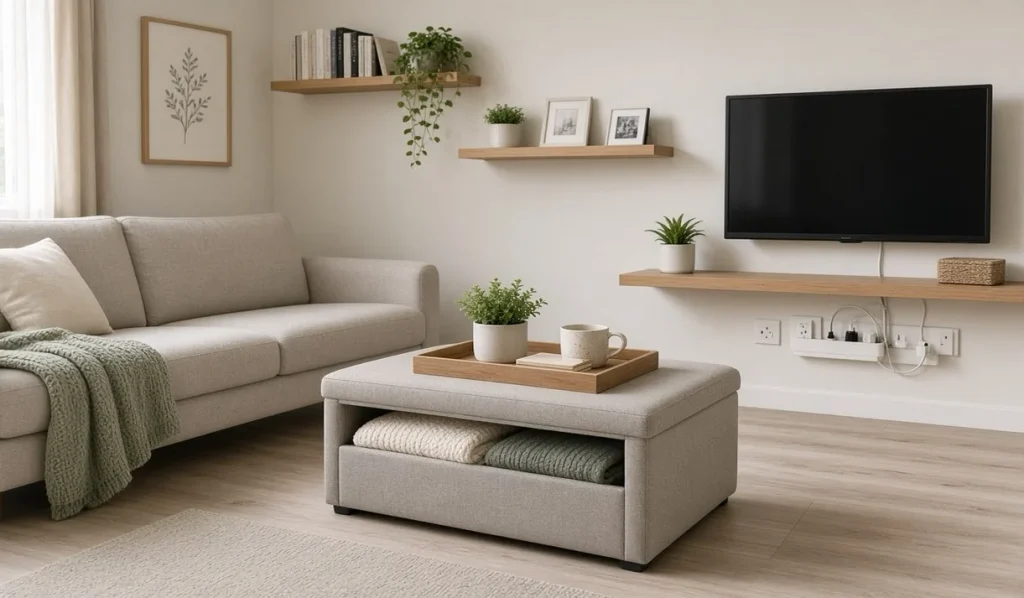
My living room is small enough that the sofa nearly touches the TV unit. The biggest help was a storage ottoman. It holds blankets and a stack of board games, and I put a tray on top so it also works as a coffee table. Cost me less than a proper table would have.
I also put up two floating shelves beside the window. Books on one, plants and a few photos on the other. Nothing on the floor, so the room feels wider.
Cables were another thing I’d ignored for years. A bundle of cable clips and a small box for the power strip took ten minutes, and the corner behind the TV stopped looking like a mess.
Kitchen
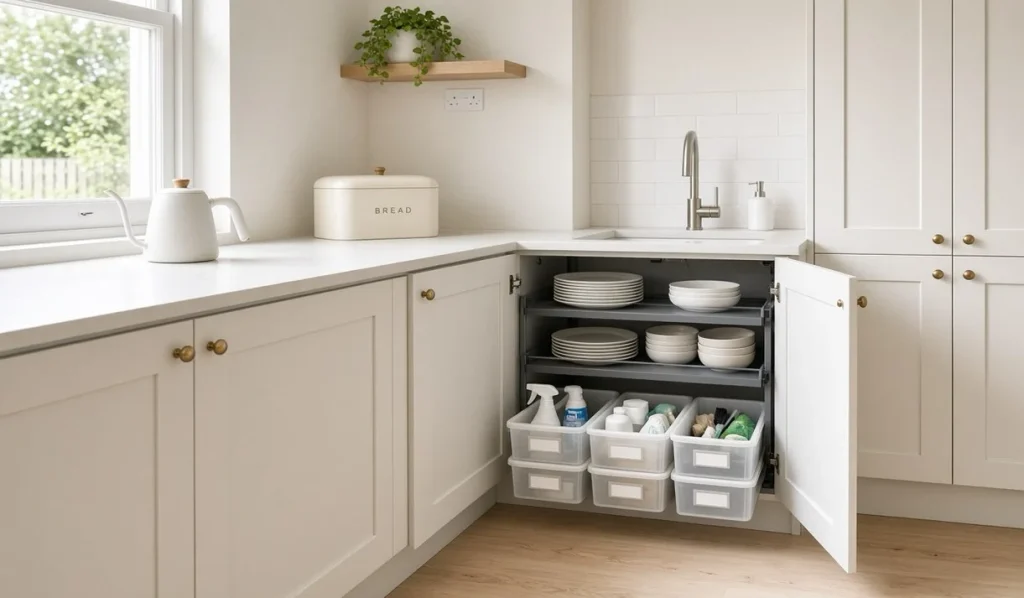
Counters are the first thing to go in a small kitchen. I cleared mine down to the kettle and a bread bin, and put everything else in the cupboards. I moved the blender, which I use maybe once a month, up to the top shelf where it belongs.
Two cheap things made a real difference. A tiered shelf inside the cupboard (so plates don’t sit in one tall stack) and a couple of stackable bins under the sink made a real difference. Before that, the space under the sink was a dark hole where cleaning bottles fell over.
Bedroom and closet
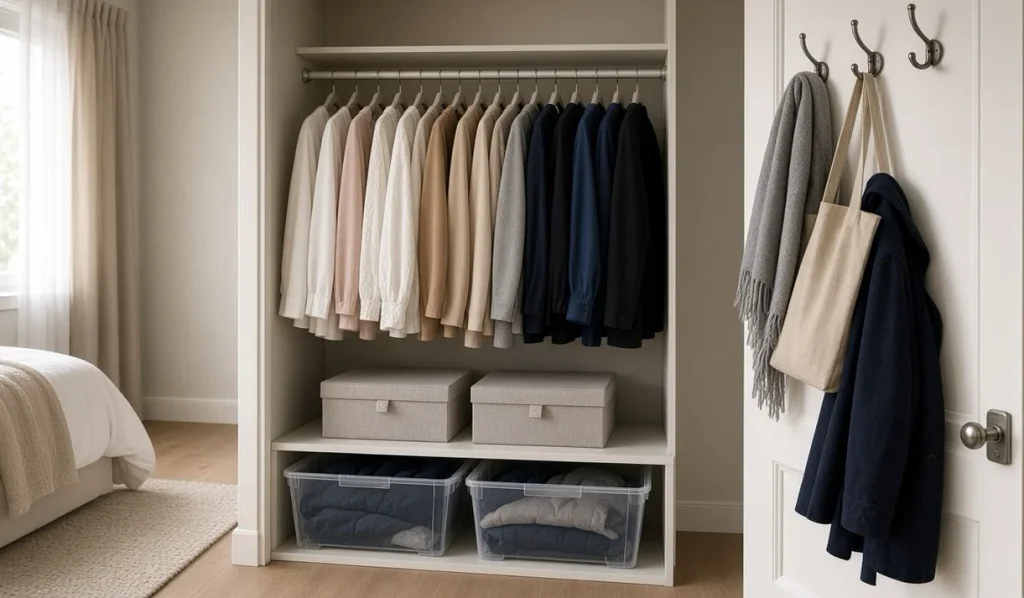
My closet was the real battle. I swapped the bulky plastic hangers for slim ones and, honestly, I got back almost a third of the rail. I know that sounds like exaggeration, but I measured.
The winter coats now live in flat boxes under the bed during summer. Hooks on the back of the door replaced the chair that used to hold “clothes I’m not sure about.” You know the chair.
Bathroom
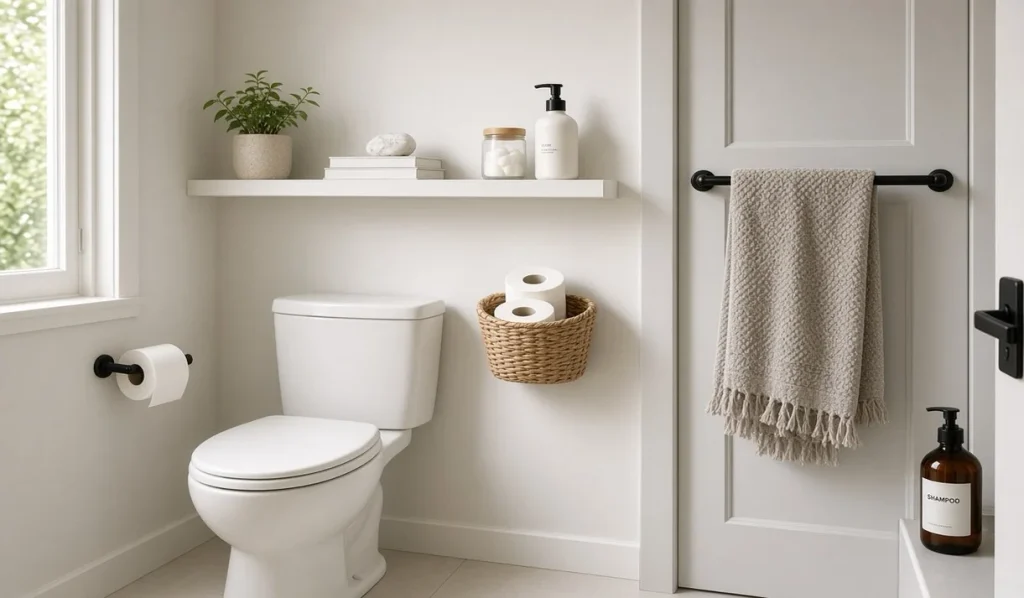
Go vertical. Add a shelf over the toilet, a small wall basket for spare rolls, and a towel rail on the door. I also finally admitted I didn’t need five half-used shampoo bottles. One on the go, one spare.
Entryway
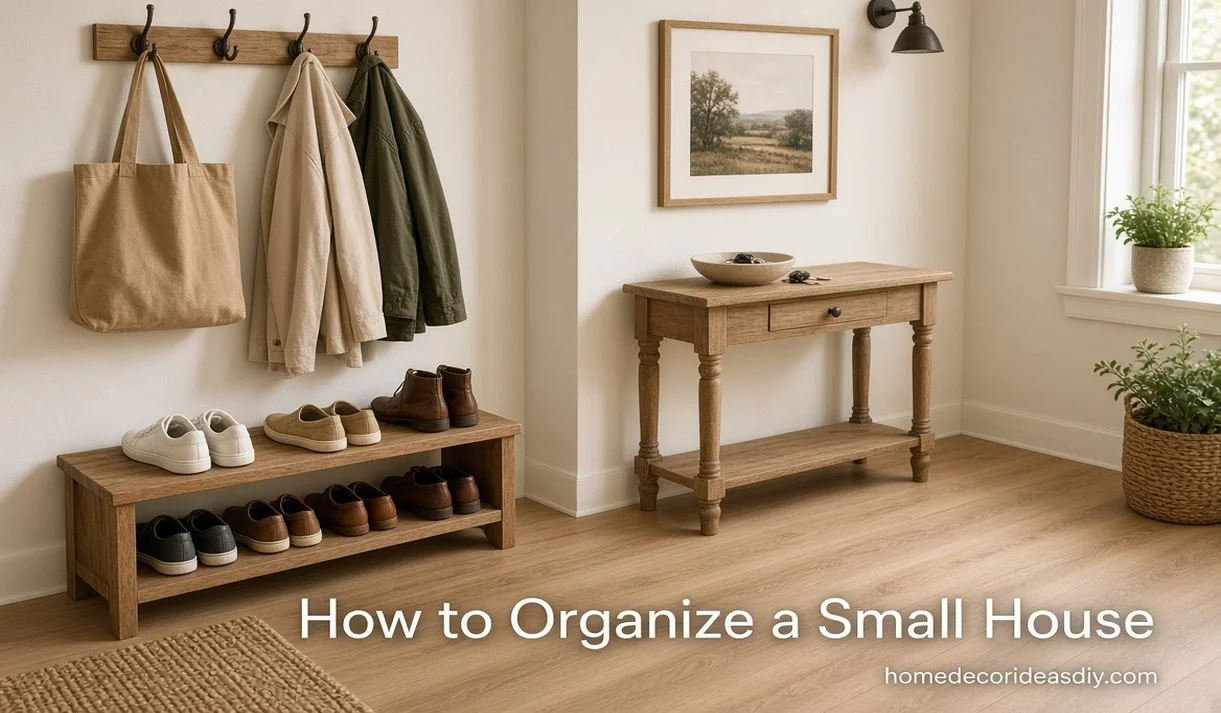
This is the spot that was costing me my keys. I put up three wall hooks, a narrow shoe rack, and a small dish by the door for keys and loose change. Since then, I haven’t lost them once. It sounds almost too basic, but a place for things by the door changes everything else in the house.
Cheap Storage Fixes That Worked for Me
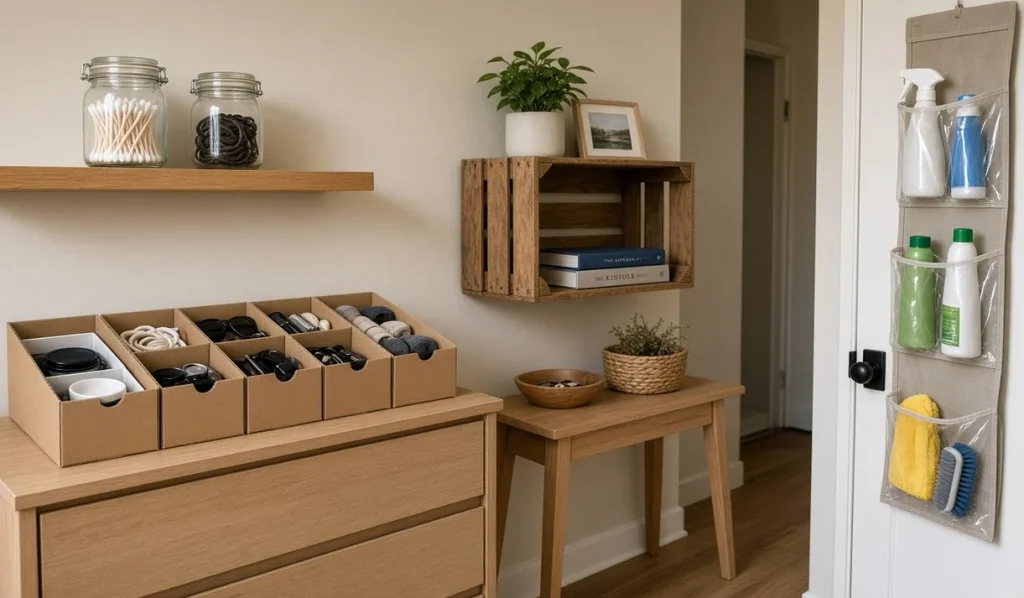
I’m not a big spender, so most of what I used cost next to nothing.
Shoeboxes make decent drawer dividers. Old jars hold cotton buds and hair ties. A wooden crate turned on its side became a little shelf in my hallway. And an over-the-door organizer, the kind with clear pockets, now holds all my cleaning stuff.
If you like pieces with a bit of age, check out some antique home decor. An old trunk stores a surprising amount and looks far better than a plastic tub. And once the room is tidy, choosing a showpiece for home decor gives it a finished feel, which is nice after all that clearing out.
Mistakes I Made (Please Skip Them)
I ordered six baskets online for a shelf without measuring it. Not one fit. I sent them all back, and it was a faff.
I also ignored my walls for ages. The floors were packed; the walls were empty. Silly.
And flat surfaces. The dining table, the end of the bed, the top of the washing machine. They fill up quietly, and then one day you can’t see the table at all.
Habits That Keep It From Falling Apart
Getting organized is one thing. Staying organized is harder, and I slipped more than once.
What worked was a ten-minute reset before bed. Set a timer, put things back where they live, and stop when it rings. Some nights I skip it, but most nights I don’t, and the house stays under control.
I also try to follow a loose one-in, one-out rule. New jumper means an old one goes to the charity shop. It doesn’t always happen, but it slows the pile down.
Frequently Asked Questions
How do you organize a small house with too much stuff?
Start by getting rid of things, not by buying storage. Go through one drawer or shelf at a time and make three piles: keep, donate, bin. Sort out storage only for what’s left.
How can I organize a small house on a low budget?
Use what you’ve already got. Shoeboxes, jars, crates and a few hooks can handle most of it, and none of those cost much.
What’s the fastest way to make a small house look tidy?
Clear the flat surfaces, throw loose bits into a basket, and make the bed. In fifteen minutes, the whole room looks different.
One Last Thing
If you’re still working out how to organize a small house, don’t aim for perfect. Mine still isn’t. I’m avoiding a drawer in the bedroom right now. But I know where my keys are, and honestly, that was the goal. Start with one shelf this week and see how it feels.