I was at a friend’s place a couple of years back, halfway through a bowl of pasta, and I caught myself running my thumb along the edge of her table without even noticing because the wood was so dark and smooth and the grain had these slow swirls in it that I’d never seen on any other table. It was a walnut dining table. I asked her about it, then went home and read about walnut until midnight.
So, a walnut dining table isn’t a small spend, and I’d rather you went in knowing what you’re paying for, the good parts and the annoying ones, because there are annoying ones.
Is a Walnut Dining Table Actually Good for Everyday Use?
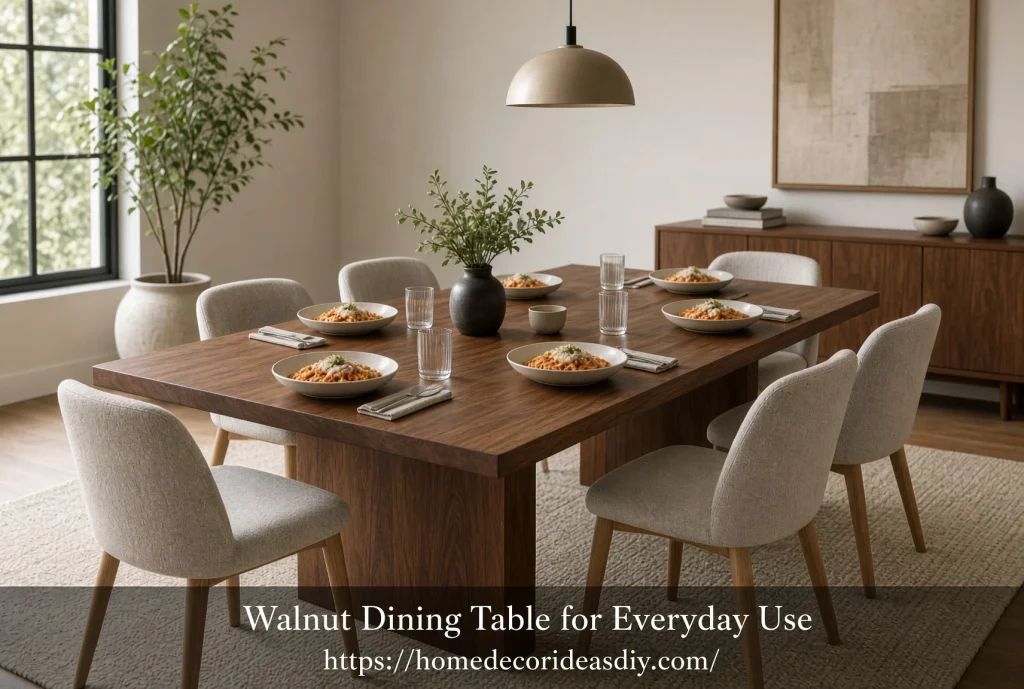
Short answer: yes. Longer answer mostly yes, with a couple of things I’ll get to.
The look
Walnut sits somewhere between milk chocolate and dark coffee, sometimes with a purplish tint depending on the board, and its grain moves around a lot more than oak’s, so no two tables come out the same. It also hides life well. Crumbs, little marks, a dusty afternoon- none of it shouts at you the way it does on a white or pale ash top.
The strength (and the dents)
Black walnut, what most US makers use, scores around 1,010 on the Janka hardness scale, which is softer than oak.
Not weak. Just softer. A heavy pan dropped on top, or a kid with a toy hammer, can leave a dent, and honestly, most people I know end up calling those marks character after the first month, but if you’re the type who’d lose sleep over one, say so to yourself now before you buy.
Solid Walnut vs Veneer, and the Listings That Trick You
This is the part that catches people out, because online sellers love putting “walnut dining table” in the title and then burying the real material three paragraphs down.
Solid walnut
Solid walnut means the top is real walnut boards all the way through, so you can sand it back and refinish it years later when it’s scratched up, and it’ll usually outlast the person who bought it. Heavier, pricier, worth it if you’re keeping it long term.
Walnut veneer
A thin slice of real walnut glued over MDF or plywood. It looks very close on day one and costs far less, but you can’t sand it much, and repairing chips or gouges is a pain.
Walnut-effect
Usually laminate or a cheaper wood stained dark. Fine for a tight budget don’t pay solid-wood money for it.
If the listing doesn’t say “solid walnut” in plain words, I’d assume it isn’t.
Getting the Size Right for Your Room

I’ve watched people fall for a table online and then find out it fills their entire dining room, so grab some masking tape and mark it out on the floor first. Seriously.
Round or rectangle
A round walnut dining table suits smaller rooms and makes conversation easier because everybody can see everybody, while a rectangle works better in a long, narrow room. And if you only host big groups a few times a year, an extendable one is the sensible middle, small most days and bigger when the in-laws turn up.
Rough sizes that have worked for me
- Seats 4: around 48 to 60 inches long, or a round top about 42 to 48 inches across
- Walnut dining table for 6: about 72 inches for a rectangle, or a 60-inch round if you don’t mind it snug
- Seats 8: 84 to 96 inches, and you’ll need a proper room for that.
- Space around it: leave roughly 36 inches between the table edge and the wall so chairs can pull out and people can squeeze past
Tight on space? A small walnut dining table with slim legs still looks solid without taking over.
What a Walnut Dining Table Really Costs
It swings wildly depending on what’s under the surface. Looking at what the big US retailers list right now, a solid walnut table from a known furniture brand tends to sit around $3,000 to $5,000 for a standard six- to eight-seater extendable ones go well past that, and veneer or walnut-finish tables from the large online stores can be just a few hundred dollars.
Custom work from independent woodworkers is similar to premium brands, sometimes more, because you’re paying for handwork and for picking the actual boards.
My view, for what it’s worth: if you’ll keep it 10 years or more, solid walnut is better value even though the upfront number sting if you rent, move a lot, or have very small children, a decent veneer table is a perfectly sensible choice. Prices fluctuate, so check a few shops before you commit.
Styling a Walnut Dining Table Without Overthinking It
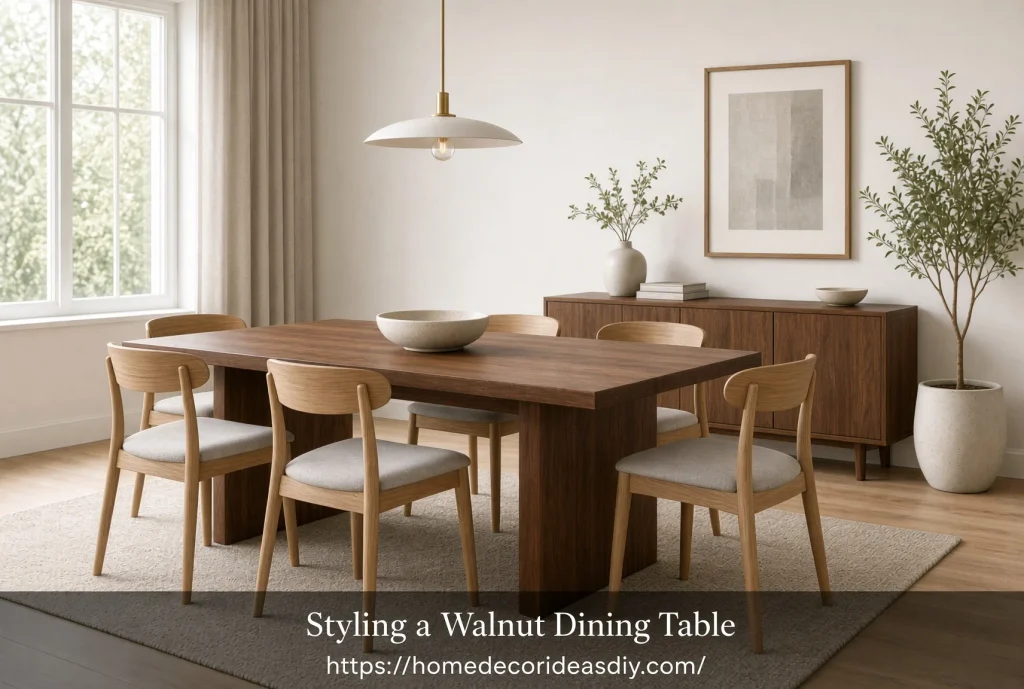
Walnut is dark, so it likes a bit of contrast, and that’s really the whole secret.
Chairs
Lighter chairs balance it: pale oak, soft grey upholstery, or white-and-black metal chairs look sharp too, but too much dark in one spot can feel heavy. I like mixing, say four matching chairs with a bench along one side.
Rug and lighting
A neutral rug in cream or sand or soft grey lets the wood stand out make it big enough that the chair legs stay on it when someone pushes back. Hang a simple pendant about 30 to 36 inches above the top, and the grain glows in the evening, which is lovely.
What goes on top
Less than you think. The wood is the star, so keep the middle simple: a low ceramic bowl, a linen runner, a few stems in a small vase.
If you like pieces with history, a find from our guide to antique home decor gives the table a story if you’d rather have one proper centerpiece, our post on picking a showpiece for home decor will help you choose one that doesn’t fight the wood.
Looking After Your Walnut Dining Table
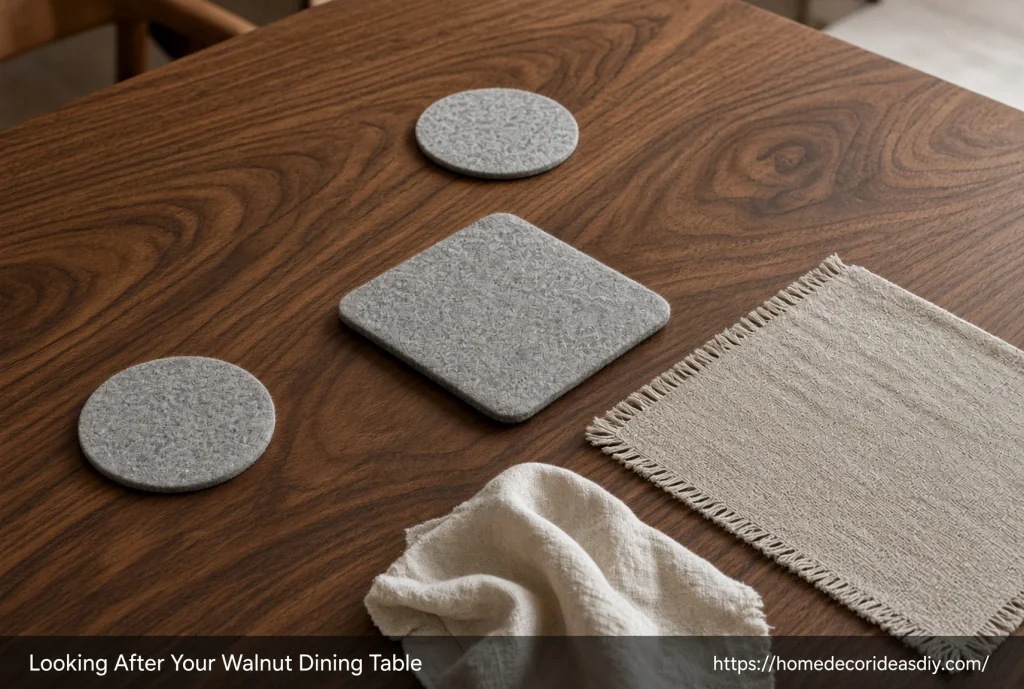
It isn’t fussy. A bit of routine and that’s it.
Daily habits
- Coasters and hot pads, always, because heat rings are the number one complaint I hear
- Wipe spills fast with a soft, damp cloth, then dry it.
- Skip harsh sprays
- Felt pads under anything you set down
Sun and finish
Direct sun slowly changes the tone, and walnut tends to lighten a little over the years, so if your table sits by a big window, sheer curtains help.
Oiled or lacquered?
Lacquer or varnish needs wiping. Oiled tops feel more natural but need re-oiling once or twice a year, and small scratches on oiled wood can usually be buffed out gently. Ask the seller which one you’re getting, because it changes how you’ll look after it.
A woodworker can sand and refinish more serious damage on solid walnut, which is another reason to buy solid if you can.
Mistakes I’d Skip
- Buying off photos alone, since walnut looks different on every screen, so ask for a sample if you can
- Forgetting chair height the seat should sit about 10 to 12 inches under the tabletop.
- Paying solid prices for veneer
- Choosing a size for the dream room instead of the real one
Frequently Asked Questions
Is walnut good for a dining table?
Yes. Strong enough for daily use, warm and rich to look at, and refinishable if it’s solid. It’s a touch softer than oak, so that it can dent, but most people live with that happily.
Does a walnut dining table go out of style?
Not so far. It was huge in mid-century furniture and keeps coming back because the color is easy to live with.
Is solid walnut worth the extra money?
If you’re keeping it for years, I think so, because you can refinish it and it holds its value better than most mass-made tables.
How do I stop a walnut table from scratching?
Placemats, felt, coasters. Boring, but it works, and a good finish helps too.