Somebody in every family owns the drawer where all the old charging cables live. Someone else, usually the person asked to fix it, ends up untangling them. If that’s you, a home organization franchise has probably crossed your mind, most likely right after a closet makeover video that made you way too happy.
The catch is that the phrase covers three different businesses, and startup costs run from roughly $25,000 to well over $600,000. I went through the published numbers brand by brand. The spread surprised me more than any brochure did.
A Home Organization Franchise Is Really Three Different Businesses
Franchise sites lump everything under one label, which makes the options look more alike than they are. You’re really choosing how you want to spend your week.
Hands-On Organizing Is The Lowest-Cost Way In
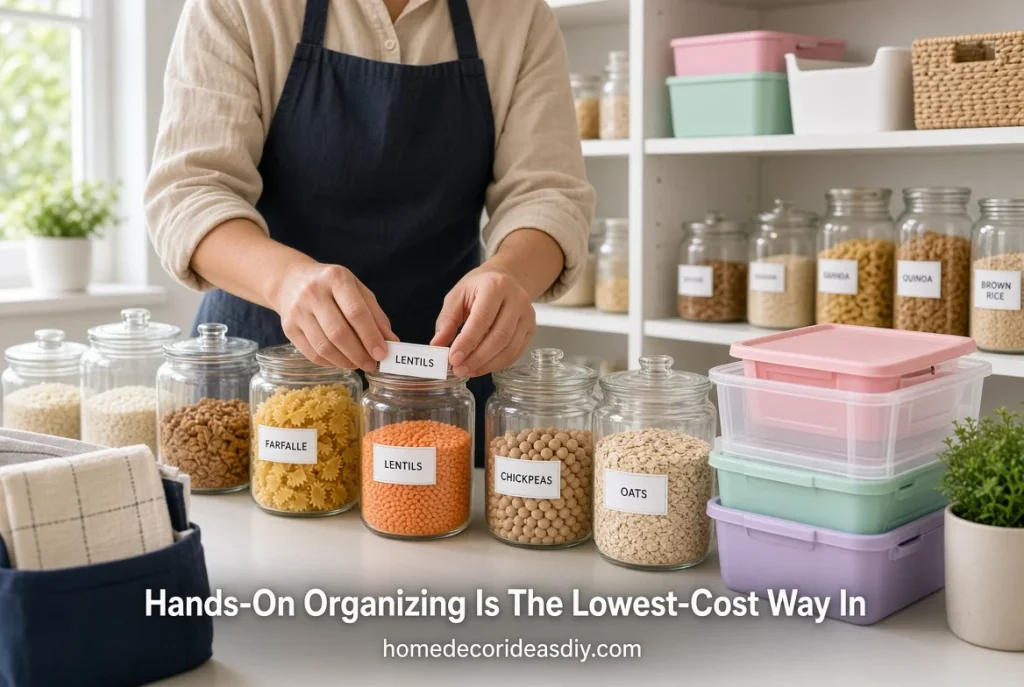
This is the sorting-and-labeling work most people picture. You walk into a client’s pantry or garage, sort, set up containers, and leave. Neat Method, Bee Organized, and 2B Organized all sit here.
2B Organized is home-based, with owners serving clients at their locations, and Bee Organized skips the retail lease and the buildout. Neat Method says you don’t need organizing experience, though a background in sales or team management helps.
Closet And Storage Installation Is Closer To Manufacturing
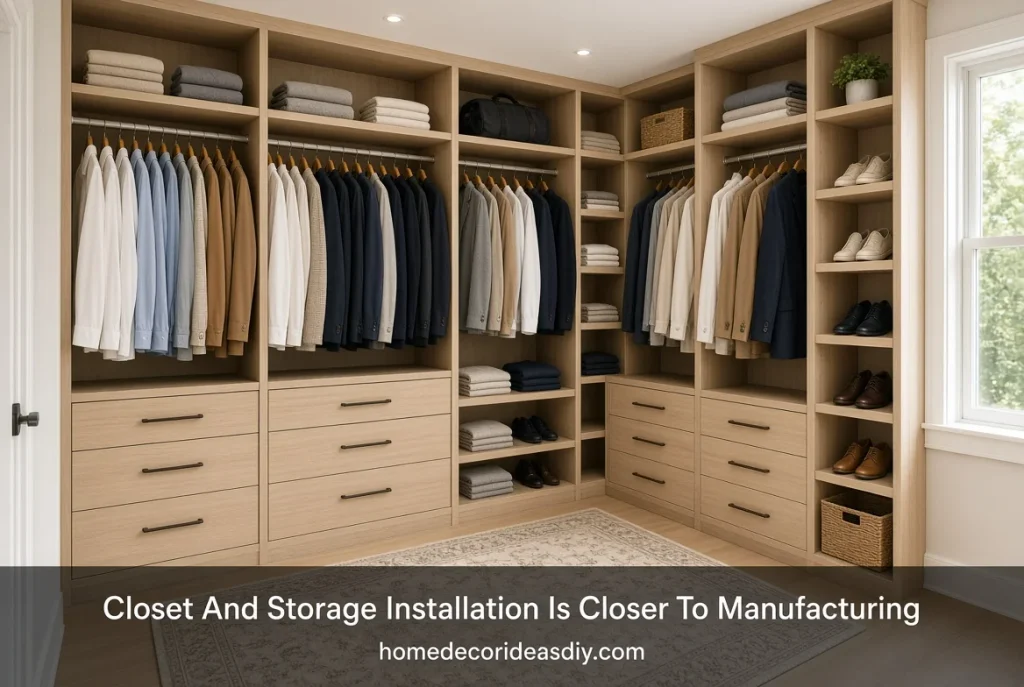
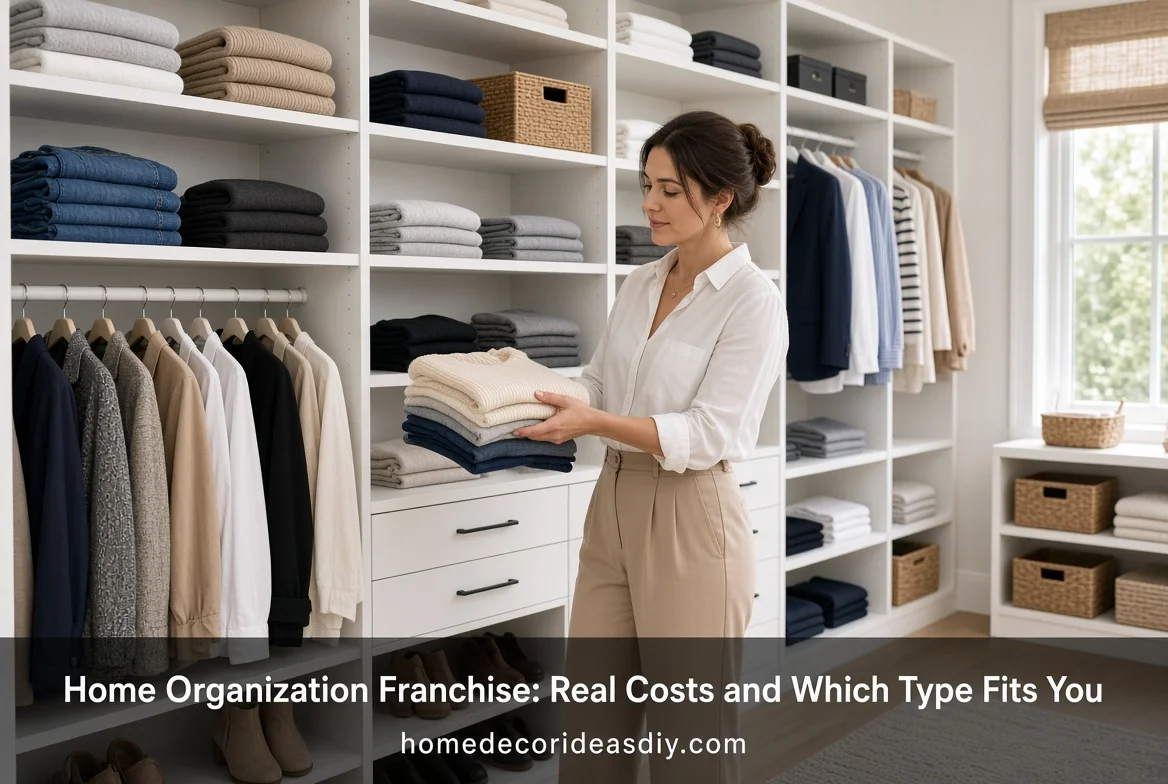
Closet Factory, Closets by Design, and The Tailored Closet design, build, and install permanent storage. That means more money and more machinery. Closets by Design involves a showroom, equipment, and a build-out, and Closet Factory’s listed investment includes real estate and equipment.
The Tailored Closet pitches itself as the lower-overhead version of the closet business, with an investment range of $177,130 to $270,650.
Pull-Out Shelving Sits In The Middle

ShelfGenie designs and installs custom pull-out shelves for kitchen cabinets. Subcontracted teams handle design and installation, so owners don’t need a storefront or inventory. It’s a smaller operation than closet manufacturing, though it still isn’t a van-and-clipboard business like hands-on organizing.
The Startup Cost Gap Runs From About $25,000 To Over $600,000
Here are the listed totals for the brands above. Treat them as a rough map, not a price list.
| Brand | Type | Listed Total Investment |
| 2B Organized | Hands-on organizing | $24,950 to $30,050 |
| Neat Method | Hands-on organizing | $37,500 to $44,500 |
| Bee Organized | Hands-on organizing | $41,416 to $66,056 |
| ShelfGenie | Pull-out shelving | $95,300 to $148,350 |
| Closets by Design | Closets, manufacturing | $154,000 to $511,000 |
| The Tailored Closet | Closets, installation | $177,130 to $270,650 |
| Closet Factory | Closets, manufacturing | $344,500 to $611,500 |
The same brand appears twice with different numbers. One listing puts Bee Organized at $41,416 to $66,056, while a comparison on Neighborly’s site shows $48,000 to $50,000. Neat Method appears at $34,000 to $38,000 on older pages and the newer figure in the table on a more recent one.
My guess is the pages copy from disclosure documents of different years. That’s why the only number worth trusting is the one in the current document.
A franchisor doesn’t want the total in your bank account, either. ShelfGenie lists $50,000 in liquid capital and a $250,000 net worth, Closets by Design lists a $300,000 net worth, and Bee Organized lists $100,000. Those are two different questions, and lenders ask both.
Does a home organizing franchise actually make money? A listing page can’t tell you. A franchise database shows average unit revenue of about $376,000 for Neat Method and about $5.4 million for Closet Factory. Putting those side by side tells you nothing, since one is a service business and the other builds and installs cabinetry.
Gross revenue also isn’t take-home pay. I haven’t found profit figures for any of these brands, and I’d be wary of a page that promised them.
Even the market-size claims don’t agree. One franchise page calls home organization a $1 billion industry, another says over $11 billion, and a market report quoted by Neighborly says about $14.6 billion. They can’t all be measuring the same thing.
Royalties Come Off The Top Of Every Job
A royalty is a cut of your revenue, paid whether the month went well or not. Neat Method lists royalties starting at 10 percent, and Closet Factory lists 6.75 percent.
On a $3,000 organizing project, 10 percent is $300 gone before you pay for containers, labels, gas, or a helper. That’s an example, not a forecast. The lower royalty on the closet side looks friendlier until you remember you’re also paying for materials and installers on those jobs.
Territory Wording Matters More Than The Territory Map
Bee Organized’s own page describes an exclusive territory based on population density. A competitor’s comparison describes a protected but non-exclusive territory, with the franchisor keeping rights to corporate accounts.
Neither has to be wrong. The wording changes depending on who’s summarizing, and the contract decides what you actually get. The Tailored Closet says its owners get a protected territory where no other franchisee will market or service, and ShelfGenie owners start with two to four territories covering 250,000 to 500,000 households or more.
Time to open is another gap. Bee Organized says it typically takes 60 to 90 days from signing to opening, versus 6 to 12 months for most brick-and-mortar franchises. That’s the brand’s own claim, so ask existing owners how long it took them.
Going Solo Costs Less And Uses The Same Skills
Nothing stops you from selling organizing without a franchise. Professional organizing has grown, and the voluntary Certified Professional Organizer credential launched in 2007.
A franchise sells you a brand name, training (Bee Organized lists a 54-hour program), leads, and systems. The cost is the fee plus a slice of every job. Going solo means you keep all the revenue, but clients come in more slowly.
Before spending a dollar on either, spend a month organizing real spaces. Start with your own, using the approach in our guide on organizing a cluttered home, then try a friend’s garage. Plenty of future clients will ask for the cheap version first, so know the free fixes too, like the ones in our small home organization ideas on a budget post. If a month of that doesn’t bore you, the paperwork starts to make sense.
I lean toward the cheapest hands-on model for anyone testing this for the first time, because excitement tends to cool fast when it comes with a six-figure loan. I’m biased toward starting small, though, and a closet installer in the right territory could make me look wrong in two years.