Every DIYer has done this. You walk in for one pack of drywall anchors, and forty minutes later you’re holding a headlamp, a bag of mulch, and no anchors. The typical store carries around 35,000 items, and the buildings run somewhere near a hundred thousand square feet, so getting turned around isn’t a character flaw. homedepot
Home Depot store layout organization is more logical than it feels when you’re stuck in aisle nineteen. Below I’ll cover the loop, the department zones, the aisle and bay numbers, and the habits that keep my trips short.
Home Depot Store Layout Organization Starts With One Big Loop
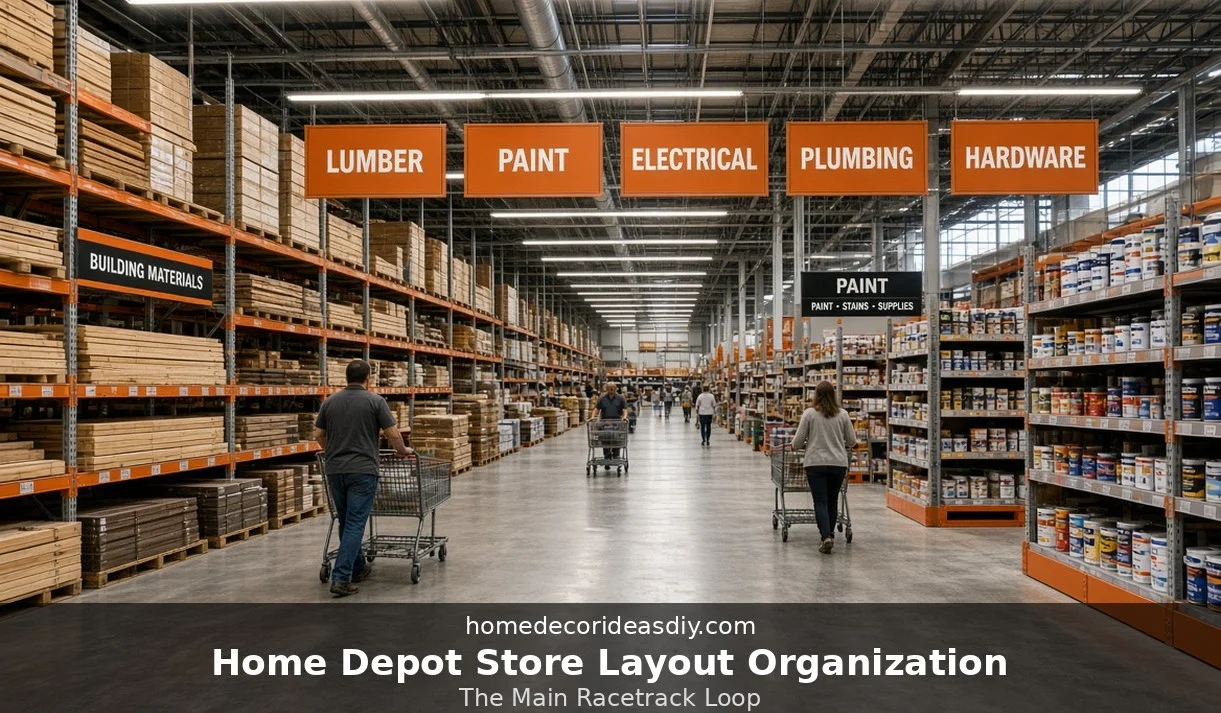
Most big-box stores use a racetrack design, and Home Depot’s floor plan is a textbook example. One wide main aisle runs around the store, and the narrower aisles branch off it like spokes. Carts and forklifts can pass each other, and you pass a lot of product on the way to the one thing you came for, which can be clever or irritating, depending on your mood.
When I’m lost, I stop pushing deeper into the aisles and go back to the wide loop. Follow it, read the overhead signs, pick the department, then turn in. Honestly, that’s most of the store map logic, and it works in a store I’ve never visited because no two stores are built exactly alike, but the loop idea holds.
Seasonal Stuff, Returns and Rentals Greet You at the Front
Right inside the doors you get the seasonal displays pumpkins one month, Christmas trees the next, then patio sets and fertilizer pallets when spring shows up. They move constantly, so don’t treat them as landmarks.
Customer service and returns sit near the registers and self-checkout. Tool rental is usually close to a front or side door so a big rental machine can roll straight out to your truck. Plenty of stores skip the rental center entirely, and I’ve seen the desk in some strange corners.
Heavy Materials Go to One Side and the Pretty Stuff to the Other
Which side is which flips from store to store, so check the first overhead sign before you assume. The split itself is steady, though.
- Rough and heavy side: lumber, plywood, drywall, insulation, doors, windows, roofing
- Finish side: lighting, ceiling fans, kitchen and bath, blinds, flooring, appliances
Paint is basically its own destination, with a desk and a color-matching machine, and where it lands changes a lot. I’ve never worked out why.
Hardware, Tools, Electrical and Plumbing Fill the Middle

The center of Home Depot is where most repair projects happen. Hardware is the little drawers and bins of loose bolts, washers, and screws. Tools take up a big block next to that, with the pricey stuff behind locked cases or glass.
Electrical and plumbing tend to neighbor each other since many jobs need both, which is handy when you realize halfway through that the fitting you bought is wrong. Bring the old part with you. Hold it against the bin, match the thread, leave. I learned that after three trips for a single compression fitting.
Lumber, the Pro Desk and Garden Supplies Hug the Edges
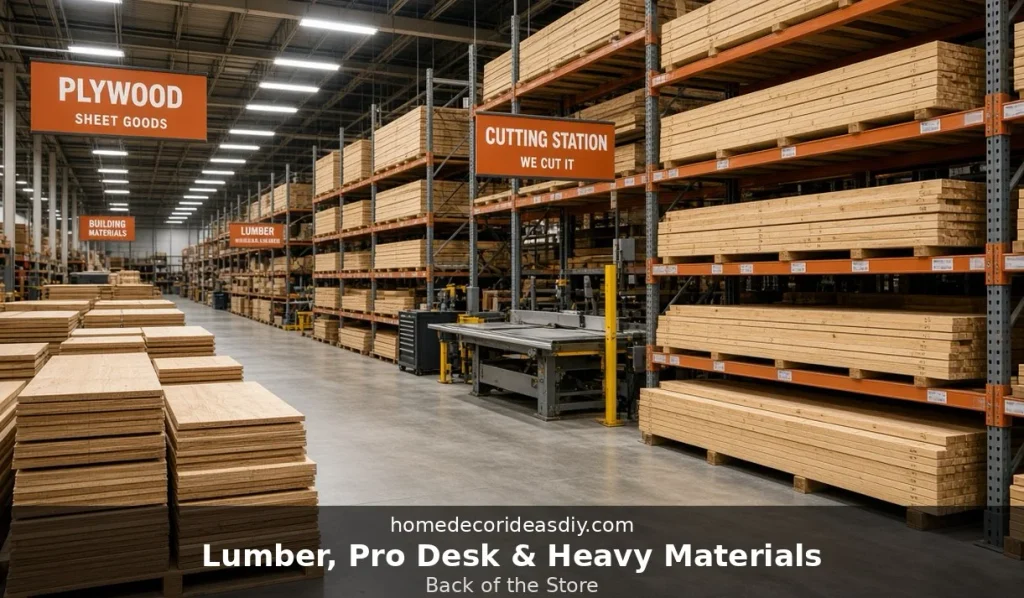
Heavy stock tends to live near the back, which makes sense when pallets come in through the rear dock. Full sheets of plywood, long boards, and the lumber cutting station are all over there. The Pro Desk is usually on that contractor side and handles bulk orders, quotes, and deliveries, so if you’re buying a lot, it’s worth a conversation.
The garden center sits on the outer edge, often with its own doors, and has soil, mulch, pavers, and plants. For an outdoor job, I start there and load up before I even touch the aisles.
Aisle Number Plus Bay Number Works Like a Street Address

The Home Depot aisle and bay system is simple once it clicks. The aisle is the street and the bay is the house number. A bay is a vertical section of shelving between two uprights, and you’ll see the numbers posted as you walk. Big overhead signs at the end of each aisle show the aisle number, and after two or three bays you can tell which way the numbers climb.
Bay numbers tell you how far along the aisle to go. Shelf height tells you the rest, and heavier things like bagged cement mix and big boxes usually sit low.
Small history thing, a former merchandising executive says Home Depot deliberately had no aisle numbers for its first 20 years. Hard to imagine with that many items.
What’s all that stuff stacked up high? Overhead racking holds backstock that refills the shelves below. Things at reach height are active stock. If a shelf is empty but the item shows as in stock, look up, then find an associate with a lift. Please don’t climb the racks.
The App Beats Wandering Every Time
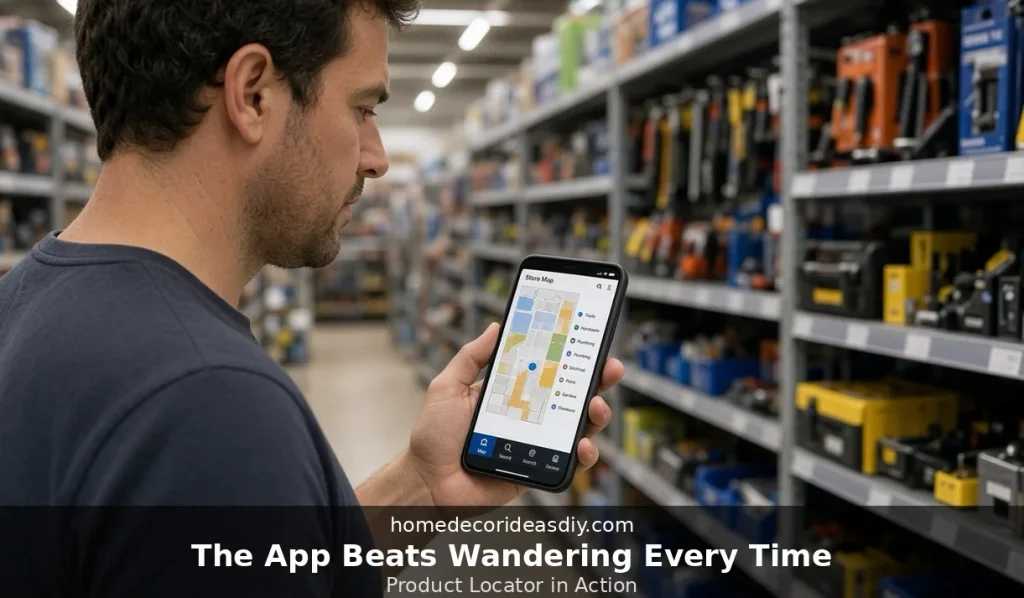
This is my favorite hardware store shopping tip. Open the app, pick your store, choose a product, tap the map, and the Product Locator guides you to the exact aisle and bay. It also shows stock before you leave the driveway.
There’s also an AI helper called Magic Apron, live in all U.S. stores and opened in the app or by scanning a QR code on in-store signage. I use it mostly for compatibility questions when nobody’s around.
Tell Associates the Project, Not Only the Item
“Where’s the tape?” gets you a pause, because there are about nine kinds. “I’m patching a hole in drywall” gets you joint compound, mesh tape, and the right knife. Associates are much faster when they know the job. It also saves you the second trip.
Clearance Is Hidden, and End Caps Are Ads
End caps, the displays at the end of an aisle, are where the store puts what it wants you to notice. Sometimes it’s a deal, sometimes it’s a stack of boxes with a loud sign. Check the price against the regular shelf tag.
Clearance location changes by store, so ask someone where it goes. The paint desk is worth a glance too, since mistinted “oops” cans get discounted.
Go on a Weekday Morning and Bring a Sorted List
In my experience, contractors crowd in at opening and weekends fill up fast, so mid-morning on a weekday is calm. Late evening works as well.
Sort your list by department in loop order, take a photo of the part or the measurements, and check stock in the app before you drive over. Lumber and appliances especially.
Walk the Loop Before You Dive Into an Aisle
Follow the wide aisle, remember that heavy materials and finish items sit on opposite sides, and read the aisle and bay like an address. Next trip, pick the department you dread most and walk it with the Product Locator open. I still lose ten minutes in the lighting section every time, because ceiling fans are weirdly absorbing.