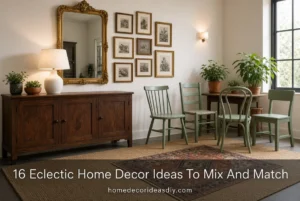
I walked into my first real US decor market about eight years back. Warehouse outside Philly. Smelled like old wood and someone’s grandmother’s perfume, not in a bad way, just… you know. I had twenty bucks, no plan, and this vague itch that I needed “something for the wall.” Walked out with a brass desk lamp that didn’t even work, a pile of mismatched frames, and the start of an obsession I still haven’t kicked.
That’s the thing about US decor markets, really. They don’t sell you a finished room in a bag. They sell you possibilities. Usually buried under dust. Usually priced low enough that ruining one doesn’t wreck your whole weekend. And if you’re reading this site? You’re probably already wired that way. You’d rather grab some sandpaper and fix a chair than buy one that’s already beige. Markets feed that itch.
What Even Counts as a US Décor Market?
People hear “market” and picture this cute row of stalls with matching tablecloths and artisan candles. Some are like that. Most? Not even close. The good ones are organized chaos estate sales in some guy’s basement, flea markets in fairground lots, thrift stores where the treasure sits on a shelf next to a VHS of Jurassic Park.
Best stuff I’ve found was in the messiest places. Carved wooden mirror at a church rummage in Ohio. Ironstone bowls at a farm auction in Vermont where I was literally the youngest person by thirty years. The American home decor markets that stick with you don’t look like magazine spreads. They look like work because they are.
The Markets That Actually Give You Something
I’m not listing every flea market in the country. Google exists. But a few types of US decor markets beat scrolling through overpriced online listings every time.
Estate sales in older neighbourhoods. Hands down the most reliable source for furniture that’s already survived forty years and will survive forty more if you spend one afternoon on it. Check estatesales.net. Or — and I’m serious — your local paper. Old sellers still list there. The online crowd misses half the good stuff because they’re too busy refreshing Facebook.
Big flea markets with mixed vendors. Brimfield in Massachusetts. The Rose Bowl in California. Overwhelming? Absolutely. Worth it? Also absolutely. Go early. Wear shoes you don’t care about. Bring cash. First hour is dealers selling to dealers. Last hour is when prices drop, and you can actually afford the thing you’ve been eyeing.
Small-town thrift stores outside the city. Everyone hits the downtown Goodwill. Nobody drives twenty minutes past the suburbs to the strip mall location. That’s where the good lamps are. I found a ceramic vase in Indiana last spring — it sits on my mantel now and gets more comments than anything else I own. If you want a showpiece for home decor that didn’t come from a chain store with three thousand identical copies? Start here.
What to Grab and What to Leave
After enough bad purchases, you start developing a gut feeling. Here’s mine.
- Solid wood. Always: Pressboard from 1987 isn’t vintage it’s landfill that thinks it’s special. Knock on it. Pick it up. If it weighs more than it looks like it should? Good sign.
- Frames with good bones: People see ornate gold frames and think “tacky.” Then they price a new frame, and suddenly that gold doesn’t look so bad. Strip the finish, paint it matte black or leave it raw, throw in some art. I went deeper on this when I wrote about styling antique home decor the same logic applies to market finds.
- Ceramics with heft: Cheap stuff feels hollow. Good stuff feels like it could stop a door. Chips on the bottom? Who cares. Cracks through the body? Leave it.
- Lamps with weird shapes: Wiring’s a fifteen-minute fix. Shape isn’t. A ceramic base with an ugly shade is one trip to the store away from being the best light in your house.
Now walk past anything that “just needs a little glue” on a joint that actually holds weight. Walk past upholstered stuff that smells like mildew, because that smell? It doesn’t leave. Ever. And walk past anything you’re buying just because it’s cheap. Cheap clutter is still clutter. I learned that one the hard way with a box of “vintage” mason jars I didn’t need. Still have them. Still don’t need them.
How to Pay Less Without Being a Jerk About It
Haggling at US decor markets isn’t like some movie bazaar. Nobody wants drama. But almost every vendor at a flea market or estate sale has padded their price a little, and they know you’re going to ask.
My move is simple: pick it up, actually look at it, and say, “What’s your best price on this?” Not “Will you take less?” Not pointing out flaws like you’re doing an inspection. Just ask. Most times they knock ten, maybe twenty percent off. No theatre. If they don’t budge and you still want it? Pay the sticker. Some things are already fair. Don’t be the person arguing over three dollars. You’re not there to win. You’re there to go home with something good.
Cash helps. Buying two things from the same person helps. And not being a pain helps more than both of those combined.
What Happens Once You Get It Home
This is the fun part. The market’s just the hunt. The work? That’s where the piece becomes yours.
That brass lamp from Philly? Rewired it in an afternoon with a twelve-dollar kit from the hardware store. Still on my desk. Seven years now. I sanded the mismatched frames, painted them the same off-white, and filled them with free botanical prints I found online. The whole wall cost less than one framed print from Target.
That’s what US décor markets are actually selling. Not finished products. Starting points. A good find, a free weekend, and the willingness to mess it up once that’s how every room I actually like came together.
If you’re new to this? Start small. One frame. One vase. One wooden box. Build your confidence on something that doesn’t matter much, then work up. I’ve repainted dressers, reupholstered stools, turned old windows into mirrors all from market finds and not one was perfect the first time. That’s not the point. The point is that it’s yours.
US Decor Markets and the DIY Thing
Here’s what I think US décor markets offer that big box stores never will: they make you decide. When every shelf has the same three colours and same four styles, you don’t think. You pick the least boring option. Markets make you look at something weird, something beat up, something with zero instructions, and figure out if you can see the finished version.
Sometimes you can’t. Fine. Put it down. Keep walking. But when you do when you look at a scratched sideboard and see it navy with brass handles — that’s when this whole thing gets fun. That’s when you’re not just decorating. You’re making something.
Best rooms I’ve ever been in weren’t bought in one afternoon from a catalogue. You pieced them together slowly, from places that smelled like old wood and someone’s grandmother’s perfume. The mistakes are part of it. The bad purchases teach you what to skip. And the good ones the ones you fixed yourself stick around longer than anything you clicked “add to cart” on.
So find a market this weekend. Bring cash. Bring patience. Fold your car seats down. You probably won’t find what you were looking for. You’ll find something better.