My last apartment had a “no nails, no exceptions” clause buried on page four of the lease, and I found that out the hard way when my landlord pointed at a single pinhole above my desk during move-out and knocked forty dollars off my deposit. Forty dollars for a hole smaller than a pencil tip. That’s the reality of renting: the walls belong to somebody else, and every picture frame you hang is a small negotiation with that fact.
Renter friendly wall decor exists because of that exact problem. It’s decor built around the assumption that you’re leaving eventually, sometimes in eight months, sometimes in three years, and the wall needs to look the same underneath whatever you put on it. That doesn’t mean boring. It means being a little smarter about how things stick, hang, or lean.
Command strips hold more than people think
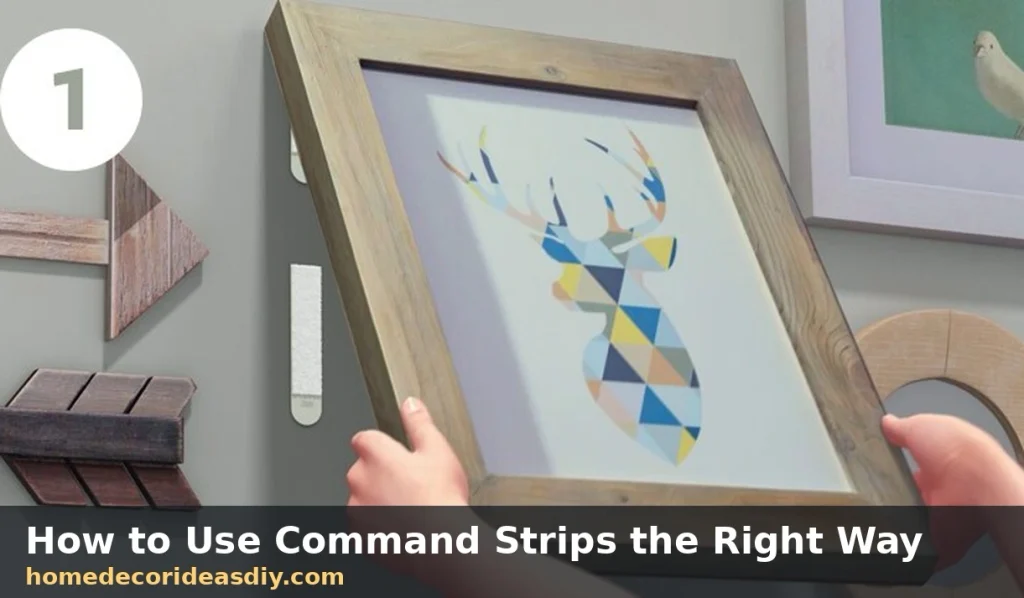
Command strips get recommended so often they’ve become background noise, which is a shame because most people use them wrong. The failure point isn’t the adhesive; it’s weight distribution. A single medium strip rated for three pounds will absolutely fail under a four-pound framed print if it’s the only thing holding the frame up. Use two strips instead of one, stagger them vertically rather than side by side, and press each strip for the full thirty seconds the packaging tells you to (nobody does this; everybody should).
The trick that actually changes the outcome: apply the strip to the wall first, let it sit for a minute, then attach the frame. Doing it the other way around sticking the strip to the frame, then pressing the whole thing to the wall is how most command strip failures happen, because the adhesive never gets full contact with the paint.
They work on textured walls too, just not the heavily stippled kind. Smooth eggshell or satin paint, they’re solid. Rough orange-peel texture, expect maybe 60% of the rated weight capacity, if that.
Leaning art skips the hanging problem entirely.
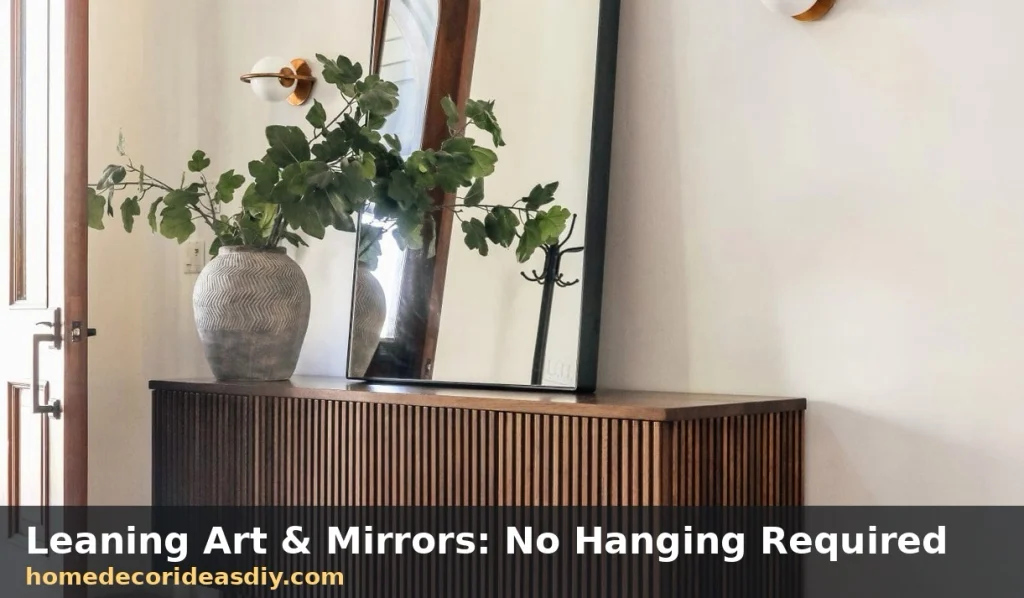
Sometimes the smartest renter-friendly decor idea is refusing to hang anything at all. A large framed print or mirror leaned against the wall behind a console table, a dresser, or even just stacked on the floor with a chair beside it does something hanging can’t: it looks intentional and casual at the same time, like you just haven’t gotten around to hanging it yet, except you have no intention of ever hanging it.
This works best with:
- Oversized mirrors (also visually expands a small room, which most rentals need)
- Framed textile or fabric art, since fabric doesn’t need glass and won’t crack if it slides.
- A stack of two or three smaller frames layered front to back for depth.
The one thing to watch is stability near kids or pets. A leaned mirror against a wall with nothing anchoring the base can tip forward if bumped hard enough, so anchor the bottom edge with a thin strip of museum putty if that’s a concern in your place.
Removable wallpaper for one wall, not the whole room
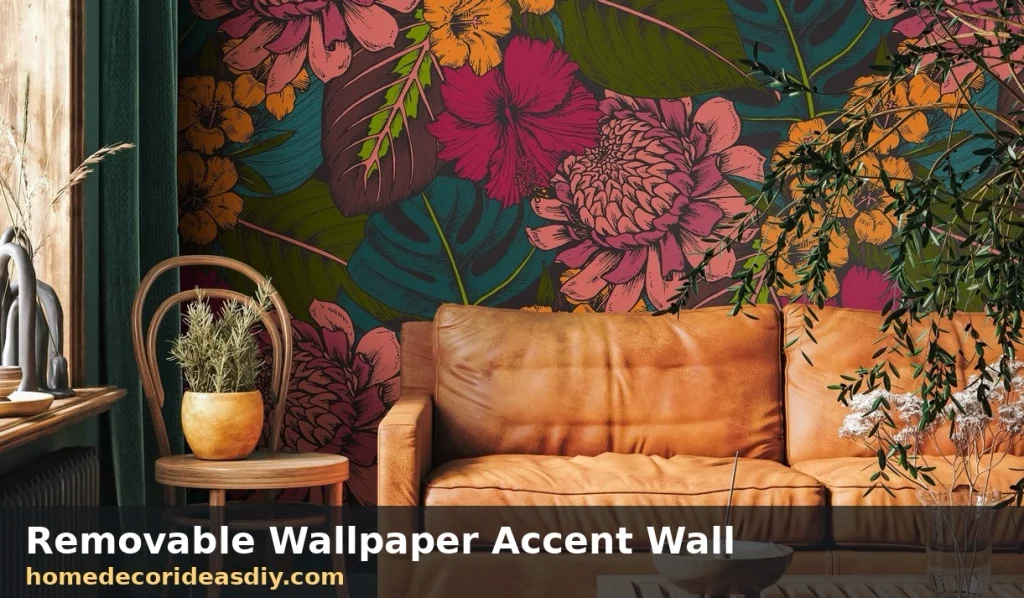
Peel-and-stick wallpaper has gotten dramatically better in the last few years; the early versions from a decade ago left ghost outlines and sometimes took paint off with them. Current versions from brands like Tarpaper and Spoonflower use a different adhesive backing that’s designed to release cleanly even after eighteen months on the wall.
One wall is almost always the right call over four. A full-room application of patterned removable wallpaper takes longer to install correctly (air bubbles multiply with every extra panel), costs more, and is harder to remove without a helper when you eventually move. An accent wall behind a bed or a sofa gives you the visual payoff without the labor.
Test a small piece in a low-visibility spot first, behind a door, inside a closet and leave it for 48 hours before committing to the whole wall. Some paint finishes, particularly newer low-VOC paints, cure differently and can react unpredictably with adhesive backing.
Gallery walls without measuring tape or nail holes
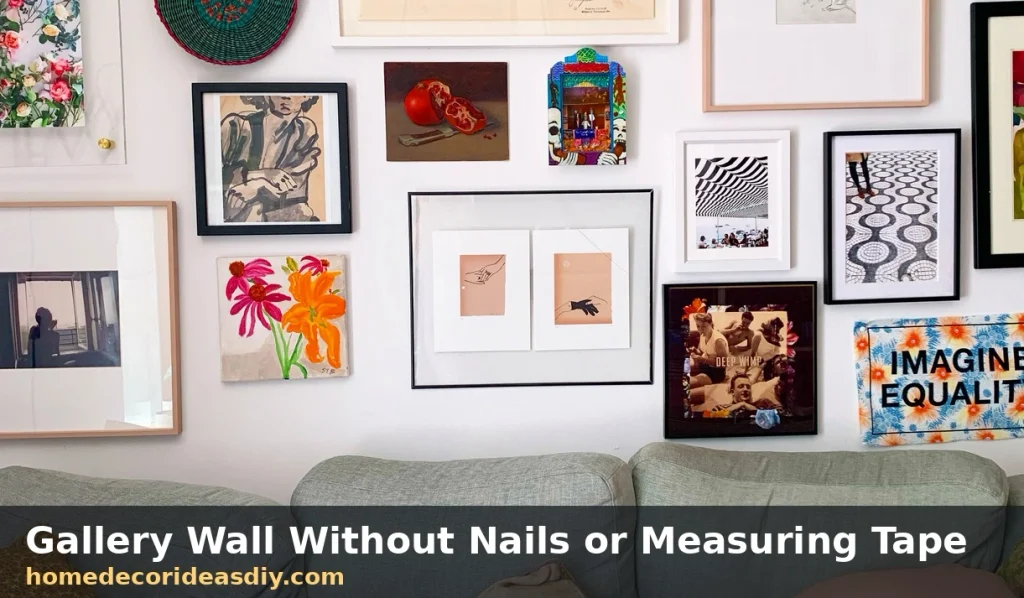
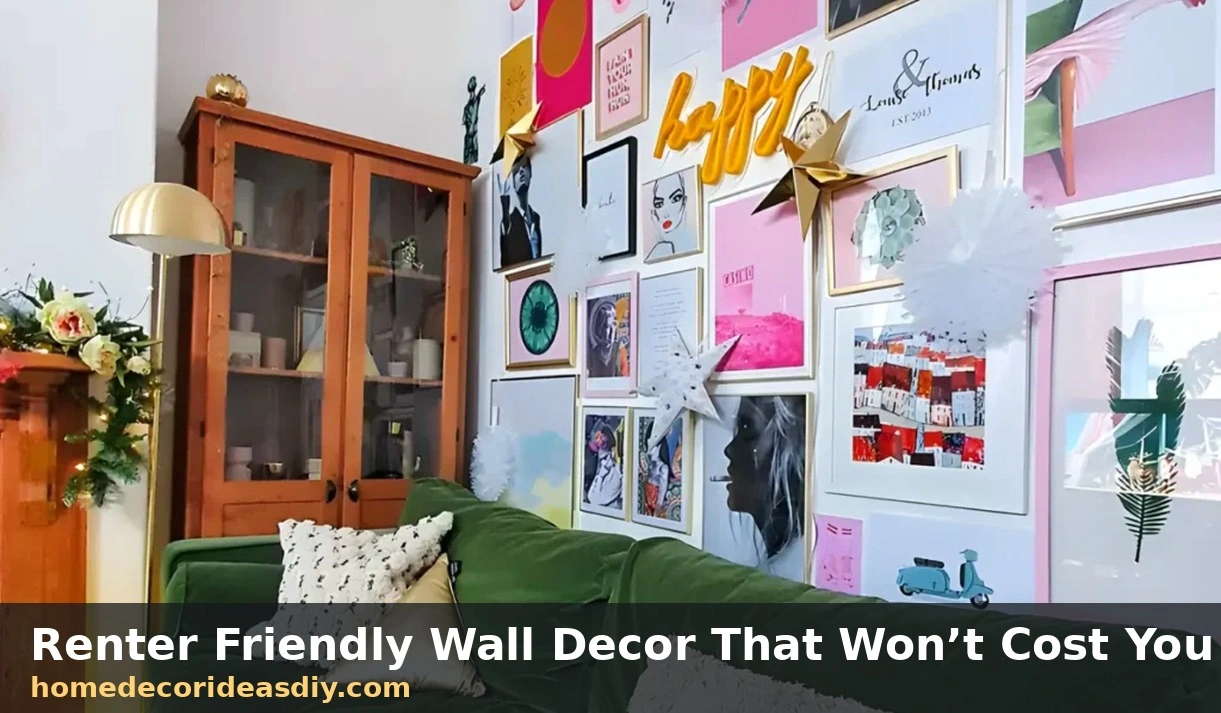
A gallery wall sounds like it demands precision-level lines, matched spacing, the whole geometric grid look. It doesn’t. Some of the best gallery walls I’ve seen in rentals are deliberately uneven, mixing frame sizes and leaving irregular gaps, because irregular reads as curated rather than “I couldn’t get this straight.”
Command strip hanging systems made specifically for gallery walls (the kind with a small level built into the packaging) solve the biggest headache: committing to a hole before you know whether the spacing works. Lay everything out on the floor first in the shape you want, take a photo from above with your phone, then transfer that layout to the wall one strip at a time using the photo as your map.
Skip glass-front frames for anything above a bed or a sofa where someone’s head could end up near it; command strips fail more often under vibration (a headboard knocking against the wall, for instance) than under static weight.
Tension rods do more than hold curtains.
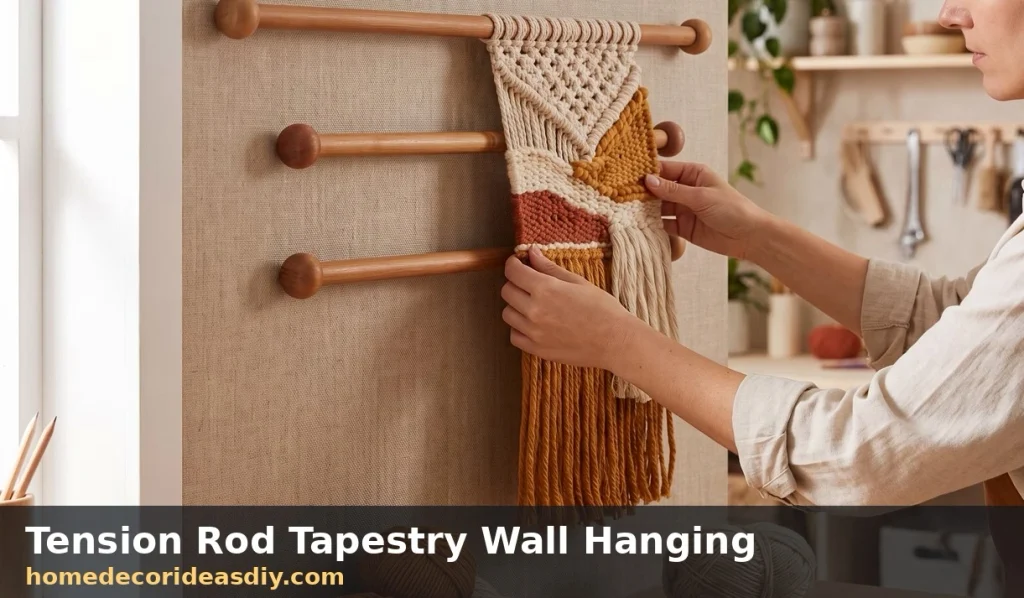
A tension rod wedged between two walls, or across an alcove, can hold a lightweight tapestry, a woven wall hanging, or even a rotating display of kids’ artwork clipped on with small binder clips. No hardware touches the wall. This is the option landlords never object to, because nothing was installed.
The weight limit matters here too. Most tension rods top out around fifteen pounds before they start to sag or slip, which is plenty for fabric but not for anything with a wood frame or glass.
What I’d actually tell a friend moving into their first renter friendly wall decor
Skip buying a dozen different products before you know your walls. Paint texture, wall material (drywall behaves differently than plaster, which a lot of older buildings still have), and your landlord’s actual tolerance for small holes vary enough that a one-size answer doesn’t exist. Buy a small pack of Command strips, test one spot, and build out from there. Renter friendly wall decor is less about finding the perfect product and more about not committing before you’ve tested it on your specific walls; the eggshell paint in one building behaves nothing like the flat paint in another.
If you’re working with a small apartment on top of the no-nails problem, our guide on small-space decorating tricks has a few layout ideas that pair well with leaned mirrors. And if the gallery wall idea appeals to you but you want more layout options before committing, the DIY gallery wall breakdown goes deeper into spacing and frame mixing than I have room for here.