Most rooms that feel wrong don’t need another throw pillow. They need a different bulb. Maybe a bigger rug too, and the sofa dragged a foot off the wall.
That’s the unglamorous part of any decor home project, and people skip it because a cart full of cushions is more fun than reading Kelvin numbers on a bulb box. Do it anyway. Light, then layout, then fabric, and the little stuff goes last.
Decor home planning is mostly light, scale and texture.
Paint gets all the attention. It usually matters less than you’d think.
What makes a room look finished comes down to a handful of things:
- the light, how warm it is and how many places it’s coming from
- whether the rug, curtains and art are sized for the room or for whatever was on sale
- texture, the most underrated of the lot, because a beige room with linen, wool and some wood grain looks fine, and a beige room that’s all polyester looks like a rental
The 60-30-10 split, loosely
The old designer rule goes sixty percent main color, thirty secondary, ten accent. Walls and a big rug take the sixty. Sofa and curtains, the thirty.
Nobody measures it. Handy when a room feels flat, though, since the missing piece is almost always the ten.
Refresh one room in this order.
Most decor home advice starts at the shopping stage. This starts earlier.
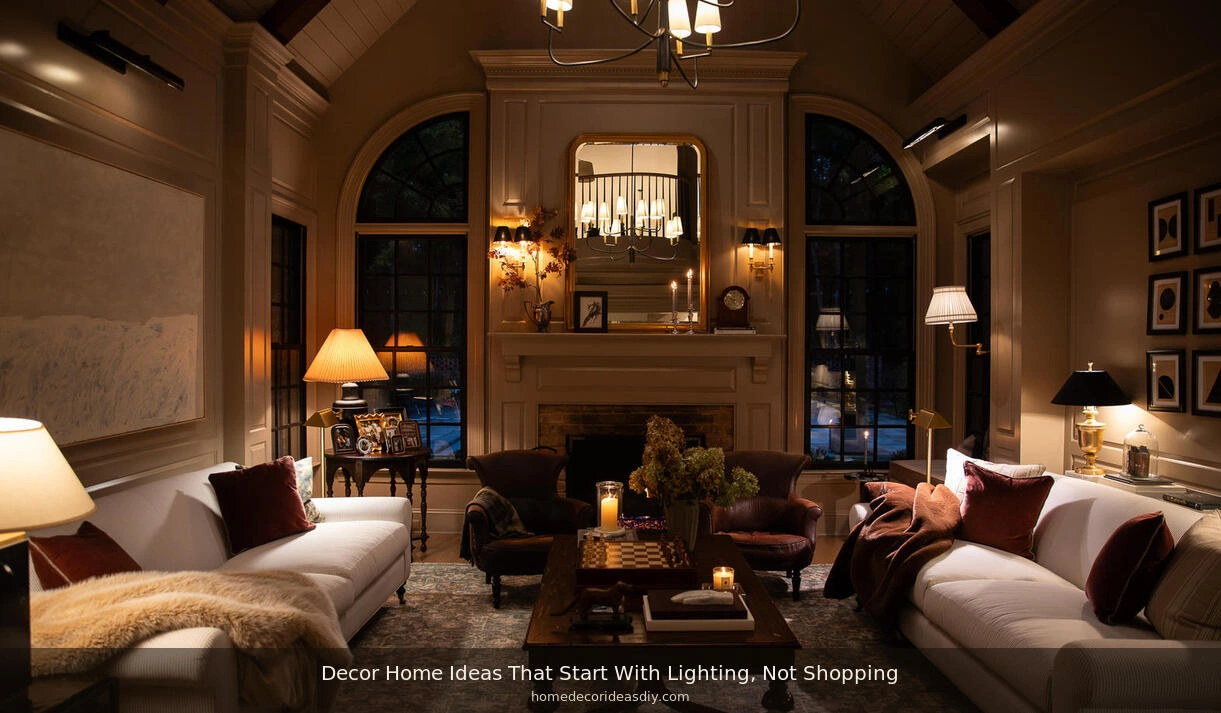
- Bulbs. Anything labeled “daylight” in a living room, swap it. Look for 2700K on the box. Cool light is fine in a garage.
- More lamps. A single overhead fixture (the dome-shaped flush mount that people online call the boob light, yes, really) lights a room like an interrogation. Put a floor lamp in one corner and a table lamp across from it and suddenly there are shadows, which is what makes a room feel cozy.
- Get the sofa off the wall. Eight inches helps.
- Rug. Bigger than you think. See the table.
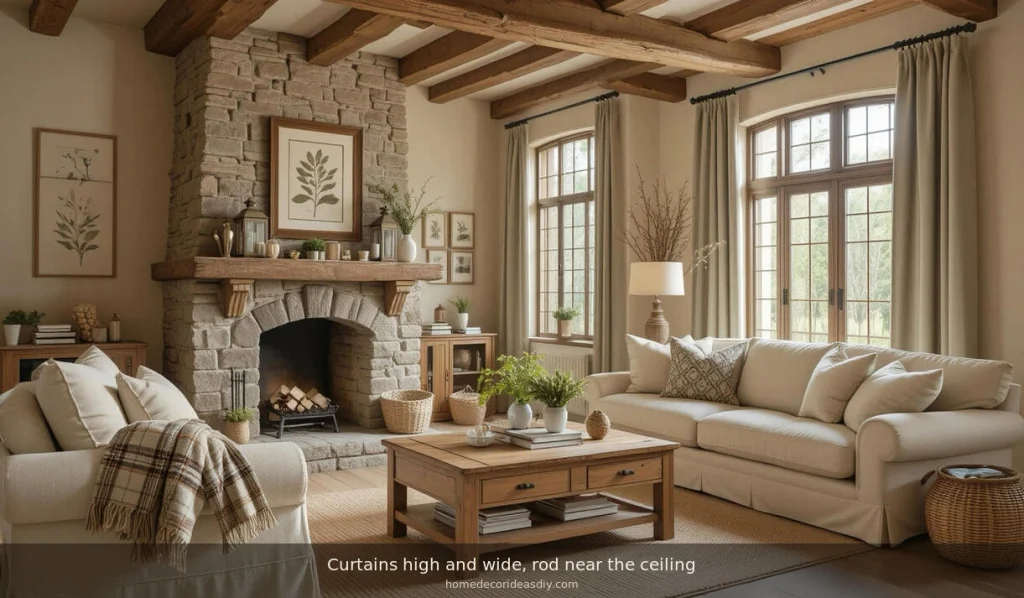
- Curtains go high and wide, the rod most of the way to the ceiling and eight to twelve inches past the frame on each side, so the panels stack on the wall and stop blocking glass.
- Art at eye level, meaning the middle of the frame sits around 57 to 60 inches off the floor. People hang it too high. Almost everyone does.
- Then pillows, throws, plants, books.
| Living room (sofa + 2 chairs) | 8×10 ft | Front legs of all seating on the rug |
| Small living room | 5×8 ft | At least the sofa’s front legs on it |
| Bedroom (queen bed) | 8×10 ft | Rug shows 18 to 24 in on each side of the bed |
| Dining room | Table + 24 in each side | Chairs stay on the rug when pulled out |
Anyone who’s posted a living room photo on a decorating subreddit has probably seen the top comment already: rug’s too small. It comes up constantly, and it’s right more often than not.
How a budget decor home ends up looking expensive
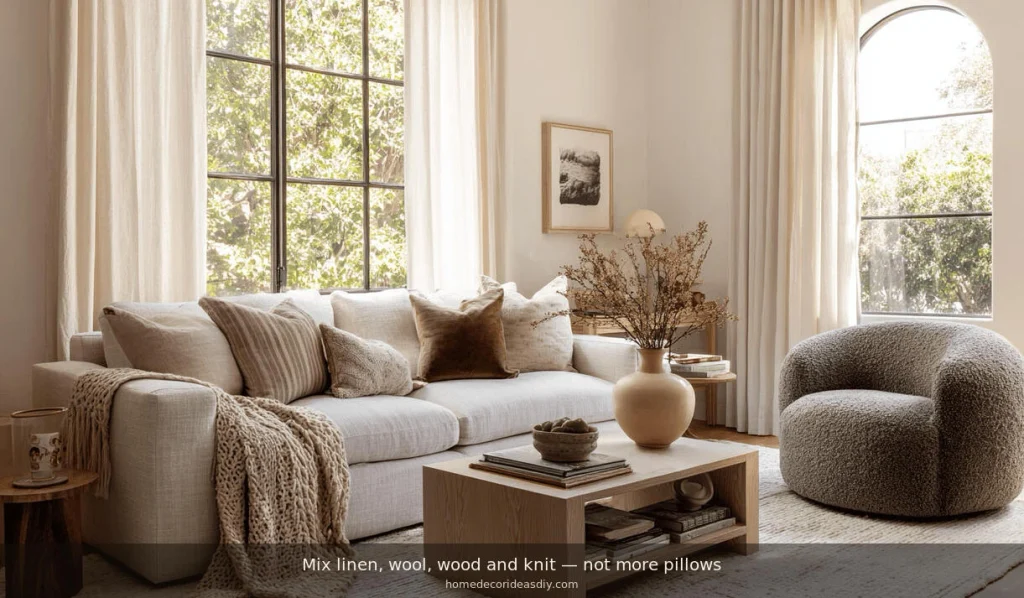
Spend on one thing. A proper wool rug or heavy lined linen curtains will do more than a shelf of eight-dollar trinkets, and you won’t be replacing it next year.
Mix textures. Bouclé chair on a jute rug, leather beside a chunky knit throw. When every surface has the same feel, the room reads like a furniture showroom, polished and a little dead.
Colors look planned when they show up at least three times. One rust cushion looks like an accident. Put rust on a book spine and somewhere in the print on the far wall and it starts to look deliberate.
Dimmers, too. Plug-in lamp dimmers are cheap, and hardly anyone bothers, which is odd given how much evening light matters.
If the budget’s close to nothing, go the DIY route and repaint a thrifted lamp base or sew envelope pillow covers from old fabric. Homedecorideasdiy.com has a stack of budget DIY decor projects that suit a slow weekend.
Small rugs and matching sets make a room look cheap.
The floating rug is the big one. A little five-by-seven in the middle of a large room, every piece of furniture orbiting it. Size up, even if that means a cheaper material.
Others worth checking:
- sofa, loveseat and armchair bought as one matching set
- curtains that stop two inches above the floor, like pants that shrank in the wash
- one small print alone on a big wall (over a sofa, art should cover roughly two-thirds of its width)
Clutter counts too. Every surface covered in small objects doesn’t read as styled. Leave a shelf half empty; it feels wrong for about a day.
FAQs
What should change first in a decor home refresh?
The lighting. Warm bulbs and at least three light sources.
Can you decorate on a small budget?
Yes. Rearranging costs nothing and bulbs cost little, so put the rest into one quality piece instead of a pile of small accessories.
How many lamps does a living room need?
Three, spread out more in a big room.
What size rug fits most living rooms?
Usually 8×10 feet, with the front legs of the sofa and chairs on it. A 5×8 only works in small rooms.
Where the lighting numbers come from
The Kelvin range isn’t a guess. The U.S. Department of Energy puts 2700 to 3600K as the usual range for indoor lighting and says warm light suits living spaces. Its page on the Lighting Facts label explains the numbers printed on bulb boxes, and ENERGY STAR pegs a 60-watt replacement at about 800 lumens.
Start with the bulbs.
Pick the room that bugs you most and change nothing but the lighting for a week. There’s a decent chance half the stuff in your cart stops looking necessary. Which room is it for you?