I still remember the first piece of Islamic home decor I ever bought. It was this massive gold Bismillah sign from Amazon, you know the type, thick faux-wood frame, glittery background, looked like it belonged in a hotel lobby in Dubai circa 2005. I hung it above our couch and stood back feeling proud. My husband walked in, looked up, and said nothing. That silence said everything. Three months later it was in the closet. We couldn’t look at it without laughing.
Here’s the thing about Islamic home decor. Everyone wants their space to feel connected to their faith. But there’s a fine line between a home that whispers peace and one that screams “I just discovered Islamic Pinterest.” I’ve been on both sides. So let me save you some money and some dignity.
Islamic Home Decor Calligraphy Trap
Walk into any Muslim home, and you’ll probably spot some Arabic calligraphy wall art. That’s not the problem. The problem is the stuff that looks like it was designed by a computer having a seizure. Gold splatter. Random geometric shapes floating around words that don’t even line up properly. I’ve seen Bismillahs that look like they were written by someone who never held a pen.
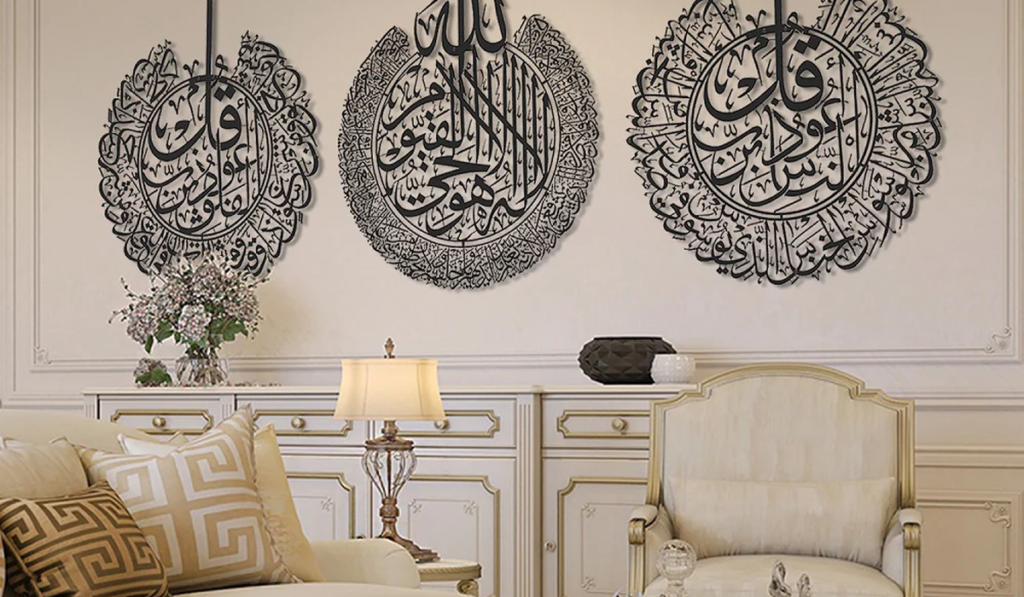
Real calligraphy has weight. The letters breathe. If you’re going to put the words of Allah on your wall, make them beautiful. Hand-painted pieces from actual artists cost more, obviously, but you don’t need ten of them. One good piece above your sofa beats five cheap canvases every time. I found a small watercolor of Surah Al-Fatiha at a local market last year. Cost me forty bucks. Guests always ask about it. The gold Bismillah in my closet? Nobody ever asked.
If you’re broke like I was in college, DIY wall art ideas can get you something personal without the factory-made vibe. Stencil some thuluth script onto a raw wood panel. Messy brushstrokes look better than machine perfection anyway.
Lighting That Doesn’t Blind Your Guests
I made another mistake last Ramadan. Bought these LED string lights that were supposed to look “warm and ambient.” Instead, our living room looked like a cyberpunk video game. My mother-in-law squinted the entire iftar. Never again.
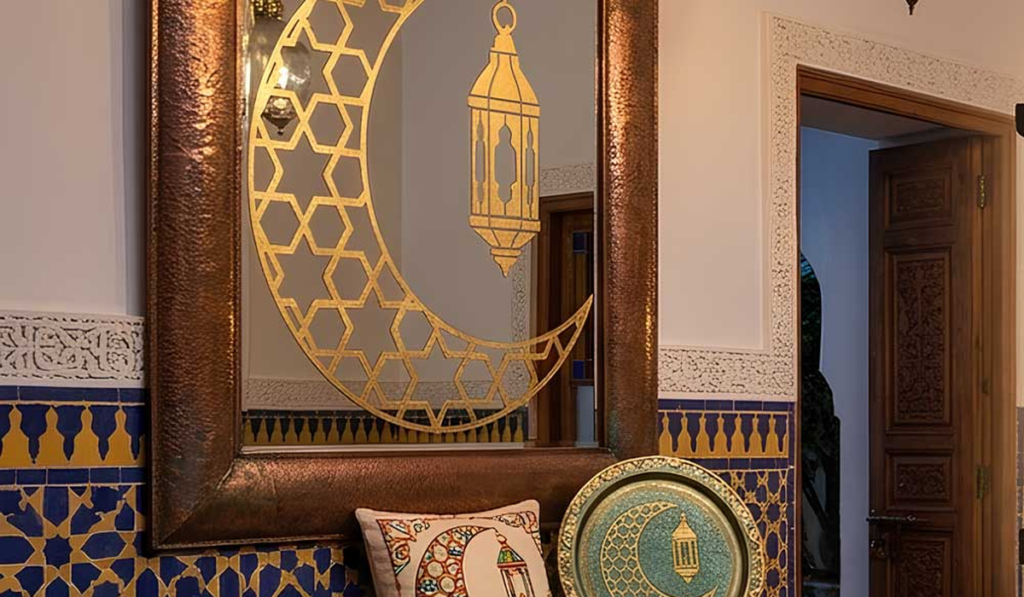
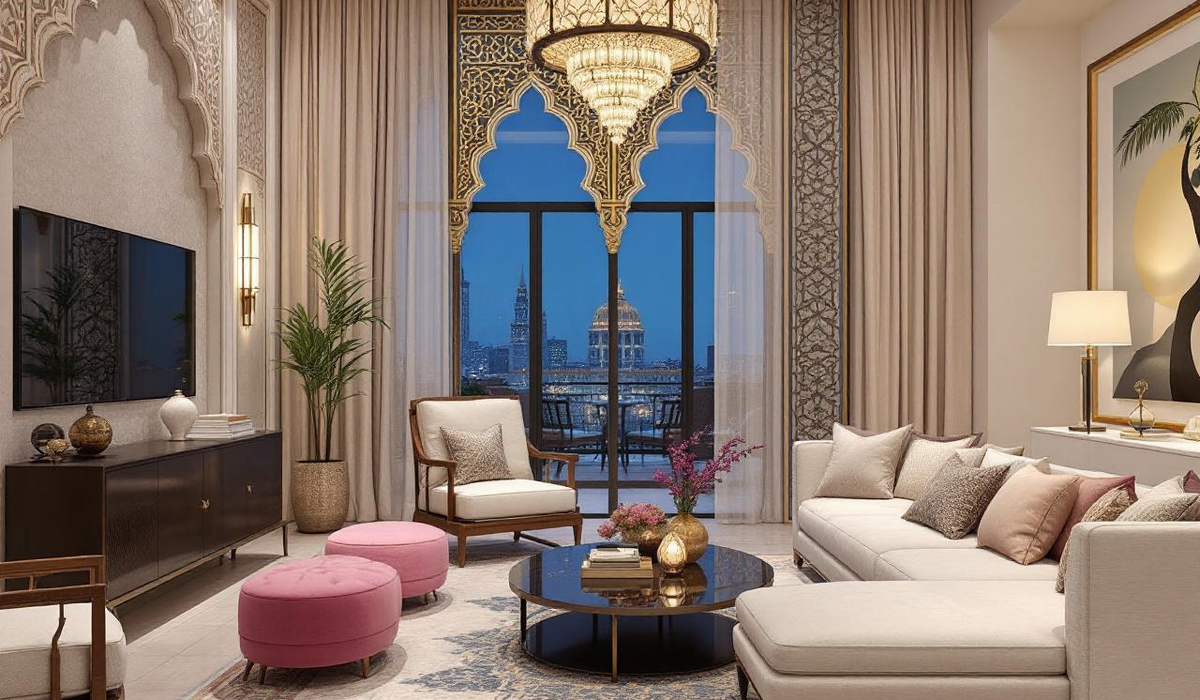
Real Moroccan lanterns — the kind with punched metalwork-cast these insane shadow patterns across your walls when the lights go down. You don’t need twenty. One decent brass pendant over your dining table or a pair of table lanterns on the coffee table does the job. During Ramadan, I swap out our regular bulbs for softer ones and put candles in glass hurricanes on the mantel. Looks festive without looking like Christmas got confused.
And please, for the love of everything, avoid overhead fluorescent lights. They make even the most expensive Muslim home design look like a dentist’s office. Floor lamps with linen shades. That’s where the magic happens.
The Prayer Corner Reality Check
When we moved into our current apartment, I envisioned a dedicated prayer room. Floor cushions. A carved wooden screen. A small fountain for the sound of running water. Then I remembered we live in a two-bedroom with a toddler. So much for that dream.
You don’t need a room. You need a corner that your brain recognizes as different from the rest of the house. I carved out a space between the bookshelf and the window. Just big enough for a prayer rug and a small floating shelf for the Quran. That’s it. No fountain. No screen. When I step onto that rug, something shifts. The laundry pile three feet away still exists, but for those ten minutes, it matters less.
If you’re dealing with a studio or sharing a bedroom, small space decorating has some genuinely clever hacks for making sacred nooks in impossible layouts. I’ve seen people use a folding screen that tucks behind a door when they’re not using it. Genius.
Rugs That Don’t Hurt Your Knees
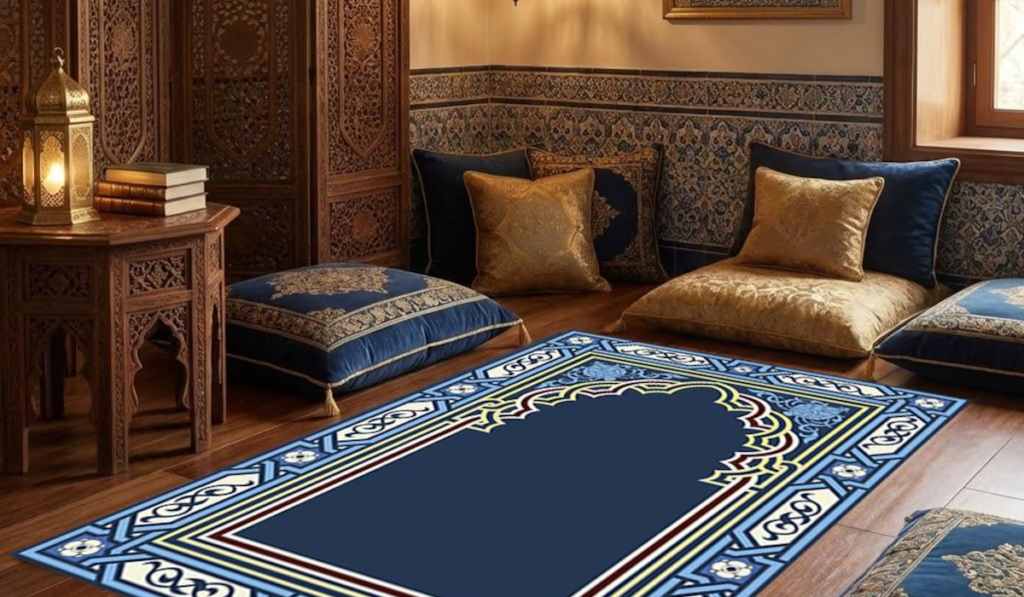
Not all prayer rugs are created equal. I had this thin Turkish one for years that felt like praying on cardboard. My knees hated me. Then I splurged on a padded Islamic geometric-pattern rug, and suddenly sujood didn’t feel like a punishment anymore.
The same goes for your living room. A good Persian-style rug with actual geometric patterns anchors the whole space. I’m talking about the real stuff-stars, interlaced polygons, the kind of math that makes your head hurt if you stare too long. These patterns aren’t just pretty. They’ve been around since the Alhambra. There’s something grounding about walking on a design people have walked on for centuries.
One statement rug beats wall-to-wall carpeting every time. And if you have kids who spill everything, as mine do, darker colors hide sins. Trust me on this.
Colors I Got Wrong So You Don’t Have To
My first attempt at minimalist Islamic decor was basically white walls, white furniture, and one black calligraphy piece. Looked great in photos. Lived like a hospital. Every fingerprint showed. Every crumb was a crisis.
Now I stick to colors that actually exist in the Muslim world. Terracotta. Deep indigo. Olive green. Warm ivory, not sterile white. These shades hide life while still feeling rich. My current living room has this sage green accent wall with cream everything else. The Quran verse decor in black script pops without trying too hard.
If you’re scared of color, start with pillows. Can’t commit to a green wall? Get a green pillow. Live with it for a month. Then decide. Budget home decor is basically built on this principle — test cheap before you invest big.
The Honest Truth
The best Muslim homes I’ve been in didn’t look decorated. They looked lived in. Books actually read. Rugs actually prayed on. Lanterns actually lit during gatherings. There’s a difference between creating a beautiful space and creating a showroom.
So start small. One piece of calligraphy that means something to you. One corner where you can bow your head without knocking over a side table. One light that makes everyone look good at iftar. The rest comes later. Or it doesn’t. Either way, your home is already blessed if you’re raising kids who know where the prayer rug lives and guests who feel calm when they walk through the door.
That’s the whole point anyway, isn’t it?