Most people searching for antique home decor don’t want a period set. They want one or two older pieces that make a normal room feel heavier and less flat without turning the sitting room into a display case.
In 2026, a true antique is generally 100 years old or more, so think 1926 and earlier. Age is the gate. Taste is separate. A cracked pressboard “farmhouse” replica from last year isn’t an antique, no matter what the tag says.
Buy less than you think you need. Check the joints before you fall for the patina. Pair one old piece with quieter modern stuff so the old thing can be seen.
What people mean when they type this
Searchers mix three words. They are not the same.
| Antique | 100+ years (1926 or earlier) | Pre-mass-particleboard construction, worn hardware, hand-cut joinery if you’re lucky |
| Vintage | about 20–99 years | Mid-century sideboard, 70s glass, 90s brass that suddenly looks good again |
| Retro | any age | New object made to look old |
Dealers, customs desks and most auction houses still use the 100-year cutoff. Christie’s treats furniture the same way. Wikipedia’s note on antique furniture is dry and useful if you want the collector definition rather than shop language antique furniture.
Age alone does not make it good. Condition, timber, joinery, and whether you will actually use it matter more than a date written on a tag.
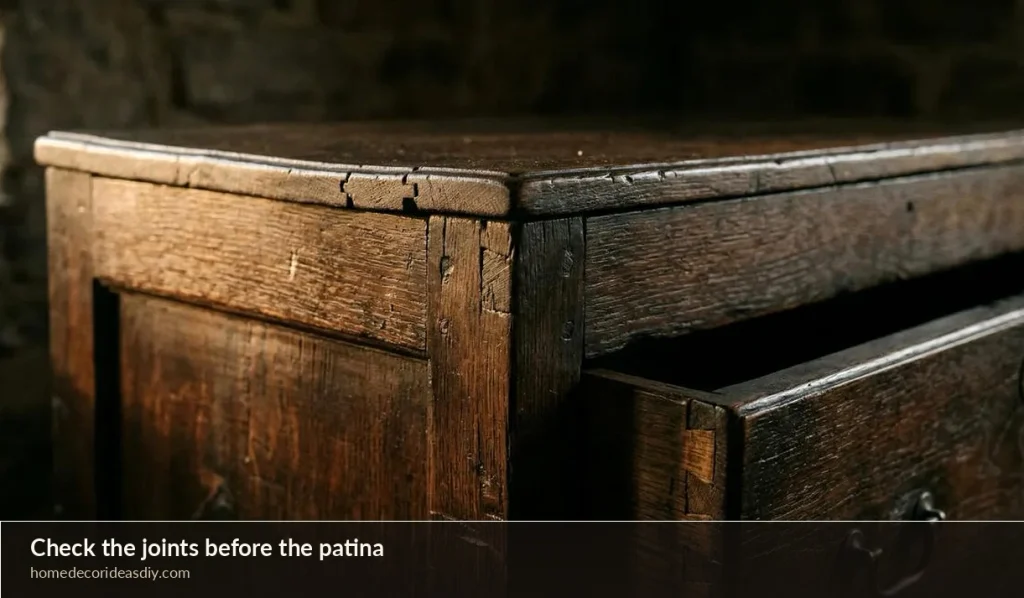
True older pieces were built before cheap board became normal. Drawers often run on wooden runners. Joints are dovetailed or pegged. Hardware is metal that has been handled for decades, not bright zinc from a blister pack.
What to pull before you spend
Walk the room first. One dark chest in a pale room does more than five matching “antique-style” accessories.
Start with things you can carry:
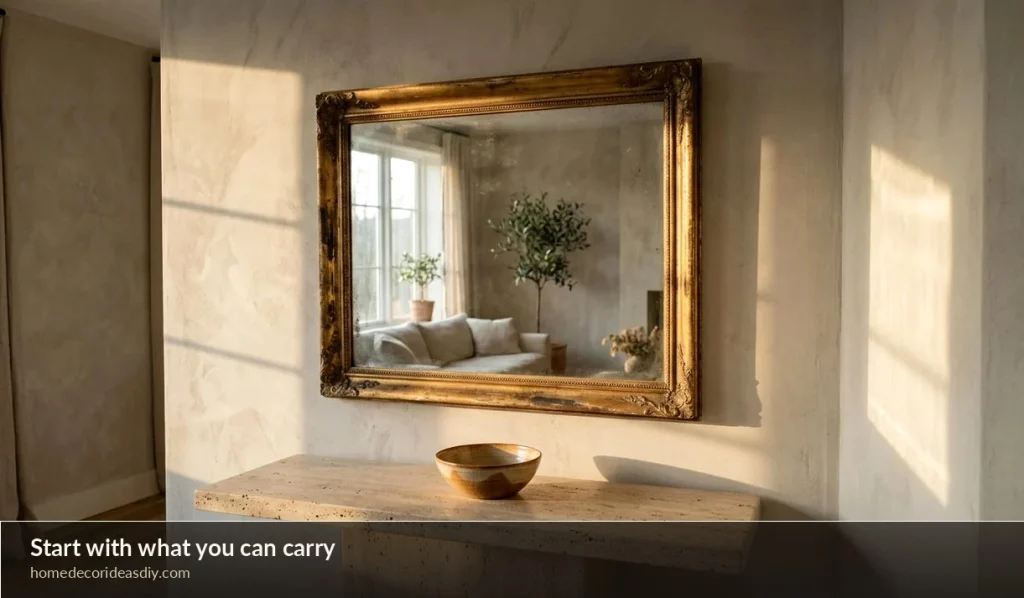
- a mirror with decent glass (frame can be ugly)
- a small table or stool with four solid legs
- a wooden box or tray
- one lamp if the flex isn’t perished
- frames keep the frame, dump the print
Leave the three-piece suit. Leave anything that smells of damp and doesn’t dry out in an hour of sun. Leave “distressed” pine that sheds grit on your jumper; that’s finish, not age.
Knock the carcass. Solid timber sounds dull and feels heavier than it looks. Hollow drum + paper-grain edge = board. Board from 1988 is not a future heirloom.
If the piece is painted and older than the late 1970s, don’t dry-sand it in the kitchen. Cheap lead test kits exist. If it pings positive, seal it with fresh paint and leave the old layers alone.
The order that actually works
- Choose the job. Coffee table, bedside, landing dump-spot, not “I liked the carving.”
- Measure the gap. An 18th-century-looking sideboard that blocks the door is just a problem with a story.
- Check structure. Wobble at the leg, split across a rail, drawers that drop walk away or budget a proper repair, not glue from a tube.
- Clean before you “restore.” Wax and dirt come off with mild soap and a barely damp cloth. Stop there more often than you think.
- Place it against something plain: white wall, simple sofa, unpatterned rug. Ornament needs quiet neighbours.
- Stop. One hero piece per sightline. Two if the room is big.
I skip gold spray on raw old wood. It reads cheap by noon light.
Rewiring old lamps is a Saturday if the kit is basic and the ceramic holder isn’t cracked. If the holder is cracked, that’s an electrician job, not a blog project.
What looks good in photos and wrong in the room
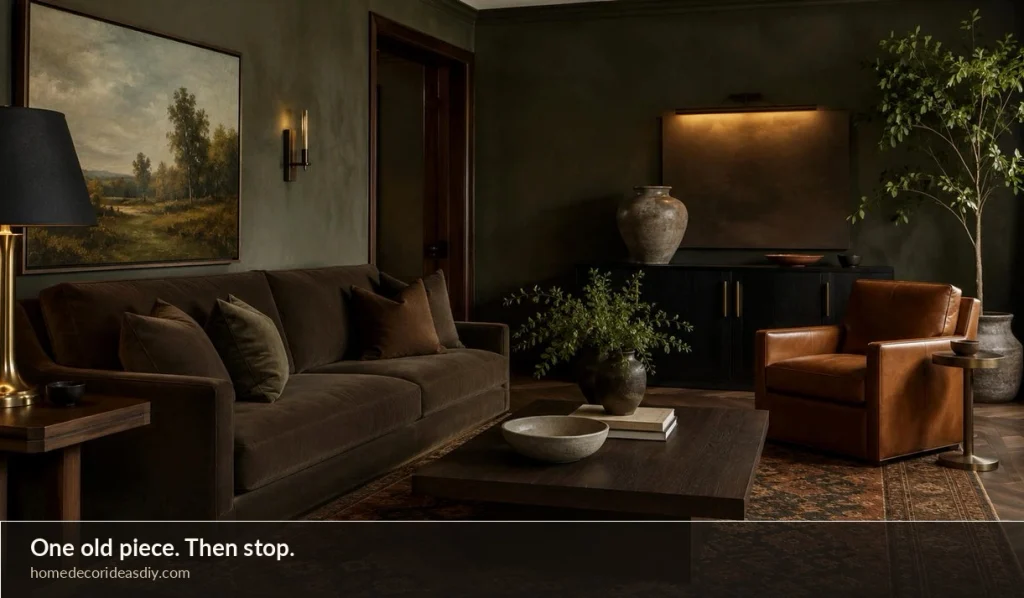
Phone photos flatten patina into “mood.” In the room, the same chest can feel like a brown block if everything else is brown.
Dark antiques need a light floor or a light wall, not both dark. A carved frame next to busy wallpaper fights. An old Persian-style rug under an old table is two histories shouting.
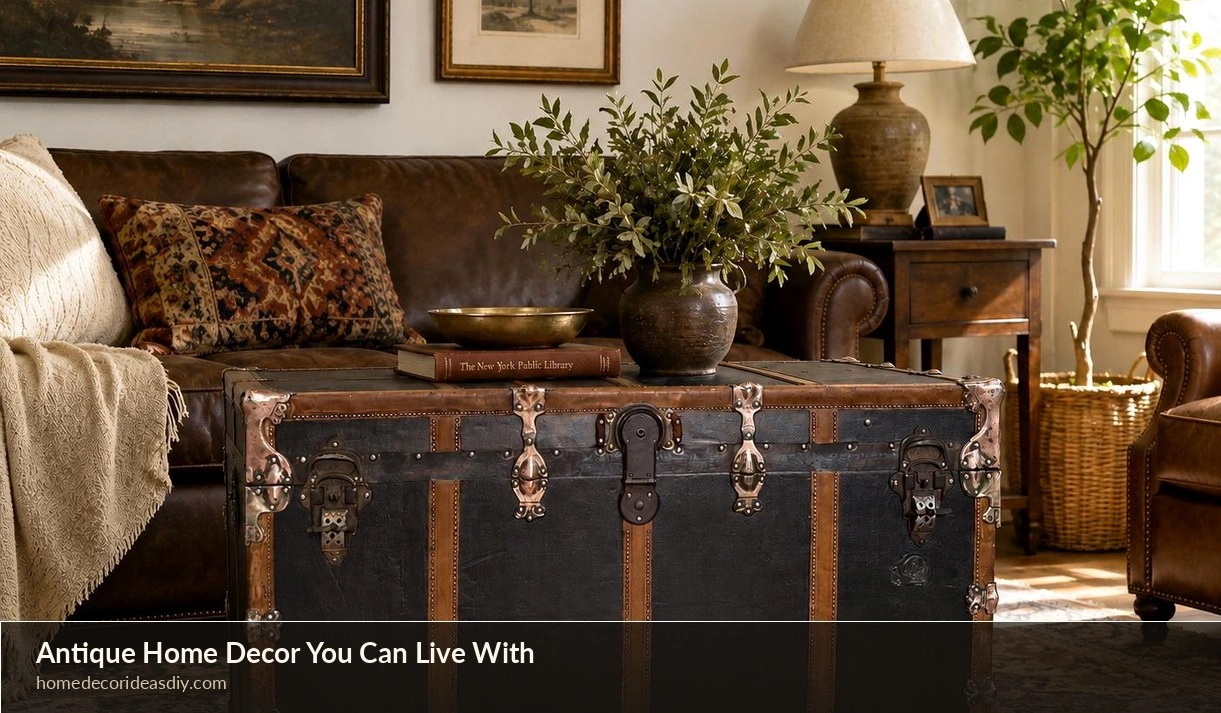
Use the piece. A trunk as a coffee table with a tray on top beats a trunk you are scared to put a mug on. Ironstone on a shelf as a vase is better than ironstone behind glass.
If you already hunt second-hand, the same eye applies as on our thrift store home decor notes buy bones, ignore the current finish, skip anything you can’t lift without regretting it on the bus.
Estate sales in older streets still beat “antique mall” pricing for ordinary domestic stuff. Markets are fine for trays and frames. Furniture wants a tape measure in your pocket.
Time and money, without fake precision
A usable small antique (stool, box, frame, tray): often the price of a takeaway if you wait.
A sound chest or table: widely ranging from a week’s groceries to a month’s rent, depending on city and timber. Oak and mahogany still cost more than pine. Pine is easier to live with in a small flat.
A botched “restoration” (stripped, stained orange, new shiny knobs): you have paid twice and lost the thing that made it worth buying.
Budget an afternoon for cleaning and placement. Budget a weekend if drawers need waxing on the runners. Don’t budget a personality transplant for the whole room in one haul.
Saturday wasting mistakes
- Buying a set so it “matches.” Matching is how rooms go dead.
- Paying for a date you can’t prove. No stamp, no consistent construction, no wear in the right places it’s a story.
- Stripping everything back to raw. Sometimes the old paint is the history.
- Filling every surface. Antiques need air around them.
- Using lemon oil like gravy. A thin coat of paste wax, once in a while, is enough for most domestic wood.
- Trusting “antique white” furniture paint to do the work. Paint can help a wreck of a frame. It cannot invent 100 years.
FAQs
How old does antique home decor have to be?
A hundred years is the working rule for furniture and most household objects. In 2026 that means 1926 or earlier. Cars and some other categories use different cutoffs, which is why shop labels get sloppy.
Can I mix antique furniture with IKEA?
Yes. That’s usually the better room. Keep the new pieces quiet: simple legs, plain fronts and let the old object carry the detail.
Is vintage the same as antique?
No. Vintage is younger: roughly twenty to ninety-nine years, and it should still look like the decade it came from. Retro can be brand new.
Should I restore a piece before I put it in the room?
Only if it’s unsafe or filthy, live with it for a week. A lot of “fixes” are just people getting nervous about marks that were the point.
Wrap-up
Pick one object that can do a job. Check it like a carpenter, not like a collector. Give it a plain backdrop and leave the rest of the room alone.
If you want the next, smaller hunt frames, lamps, pots, the stuff you can carry home, start on Home Decor Ideas DIY and work up to the heavy timber when you’ve got a wall that can take it