Most home decor ideas for living room lists open with a shopping basket. Do these seven jobs first and the basket gets a lot smaller.
The seven jobs, in order:
- Clear every surface
- Move the big furniture.
- Wash, fill, sand
- Paint the walls
- Paint the skirting and door frame.
- Sort the lighting
- Hang the mirror and art, then write your list.
1. Clear every surface
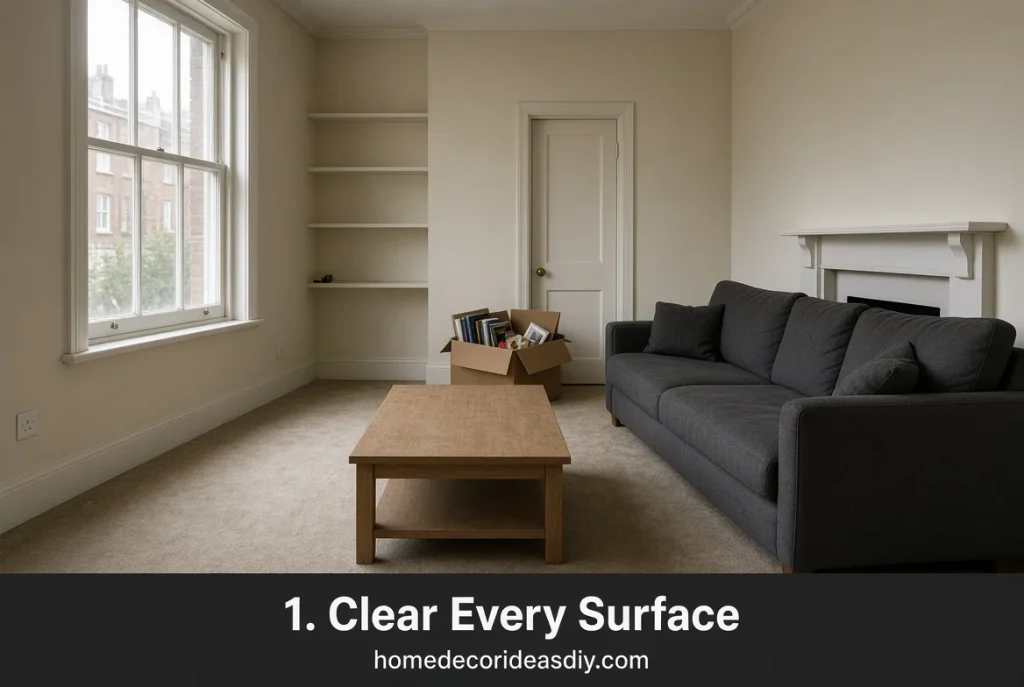
Shelves, mantelpiece, coffee table, windowsill. Put everything in one box by the door, not the loft, because about half is coming back.
You’re doing two things here. Making room to work, and finding out what the room looks like empty.
2. Move the big furniture
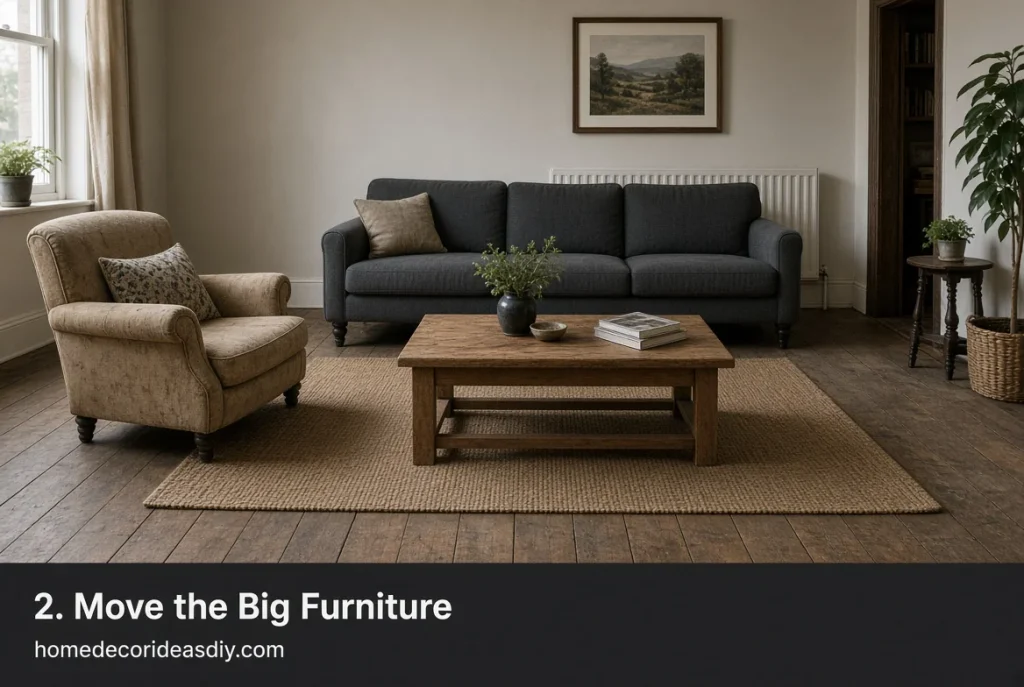
Pull the sofa 20 to 30cm off the wall. Or turn the armchair so it faces the sofa rather than the TV.
In many terraced houses, the radiator sits exactly where the sofa wants to go. If that’s your room, leave the sofa and move the chair instead.
While the furniture is out, check the rug. The front legs of the sofa and chairs should sit on it. If they don’t reach, the rug is a size too small. That’s the single most common buying mistake in a living room, and it’s worth knowing now rather than after you’ve ordered another one.
3. Wash, fill, sand
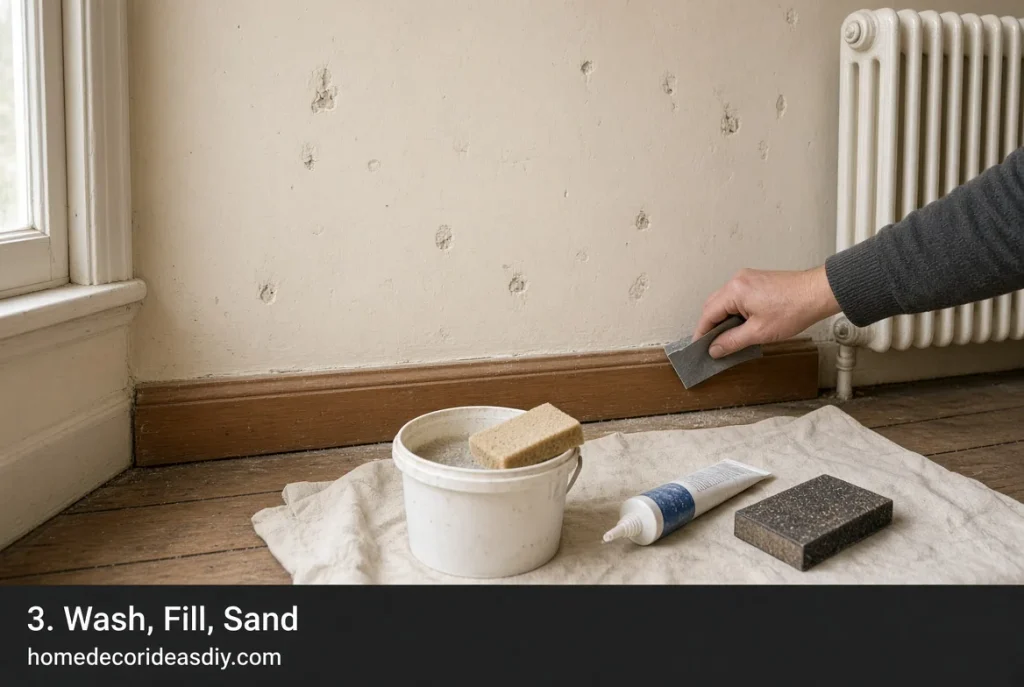
Sugar soap on the walls and skirting. Fill the old picture-hook holes, leave to dry, then sand with 120-grit paper until it’s flush. If you’re painting over gloss woodwork, rub that over too so the new coat has something to grip.
Wipe everything down with a damp cloth at the end.
One safety check before you sand anything. Lead paint can be present in nearly any pre-1960s building, usually in the old layers on skirting, doors and window boards. If your house is that age, don’t dry sand it. Cambridge City Council’s guidance on lead paint at home explains the safer method: a face mask with an EN143 P3 filter, and waterproof abrasive paper used on a moistened surface rather than dry sandpaper. SPABcambridge
4. Paint the walls
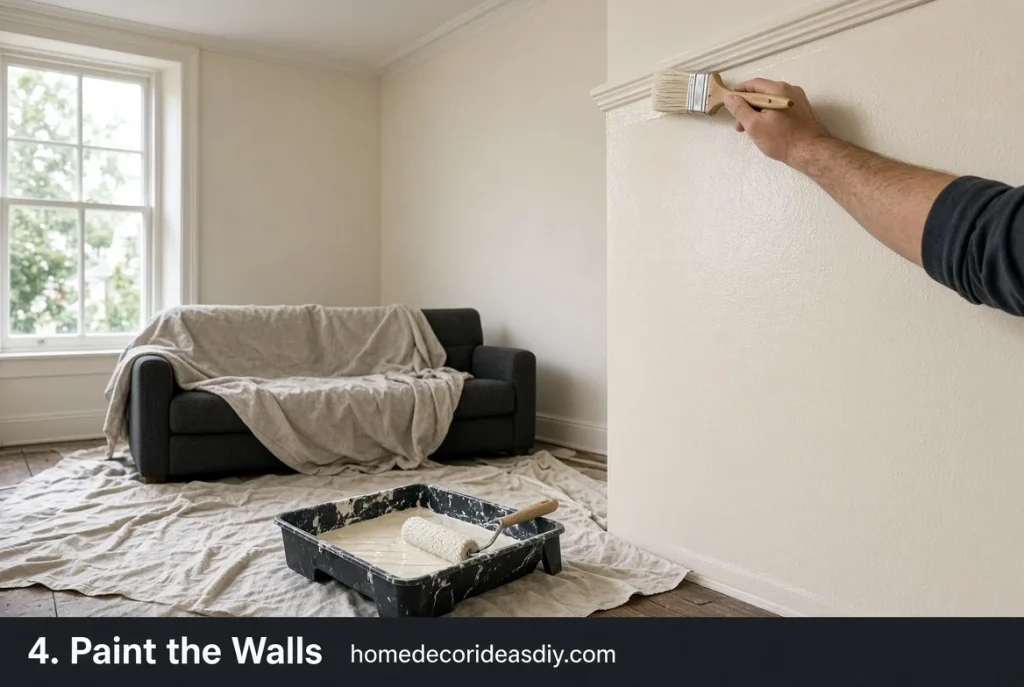
Cut in around the edges with a brush, then roller the middle. Two coats, a few hours apart.
Some decorators do woodwork first. I do walls first, because a smear of emulsion on the skirting doesn’t matter when the skirting is getting painted the next day.
Pale, warm-based colours suit most British living rooms, especially north-facing ones. Cool greys look soft in photos and go slightly blue in real daylight.
5. Paint the skirting and door frame
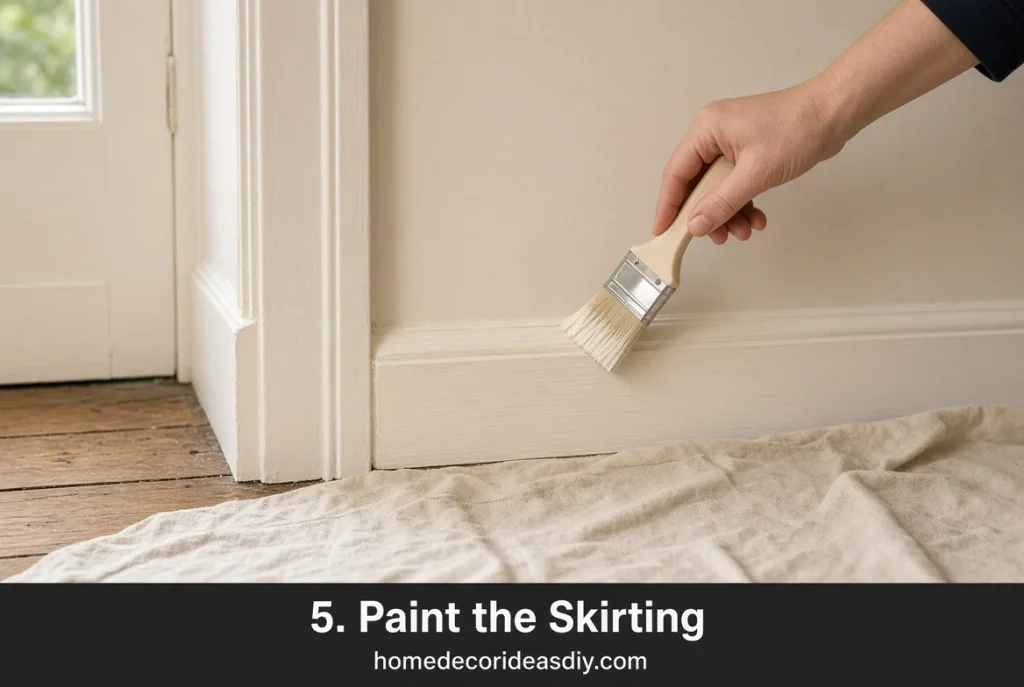
Use quick-dry satinwood, brushed on with a 1.5-inch brush, laid off in long strokes along the board.
It needs six hours between coats, so put the first coat on after breakfast and the second around teatime.
In a small living room, paint the skirting the same colour as the walls. It removes the hard line at the bottom of the room, and the walls read taller.
6. Sort the lighting
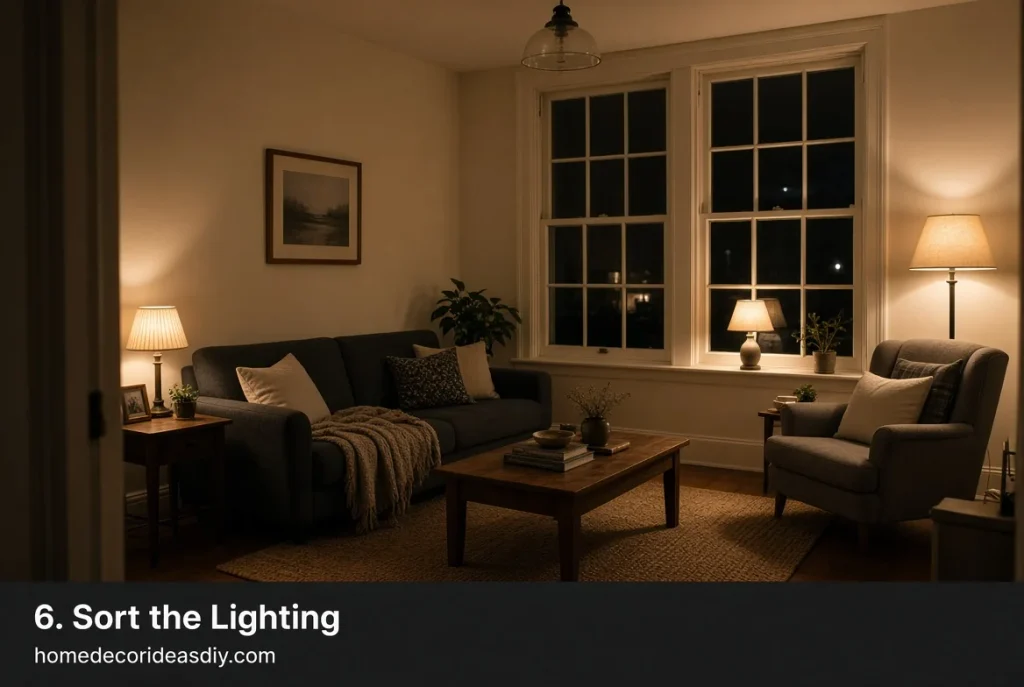
Do this bit after dark. There’s no point judging it at 2 pm.
Ceiling light off. Then:
- One lamp low, on a side table
- One on a shelf or windowsill
- One floor lamp behind the armchair
- Warm white bulbs in all of them, 2700K, printed on the box
You probably already own two of those lamps. Take them out of the bedrooms.
If the room still looks flat with three lamps on, one of them is lighting the wrong wall. Move it before you decide you need a fourth.
7. Hang the mirror and art, then write your list
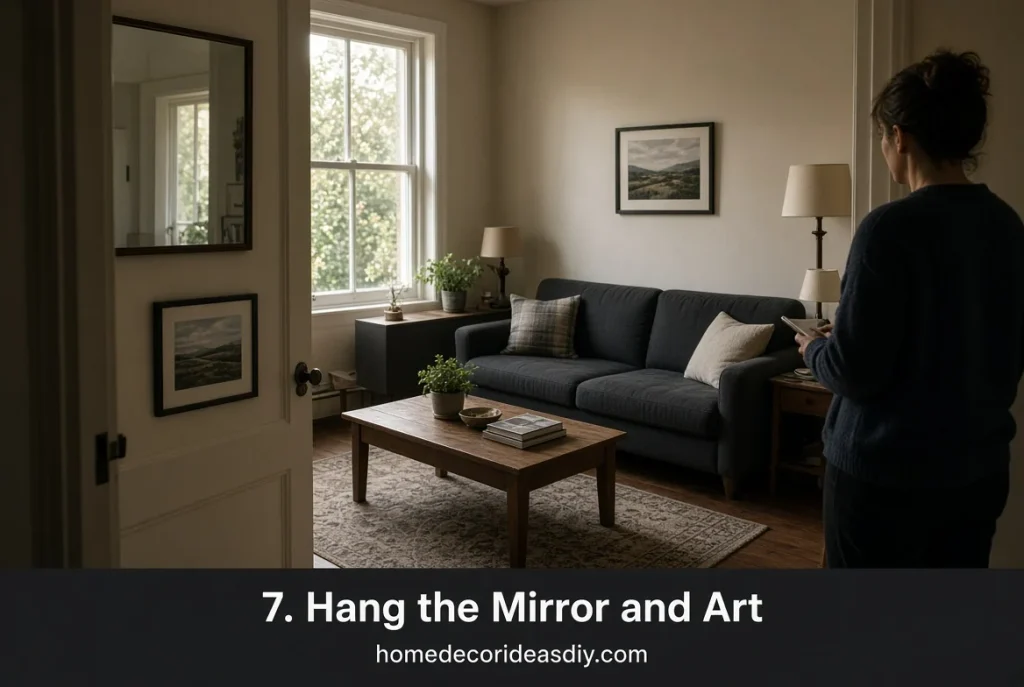
Mirror goes beside or opposite the window so it throws daylight back in.
Art hangs lower than most people hang it: about 145cm to the middle of the frame on an open wall, or 15 to 25cm above the back of the sofa.
Check what your wall is before you drill. Plasterboard needs proper plasterboard fixings. Brick takes a plug and screw. Old lath and plaster is the awkward one, so tap it and listen first.
Curtain pole too low? Move it 10 to 15cm above the window frame, and make it wide enough that the open curtains sit off the glass.
Now stand in the doorway with the lamps on and write down what’s actually missing. It’s normally a bigger rug, a throw, and maybe one lamp.
What these home decor ideas for living room jobs cost
| Clearing and moving furniture | £0 | An afternoon |
| Sugar soap, filler, 120-grit paper | Under £20 | 2 to 3 hours |
| Walls, two coats of matt emulsion | £40 to £70 | Most of a day |
| Skirting and door frame, satinwood | £20 to £25 a tin | Two coats, six hours apart |
| Warm white bulbs | A few pounds each | Ten minutes |
| Fixings for mirror and art | Under £10 | An hour |
Paint prices are mid-range tins at DIY shed rates. Dulux matt emulsion is around £21 for 2.5L at Wickes and £22 at B&Q. wickesdiy
Mistakes that waste your decor
- Buying cushions first. Easiest thing to buy, least likely to fix anything, and they end up picking your colour scheme for you.
- Choosing paint from a tester stripe at noon. Paint an A4 patch and look at it after dark with the lamps on.
- Painting cut MDF without sealing it. The cut edges swell and go furry. Thinned PVA, dry, light sand, then paint.
- Sticking adhesive picture strips to paint that went on the same morning. Give it a few days.
FAQs
How much paint do I need for a living room?
Two or three 2.5L tins of matt emulsion for two coats in an average room. Dulux matt covers up to 13 square metres per litre, so one tin does a bit over 30 square metres per coat. Measure each wall, subtract windows and doors, then double it. Going dark over light can need a third coat. diy
Can I paint over gloss skirting with water-based paint?
Yes, if you sand it first. Key the gloss with 120-grit, wipe with sugar soap, then use satinwood or eggshell. Skip the sanding, and it peels off in strips the first time the hoover catches it.
What makes a small living room look bigger?
Pale warm colours on the walls and the skirting, curtains hung high and wide, and a mirror facing the window. Showing floor space under the furniture helps too.
Do I need to paint at all?
No. Jobs 1, 2, 6 and 7 cost nothing and make most of the difference. Painting makes the result last longer.
Start with the lamps tonight.
Turn the ceiling light off, bring two lamps in from other rooms, sit with it for an hour. If the room already looks better, the rest is worth your Saturday.
Once it’s done, our budget DIY decorating ideas cover the shelves and the tired side table. Leave the cushions till last.