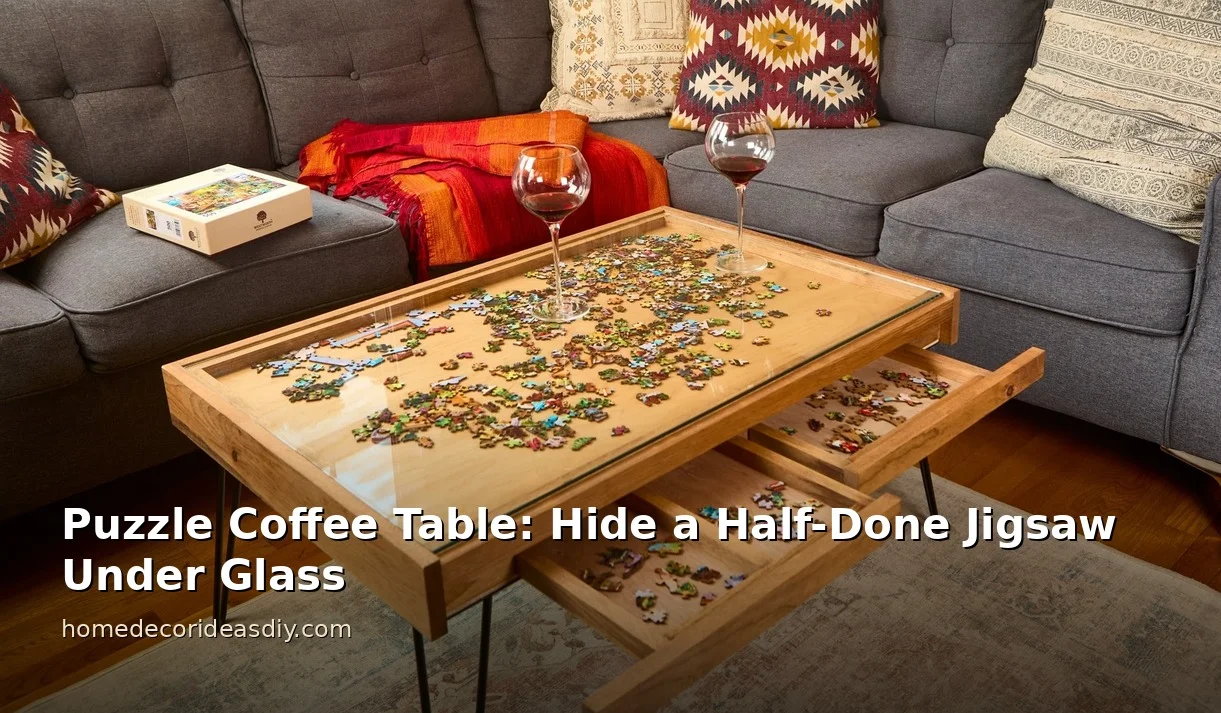
You’ve got a thousand-piece jigsaw half finished on the coffee table and nowhere left to put a cup of tea. A puzzle coffee table sorts that out: the puzzle sits in a shallow well a couple of centimeters below the top, and a sheet of glass, a lid, or a sliding board goes over it when you’re done for the evening. The puzzle stays exactly where you left it, and the table goes back to being a table. You can build one from plywood over a couple of weekends or convert a solid table you already own, and which way you go depends mostly on how big your puzzles are.
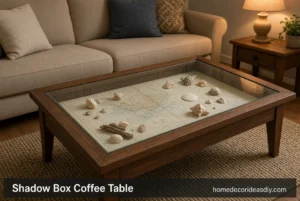
The phrase also turns up for tables shaped like jigsaw pieces, the sort that lock together. There’s a pair of 1950s Italian interlocking brass ones and a seven-piece burlwood tangram table by Baker Furniture listed on 1stDibs, and they’re lovely. Still, they’re collector furniture and not what this page is about.
Box size and finished puzzle size aren’t the same thing.
Piece count gets you in the right area and not much further. A Ravensburger thousand-piece finishes at about 50 by 70 cm, while a Cobble Hill thousand-piece can come out nearer 56 by 71 cm. The puzzle blog Tea-sip measured both on their own dining table after one wouldn’t fit, and that few centimetres is exactly what ends up hanging over the edge of a well cut to the “standard” size.
So pick the biggest puzzle you actually do, read the finished size off the side of the box, and add about five centimetres all the way round for the loose pieces you haven’t placed yet.
| 500 | about 40 × 55 cm | 50 × 65 cm |
| 1,000 | 50 × 70 to 56 × 71 cm | 60 × 80 cm |
| 1,500 | about 60 × 80 cm | 70 × 90 cm |
| 2,000 | about 70 × 100 cm | 80 × 110 cm |
For most people, a well of around 60 by 80 cm is the right call, because it takes almost any thousand-piece and still leaves the table a normal size. A two-thousand well pushes the whole table past 120 cm long, which is a lot of table for a flat sitting room, and honestly most people doing two-thousand-piece puzzles already have them on the dining table anyway.
Keep the well shallow, two to three centimetres below the top. Any deeper and your wrist catches the edge every time you press a piece in.
How low is too low?
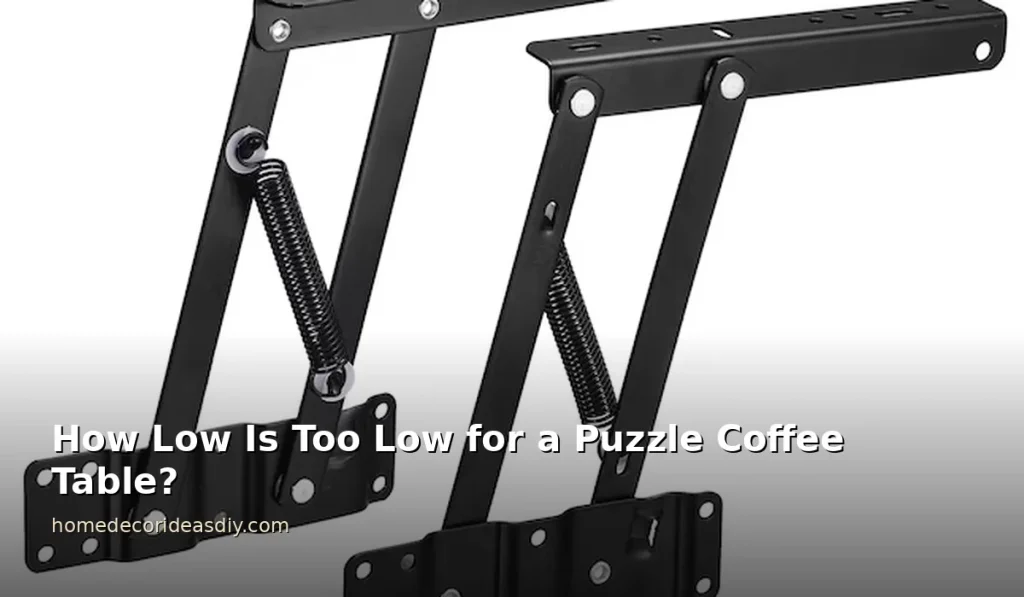
A normal coffee table sits somewhere around forty to forty-five centimetres off the floor, and that’s fine for an hour but not for a whole Sunday bent over the last three hundred pieces of sky. If you puzzle in long sittings, a lift-top mechanism that raises the surface towards you is worth the extra money and the extra fiddling during the build.
Glass, flip lids, or a board that slides out?
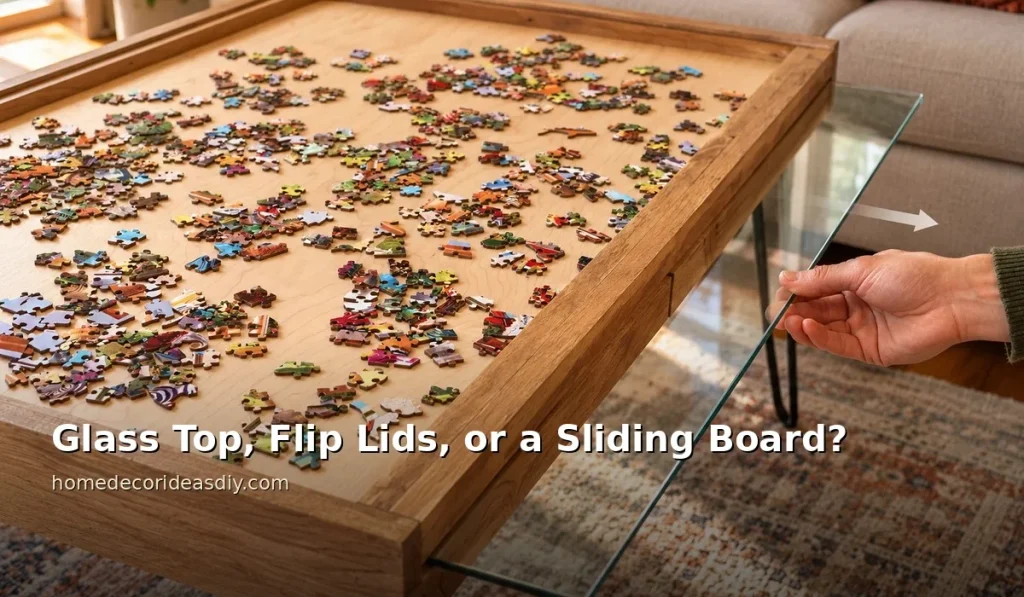
For most sitting rooms, a glass top for puzzles is the easiest to live with, as long as there’s somewhere to stand the glass while you’re working. Get toughened glass cut by a glazier, at least 6 mm thick, because ordinary float glass isn’t safe on a surface people lean on and put hot mugs down on every day. The one thing you’re signing up for is looking at the half-done puzzle all evening, which some people love and others find messy, especially when it’s mostly loose sky.
Flip lids give the tidiest look when the table’s closed. That’s two plywood leaves on piano hinges opening out from the middle. Woodshop Diaries built theirs with a noughts and crosses grid on one lid and a chess board on the other, which is a nice idea if the table’s going to see board games too. Check the gap to your sofa first, though, because an open lid has to land somewhere, and if the sofa’s close, it lands on the cushions.
The sliding board is basically a drawer without the box. A thin sheet of six-millimetre ply or hardboard extends from the end of the table, with the puzzle sitting on it. It’s the easiest one to add to an existing table. A long thin board does sag in the middle when you pull it out, so glue a batten along the underside to stiffen it.
Building a DIY puzzle table from plywood
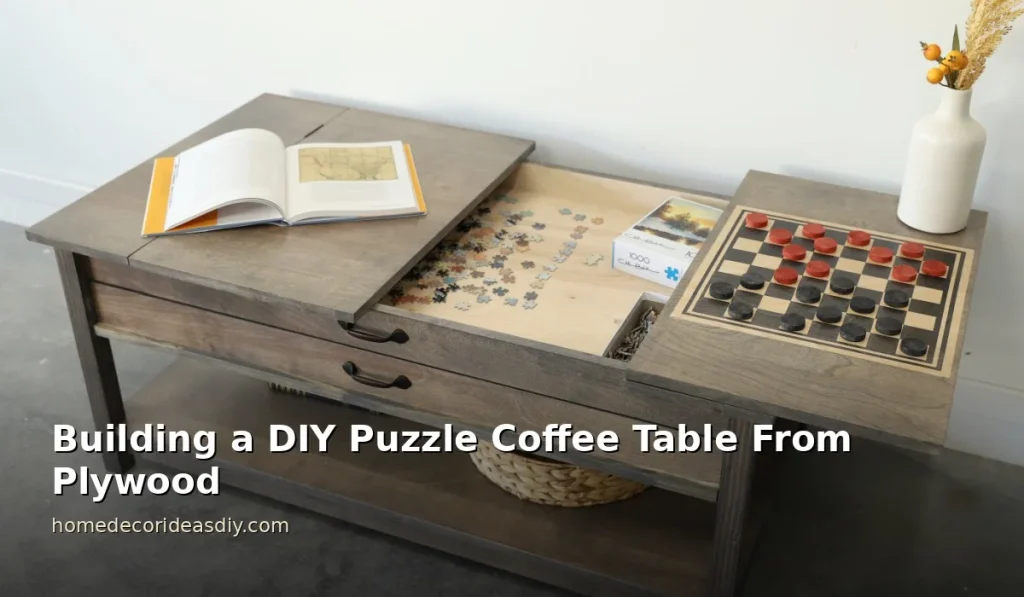
If you’d rather copy real sizes than guess, two builds are worth looking at:
- Woodshop Diaries’ flip-top table: about 122 cm wide, 67 cm deep and 50 cm tall, with an opening of roughly 55 × 81 cm under the lids
- The Puzzle Table’s coffee-height model (made in Holmes County, Ohio, in brown maple): about 91 × 60 cm and 48 cm tall, with an 88 × 55 cm workspace sized for most thousand-piece puzzles
Both sit a little taller than a standard coffee table, and that’s not an accident.
Materials
18 mm birch plywood for the frame and any lids, because it stays flat and takes paint or oil without fuss. The well floor only carries cardboard, so 9 or 12 mm is plenty.
The order you put it together in
Get the frame and legs up first, then screw cleats along the inside of the frame two or three centimetres down from the top edge and drop the well floor onto them. Shelves and drawer runners go in next, and the lids go on last so you can check everything closes flat. The Woodshop Diaries built the fitted top supports before the floor, then struggled to get the floor panel in, and their advice afterwards was to do the bottom first.
The floor of the well
Line it with plain felt or baize in a mid-tone colour. Pieces grip it instead of sliding about, and they’re easier to spot against it than against wood grain. Don’t varnish the well floor with anything glossy, because it throws the lamp light back at you and the edges of the pieces disappear. If you’re doing lids, cut a finger notch into each one, or you’ll be prying them up with a butter knife within the week.
A puzzle table with drawers makes the sorting bearable
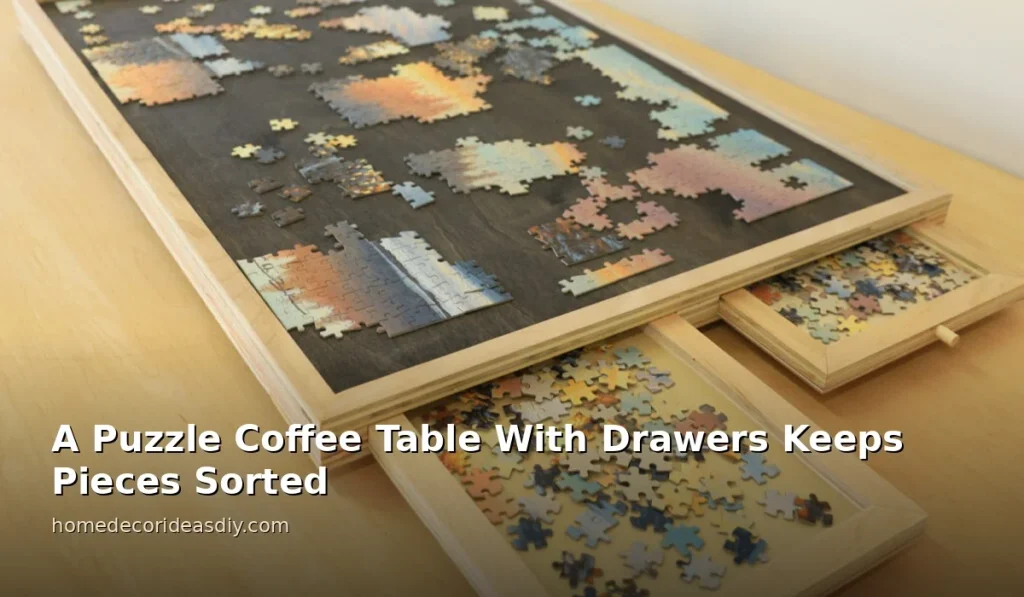
Everyone sorts differently, but edge pieces usually come out first, and the rest ends up in colour piles, and piles on an open table don’t survive a cat or a toddler. Four small drawers work better than one wide one, because every colour group gets its own and you’re not raking through the lot for one bit of blue. Keep them shallow, five or six centimetres, and put them at the short ends of the table so you’re not leaning over the puzzle to open one.
A wider slot for the box lid is worth having if there’s room. You end up looking at that picture more than the puzzle.
Turning the table you already have into a puzzle coffee table
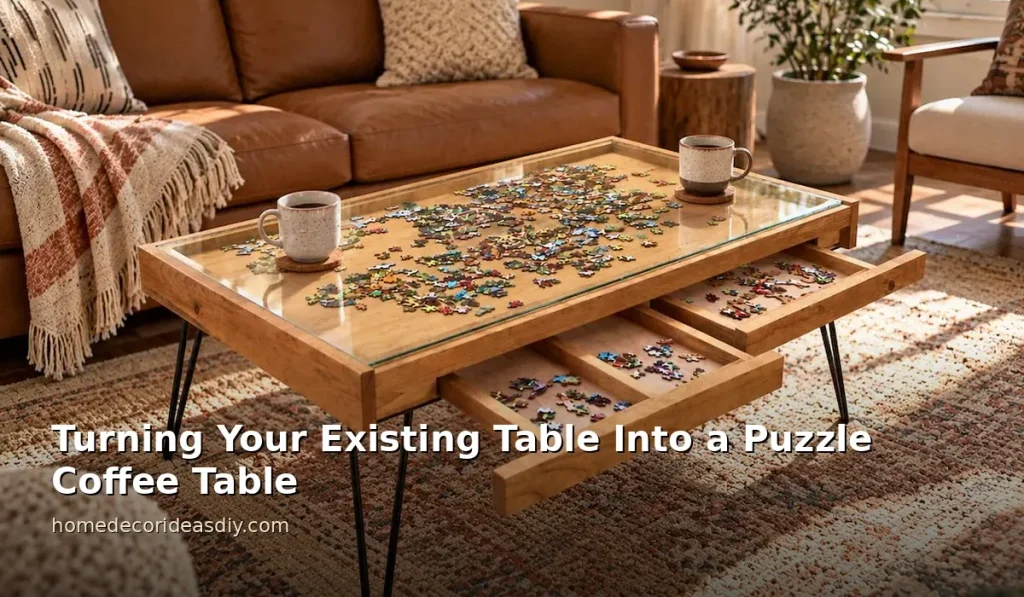
A solid table can usually take one of two conversions. The first is the sliding board from earlier, on a pair of drawer runners screwed to the inside of the apron, which is the band of wood running under the tabletop. You need about four to five centimetres of clear space under the top for that, so measure before you buy runners.
The second is quicker. Screw a frame of three-centimetre battens round the edge of the tabletop, line the inside with felt, and lay toughened glass over it, and you’ve got a hidden puzzle coffee table out of furniture you already owned. Paint the battens the same colour as the legs, and it looks like it was always meant to be that way. Anchor such as “repainting an old coffee table”, pointing to a live furniture makeover post on the site]
Whether either works depends on the top, and it’s hard to tell from looking. Cheap flat-pack tables often have hollow, honeycomb-filled tops that won’t hold a screw, so on one of those, skip the conversion and build the box instead.
Where first builds tend to go wrong
The well gets cut to the box size, not the finished puzzle size. This is the big one, and it’s why that table near the top of the page exists. The box is always smaller than what’s inside once it’s assembled.
A few others that come up:
- lids fitted with no thought for where they go when open
- a well-made deep “to be safe”, which is worse for your wrists
- a lid finish that can’t handle hot mugs, even though it’s still going to be used as a coffee table every single day
That last one gets missed because the build feels finished once the puzzle part works. It’s still the table everyone puts their tea on.
If it were my room, I’d go for the glass top over a 60 by 80 cm well and not bother with lids at all, because the glass is less work to build and the puzzle stays visible, which is half the reason to do a jigsaw anyway. Measure your sofa gap and your biggest box before you buy anything.