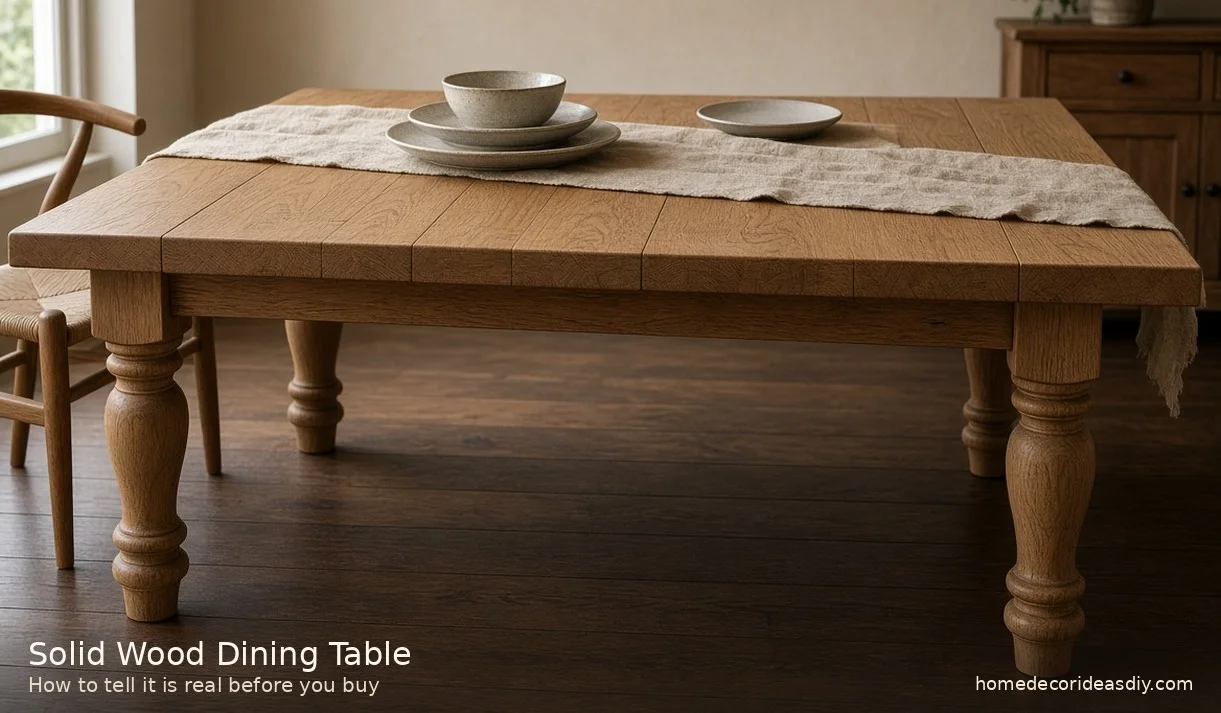
A solid wood dining table costs much more than a veneer one, so make sure you’re paying for what you get. Tags don’t always help. Many tables sold as “wood” are a thin layer of real wood glued over particleboard or MDF, and from five feet away, they look the same as the real thing. It takes about two minutes to tell them apart, and you don’t need any tools.
“Solid Wood” Means Boards All The Way Through
Solid wood is made from boards cut from a tree and glued edge to edge. Cut the top in half, and it’s the same wood all the way down.
Veneer is a thin sheet of real wood glued over plywood, particleboard, or MDF. It isn’t always junk, and some good furniture uses it on purpose. But a dining table top takes a beating. Interior designer Kevin Billings told Southern Living that scratches are “bound to happen” on a dining table, and he said it’s worth paying more for a real wood top. I agree with him. You can sand a scratch out of solid wood. With veneer, you only have a thin layer to work with, so repairs are a lot harder.
These Words On A Tag Mean It Isn’t Solid
- Wood veneer: real wood on top, something else underneath.
- Engineered wood, MDF or particleboard: wood fibers or chips pressed into a panel with glue.
- Wood-look: not wood at all. It’s a printed surface.
“Solid wood top” is usually fine, though. It only tells you the legs or frame may be made of something else. If a listing says “wood” and stops there, ask the seller which parts are solid and which are veneered.
Four Checks For A Solid Wood Dining Table In The Store
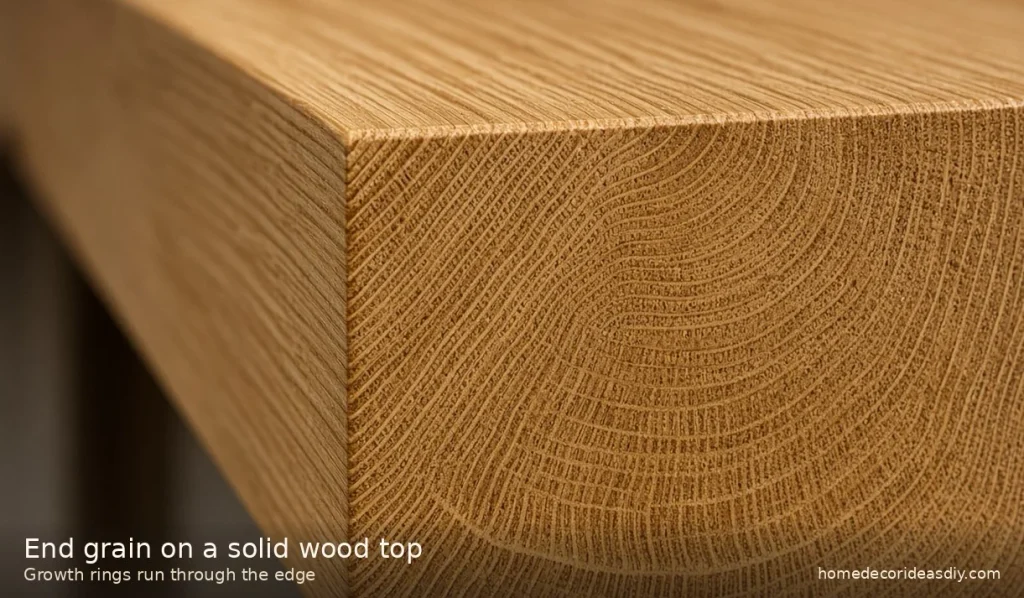
- Look at the short end of the top. On real wood, you’ll see end grain there, which is the growth rings of the tree. The lines on the top also carry over the edge. On veneer, the grain stops at the edge, or a thin strip runs all the way around.
- Get under the table. The bottom of a solid top looks like the top side: same boards, same seams. If you see plywood layers or speckled particleboard under there, it’s veneer.
- Check the pattern. Real boards don’t repeat. Knots and color changes show up wherever they want. If you spot the same swirl twice, you’re looking at veneer or a print.
- Knock on it. Knock your knuckle on the middle of the top. Solid wood gives a low thud. Veneer over a core sounds higher.
I wouldn’t go by weight. MDF is heavy too, so a heavy table can still be veneer.
The same checks work on used furniture. Our post on what to look at before you upcycle an old dresser gets into the particleboard problem.
Oak Or Maple For Kids, Walnut Or Cherry For Looks
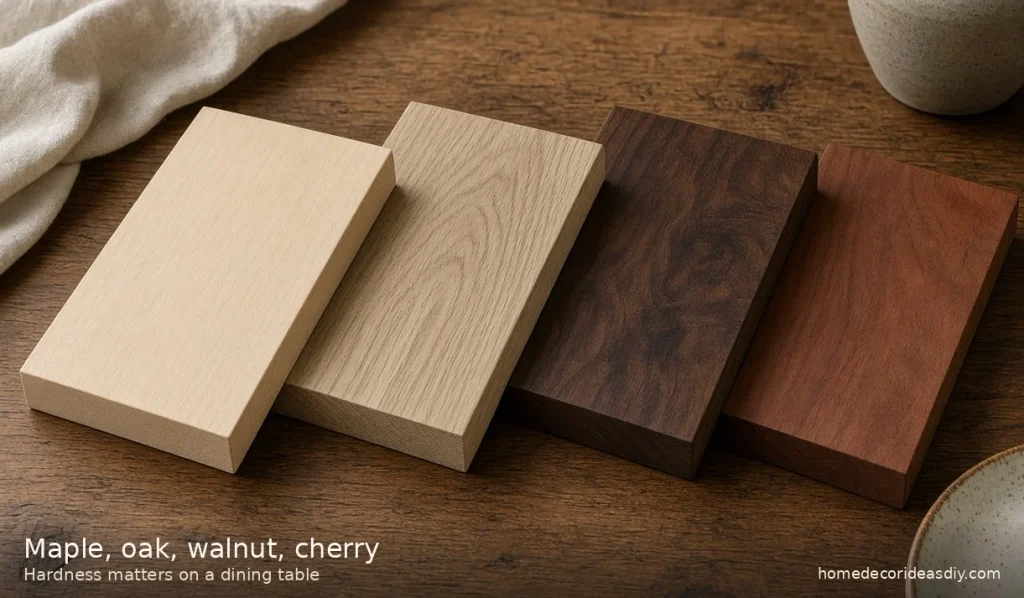
A dining room table gets hit with forks, toy cars, and laptops, so hardness matters. Wood hardness is measured with the Janka hardness test. It measures the force required to push a small steel ball halfway into the wood. A higher number means the wood resists denting.
- Hard maple, 1,450: the hardest of the common ones. Pale color, quiet grain.
- White oak, 1,360: almost as hard, and I think the heavy grain hides small scratches.
- Red oak, 1,290: close to white oak and usually cheaper.
- Black walnut, 1,010: dark brown and softer. It will dent before oak does.
- Cherry, 950: the softest hardwood here. It gets darker over the years.
- Eastern white pine, 380: dents if you look at it wrong. Fine for a farmhouse table if you like a beat-up look.
Teak comes in at 1,155. You’ll also see acacia, mango, and sheesham on imported tables. They’re real wood too, so run the same four checks.
Give Each Person 24 Inches Of Table Edge
The National Kitchen & Bath Association says one place setting needs 24 inches. That makes the length easy. Counting only the long sides:
- 48 inches seats four
- 72 inches seats six
- 96 inches seats eight
A 72 By-36 Inch Table needs a 12-by-9-foot room
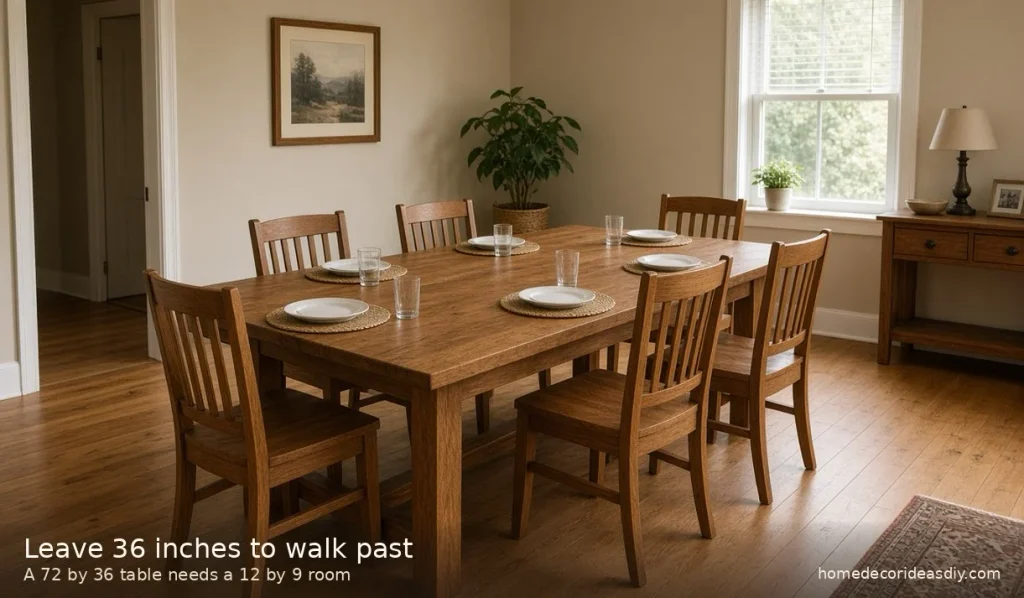
Leave at least 36 inches from the table edge to the wall on every side so that people can get in and out of their chairs. Add that to both sides of a 72-by-36-inch table, and you need a 12-by-9-foot room. Smaller room, smaller table. A round table works better in a small square room, and everyone can talk to everyone.
If you only need eight seats at Thanksgiving, buy the six-seater with a leaf. We compared the types in our guide to dining tables with a leaf.
Measure your doorways too. A solid oak dining table is heavy, and it doesn’t bend around corners.
Dry Air And Heat Do More Damage Than Spills
Real wood moves. The boards get a little wider in humid summer air and shrink back in dry winter air. Doug Stowe wrote in Fine Woodworking about a table in a Tennessee state park cabin where the top had grown 3/8 inch past its end boards on both sides.
So a hairline gap in winter is normal. Amish Direct Furniture says small cracks and gaps like that aren’t flaws, and it suggests keeping your house at 40 to 50 percent humidity to avoid them.
The rest is simple:
- Keep the table away from heat vents and out of direct sun.
- Put a trivet under hot dishes.
- Wipe up spills when they happen, and don’t leave a wet glass sitting on it overnight.
I’d Take Plain Oak Over Pretty Veneer
My pick is a white oak table with a solid top and simple legs. It’s going to get scratched; every hardwood dining table does. But in ten years you can sand it down and put a new finish on it, and it’s a new table again. A veneer table that looked nicer in the store usually can’t do that. What’s your table made of? Check the short end and tell me in the comments.