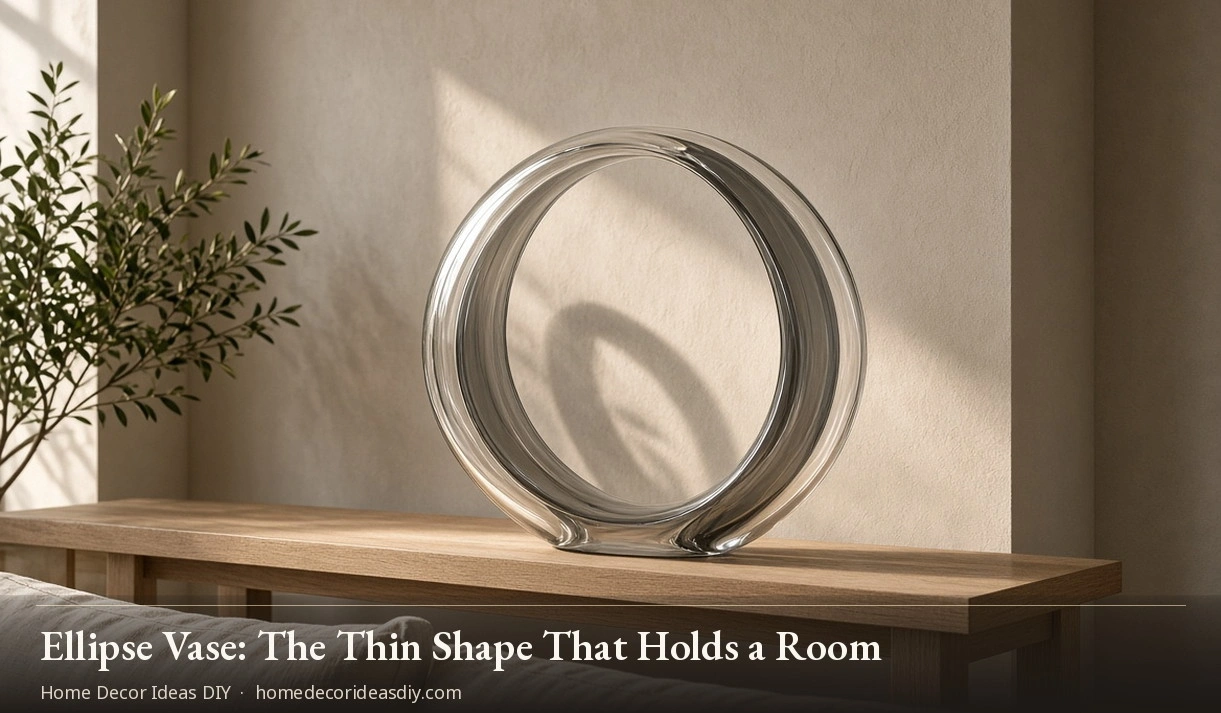
I bought my first ellipse vase because it looked wrong in the photograph. Too thin from the side, too wide from the front, the sort of object that sits on a white background and makes you wonder if the shop listed the measurements the wrong way round. Then I put it on the console behind the sofa and stopped thinking about it as a vase at all. A round pot occupies a circle of space. This one cuts a line through it.
That is the whole argument, really. Most people shop for height. Height is easy to compare. What actually changes a surface is the footprint, and an oval vase takes up less depth than a cylinder of the same width. You get the presence of a large piece without the bulk. I have lost count of how many wide ceramic drums I have moved off tables because they ate the room.
What an ellipse vase actually is
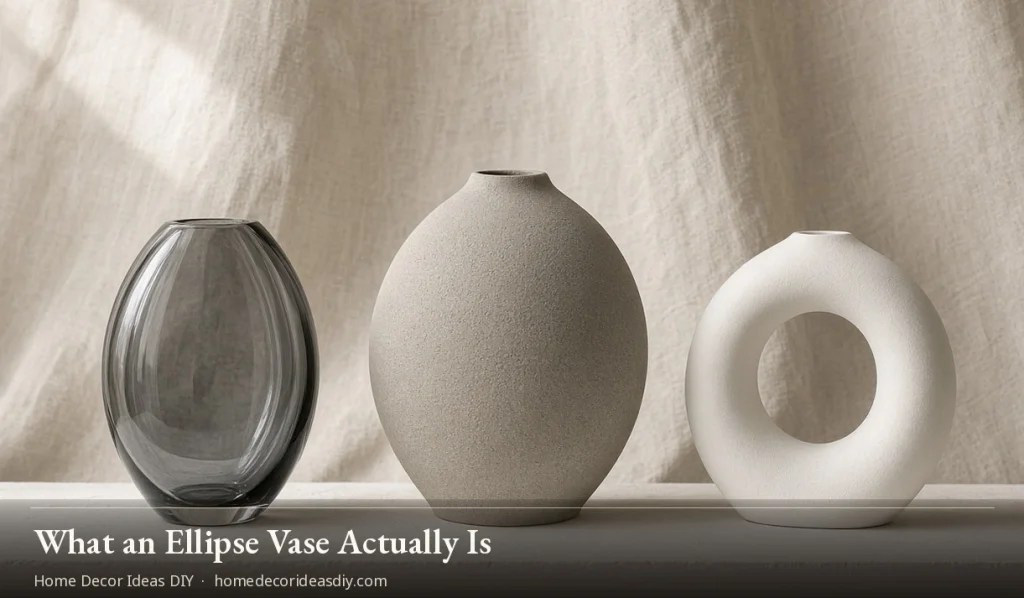
An ellipse is a flattened circle. That is the school definition, and it is enough. Look it up on Wikipedia’s ellipse page if you want the maths. In furniture and objects, the word gets used for anything that is oval when you look down on it, or stretched when you look at it from the front. Some pieces are a thin glass lens standing on edge. Some are a stoneware oval with a wide belly and a narrow foot. Some are the hollow ceramic rings sold as mid-century modern shelf décor, with a hole through the middle and no intention of holding water.
They are not the same object. Treat them as three cousins sharing a name.
- The thin glass lens. Clear or smoky. Often 18 to 24 inches wide and only four or five inches deep. Holds water. Looks like sculpture when empty.
- The ceramic oval. Heavier. Stone or beige finishes. Better as a closed form than as a workhorse for a weekly bunch from the market.
- The hollow ellipse vase. A circle or oval with a cut-out. Decorative only. Looks cheap in a set of three and decent as one piece on a shelf.
I own one of the first kind and one of the third. The glass one earns its keep. The hollow one lives on a bookcase, and I still have not decided if I like it. That is a useful test. If you are not sure after three weeks, it is décor, not a tool.
Why the ellipse vase works when a cylinder looks stiff
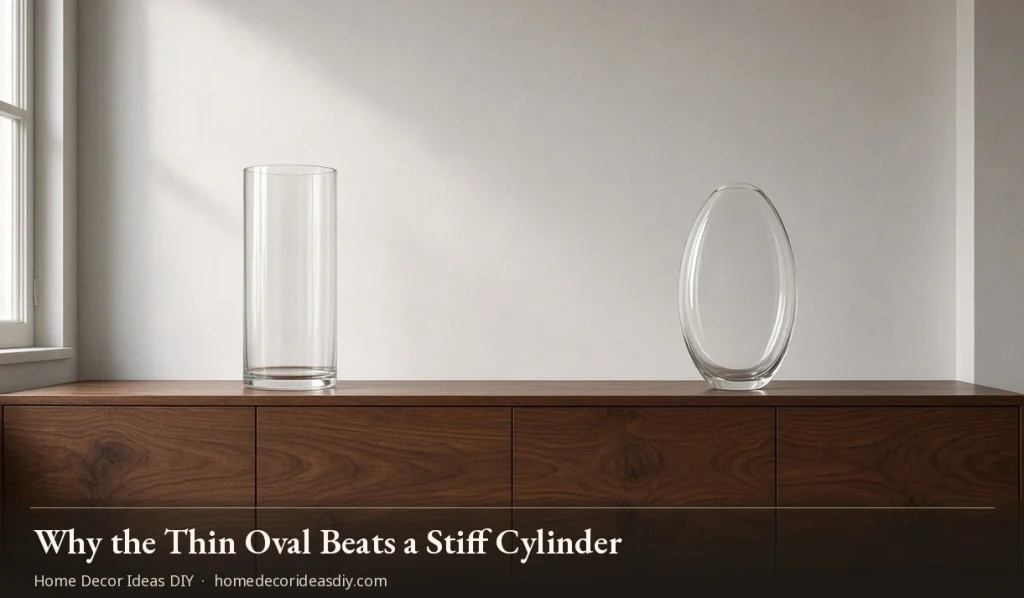
A cylinder is honest. It also photographs like every other cylinder on the internet. Stand two of them on a sideboard, and the surface starts to look like a shop window. The oval silhouette breaks that. From the front you get width. From the side you get a sliver. Light goes through the glass version and leaves a long shadow instead of a round one. Guests notice the shadow before they notice the object, which is a strange compliment and a good one.
This is the same logic as leaving space around a statement piece. The object is doing structural work. It is the landing point for your eye when you walk in a fat vase in the same spot shouts. An ellipse vase holds the spot and then gets out of the way.
Scale still matters. A 24-inch glass piece on a narrow hallway table will look like it arrived from a different house. Measure the surface first. The vase should not be wider than two-thirds of the table, and on a dining table the whole arrangement, flowers included, wants to stay under about 14 inches high or people start leaning around it to talk. I learned that the loud way.
Where I put an ellipse vase so it does not look like a shop display
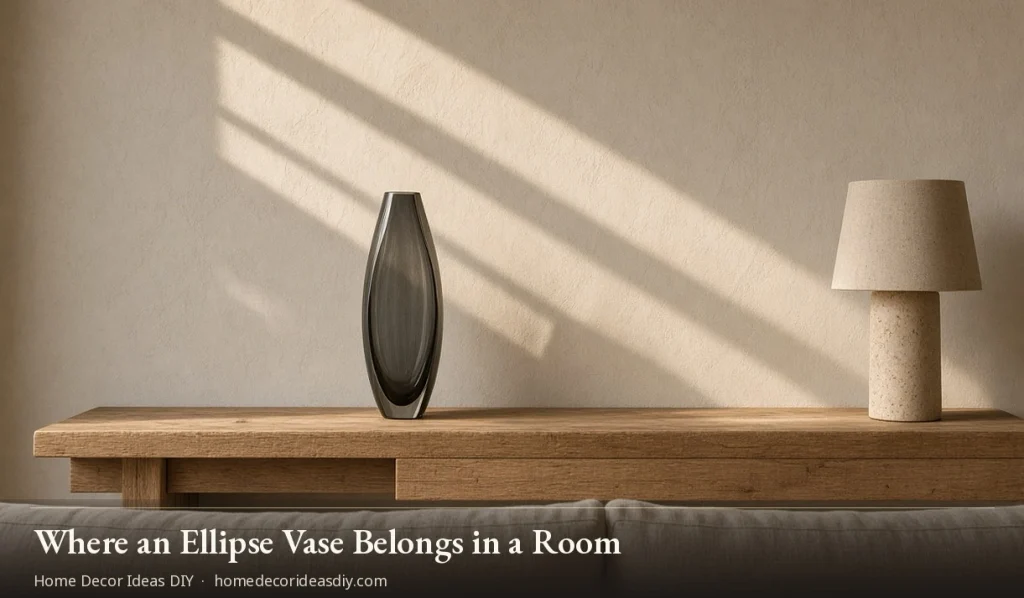
Console behind the sofa. That is the first place I try, slightly off-centre, with almost nothing else on the surface. A lamp on one end if the table is long. Not a tray, not a stack of books, not a candle. One object. If the room already has a lot going on, leave this piece alone.
The dining table is the second place, and only if the vase is short or the stems are low. A tall, thin glass oval in the middle of the dinner table is a wall. Use it empty on weeknights. Put three stems in it when you have people over, then take them out before pudding. I am not being precious. People need to see each other.
Bookshelf works if the piece is small. The hollow ceramic versions belong here more than on a table. They read as shape, not as a container waiting to be filled. Pair one with a stack of hardbacks used as a riser. I wrote about that habit in thrift store home décor, and it still holds—spines in if the books are ugly. Nobody is reading them.
Use an entry table only if the piece is stable. I found that out with a coat sleeve. If the base is smaller than your palm, it does not live near a door.
Flowers, branches, or nothing at all
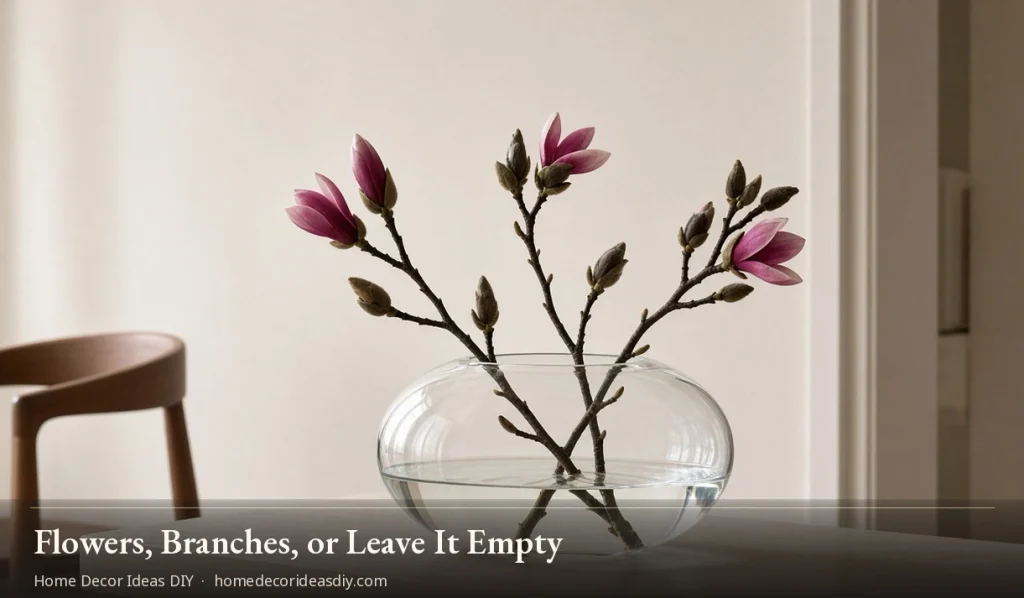
The thin glass versions are the ones that actually take water. The opening on a typical large piece is wide, often close to 10 or 11 inches, which is the opposite of what I usually want. I have already gone on about mouths in decorative vases. A wide mouth lets stems fall to the rim and leaves a bald patch in the middle. The tape-grid trick still works. Tape clear squares across the opening, one stem per square. Ugly for five minutes. Fine once the heads cover it.
What looks right in this shape is not a supermarket mixed bunch. Too many colours fight the silhouette. One kind of stem, or two at most:
- A few branches. Magnolia, beech, twisted hazel. Three is enough.
- Dried stuff that already has a line. Pampas is overdone. A couple of palm spears or one dried allium is quieter.
- A short run of the same flower. White tulips. Ranunculus. Nothing with a huge head unless the vase is short.
- Nothing. This is allowed. The glass versions were designed to stand empty. If it looks unfinished without stems, the piece is too small for the surface, not too empty.
The height rule is the same one Mississippi State teaches in its floral design notes. the tallest stem should be about one and a half to two times the height of the container, measured from the table, not the rim. On a 20-inch vase, that puts the top of the arrangement somewhere around 30 to 40 inches off the surface. Fine on a console. Rude on a dining table.
Glass, ceramic, and the versions that cannot hold water
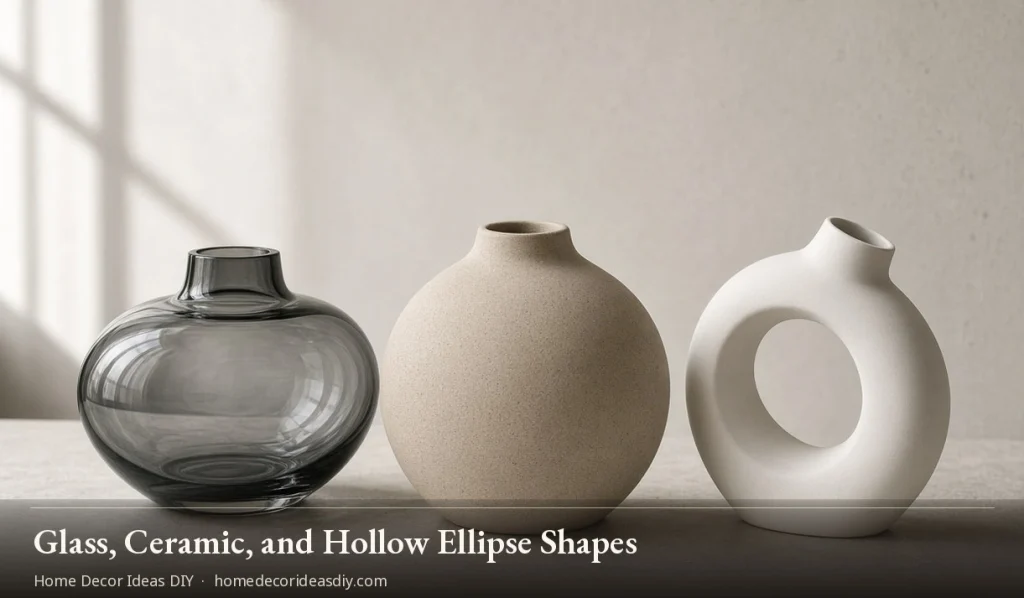
Clear glass shows stems and water marks. That is the deal. If your tap water leaves a film, you will see it. Wipe the inside when you change the water. Smoky grey glass hides the mess and reads more like a sculptural glass vase than a container. I prefer the smoke for that reason. It also picks up evening light in a way clear glass does not.
Ceramic ellipse pieces behave like any other heavy vessel. Weight is the tell. A good one feels like it would hurt if you dropped it on a toe. Hollow resin with a stone print does not. I have written before about how a ceramic object with actual mass is one of the cheap ways a room starts to look like expensive home décor without the sofa budget. Hands notice before the brain does.
The hollow ellipse vases with a hole through the middle are a different product. They are shelf shapes. Do not put water in them. Do not buy the set of three in white and gold unless you already know you like that look, because three matching pieces read as a kit. One is a shape. Three is a theme. Same warning I keep repeating in luxury home décor: matching sets look staged.
Handmade glass is worth paying more for if you can see the evidence. A slight lean. A seam that is not perfectly even. A colour that shifts at the rim. Mass-produced “hand-blown look” pieces are usually too even. If you are trying to tell the difference, the same notes still apply to handmade home décor items. Identical glaze bubbles on three listings from the same shop are a mould, not a studio.
What to check before you buy an ellipse vase
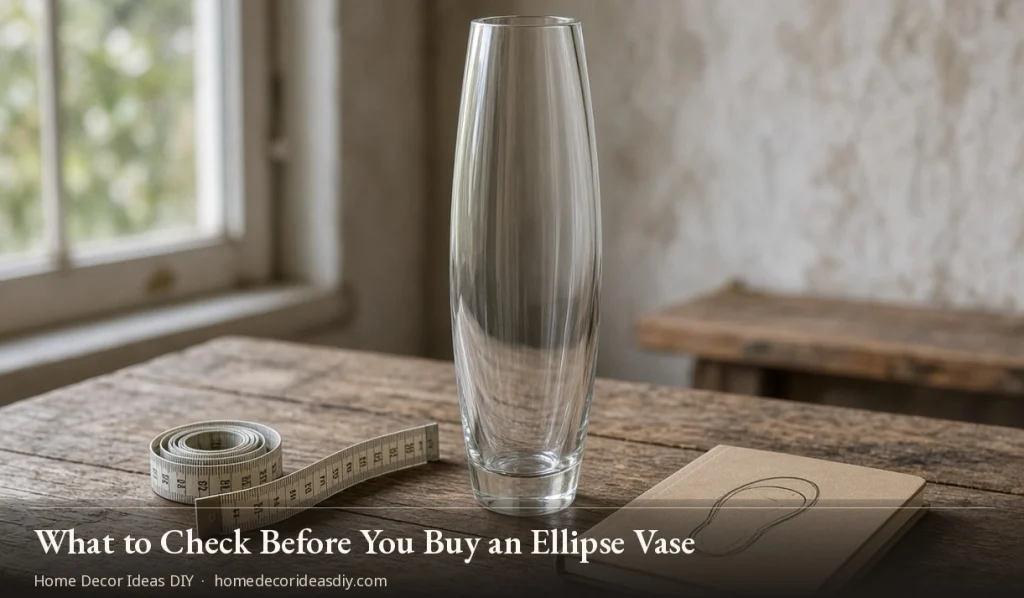
Listings lead with height and a lifestyle photograph. Ignore the photograph. Ask for, or measure, four things.
- Depth. The side-to-side measurement decides whether it fits a console or a shallow shelf. Plenty of “24-inch” pieces are only five inches deep. That is the point. Confirm it.
- Opening. If you want flowers, you need to know the mouth. Wide openings need a frog or tape. Narrow openings do the arranging for you.
- Base. A pretty silhouette with a tiny foot will tip. Press the listing photo. If you cannot see a flat, decent base, assume it is unstable.
- Weight. Glass this size is heavy. Some of the large clear pieces sit around 18 to 20 pounds. That is not a complaint. That is why they don’t walk off the table. That is also why you don’t want one on a wobbly IKEA unit.
Second-hand is still the better hunt if you are not set on a specific designer piece. Charity shops are full of oval glass that nobody wanted because it would not take a mixed bouquet. That is your opening. Wipe it, check for chips on the rim, and you’re done. Same instinct as the dented aluminium vase I still use, which I wrote about in aluminium décor. Scratches on glass bother people more than they should. From three feet away, you cannot see them.
The bit I got wrong
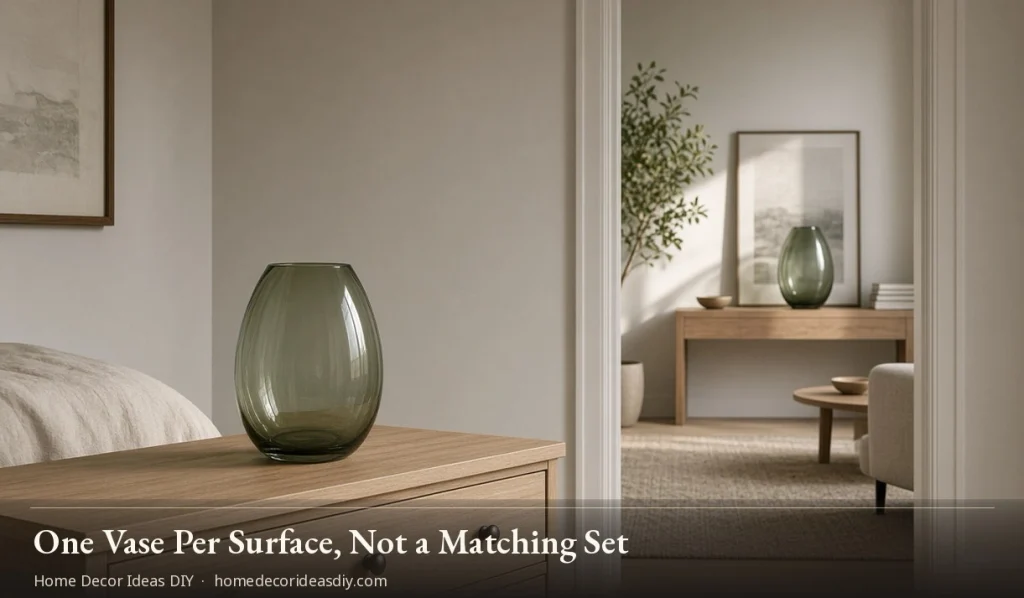
I bought a second one too quickly. Same shape, smaller, different tint. I put both on the same console because a pair would look considered. It looked like I had ordered a matching set and then lost the middle size. I moved the small one to a bedroom chest and left the large one alone. The room got quieter. That is usually the answer.
An ellipse vase is not a collection. It is one decision. If the rest of the surface is busy, skip it and spend the money on something the room is actually short of, which is often light or a decent pot for the plant you already own. If the surface is empty and a bit sorry for itself, this shape does more work than another round ceramic ever will.
Leave it empty for a week before you decide it needs flowers most of the time it does not.