Your bedroom is the one room guests hardly see, so it’s usually the last one that gets any money, and that’s why so many of them end up with a bare ceiling bulb, a small rug and a bed pushed against whatever wall it fits on. If you want to how to decorate your bedroom without spending much, the order you do things in matters more than what you buy. Pick your colors, get a real lamp, fix the bed and the rug, then thrift the rest. That’s all there is to it, and below I will discuss each section, along with some information for small rooms at the conclusion.
Step 1: Pick Your Style and Color Palette First
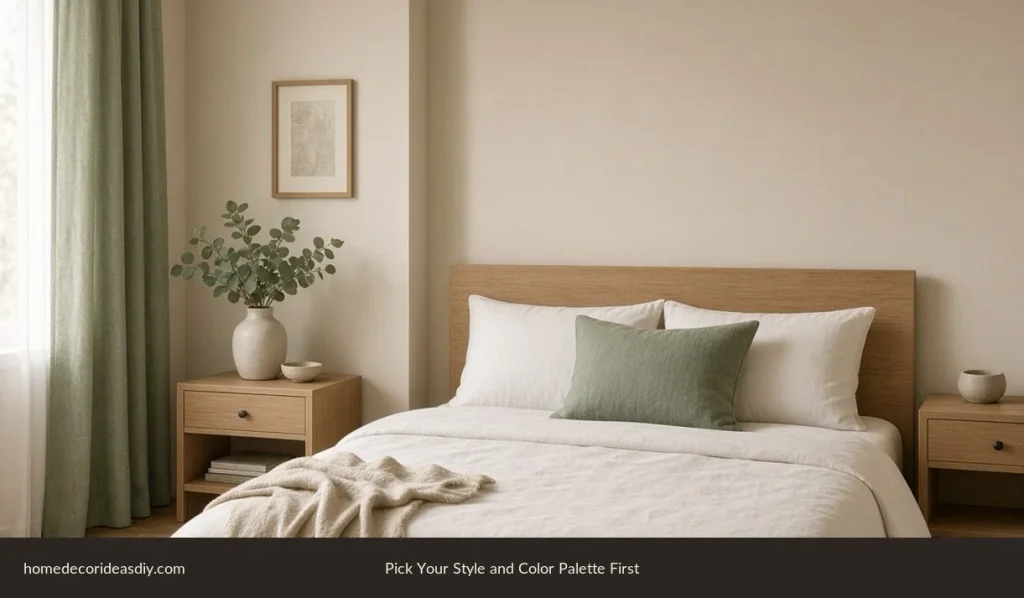
Don’t buy a thing yet. Stand in the doorway at night with only the lamp on, if you have one, and think about what you want to feel when you walk in there after a long day. Some people want soft and calm, some want dark and a bit moody, some want it bright like a hotel. There’s no right one. Pick three words and keep them on your phone, because later you’ll be standing in a store holding a pillow you love that doesn’t match anything, and those three words will save you twenty bucks.
Colors that work in most bedrooms right now are the warm, quiet ones:
- Beige or warm white on the walls, good if the room is dark or small
- Warm gray if beige feels a little boring to you
- Sage green, a soft gray green, looks really good next to wood furniture and plants.
After that, pick a primary color, a lighter shade, and a darker tone that appears only on small items such as a throw or a pillow cover.Beyond that, it begins to appear cluttered.
Should you do an accent wall?
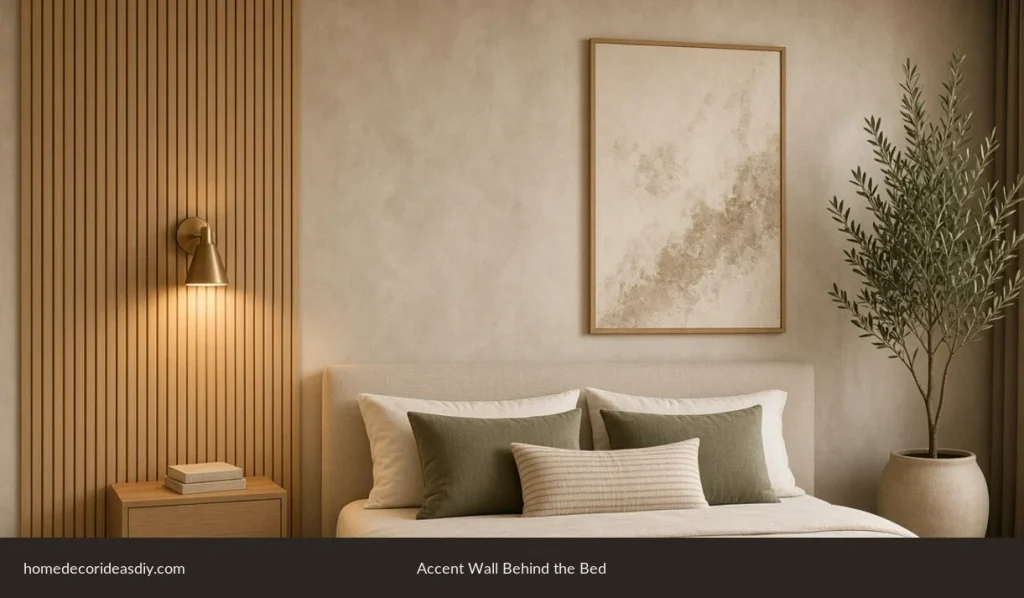
If you do, do the wall behind the bed, since that’s the one you look at most. Wood slats, limewash paint (it has this soft cloudy look, like old plaster) or a darker paint color on only that wall all work fine. Renting? Peel-and-stick wallpaper or a big fabric headboard gets you close, and you can take it with you when you move.
People have started calling this trend warm minimalism: warm colors, less clutter, more wooden furniture, and a few plants. You are not emptying your room of all your belongings; you’re getting rid of the things you don’t need or want to keep just because they have always been there.
Step 2: The Key Items You Need to Buy
Where to spend. Not all at once; you can do one thing a month, but I’d go in this order.
1. A lamp that isn’t on the ceiling
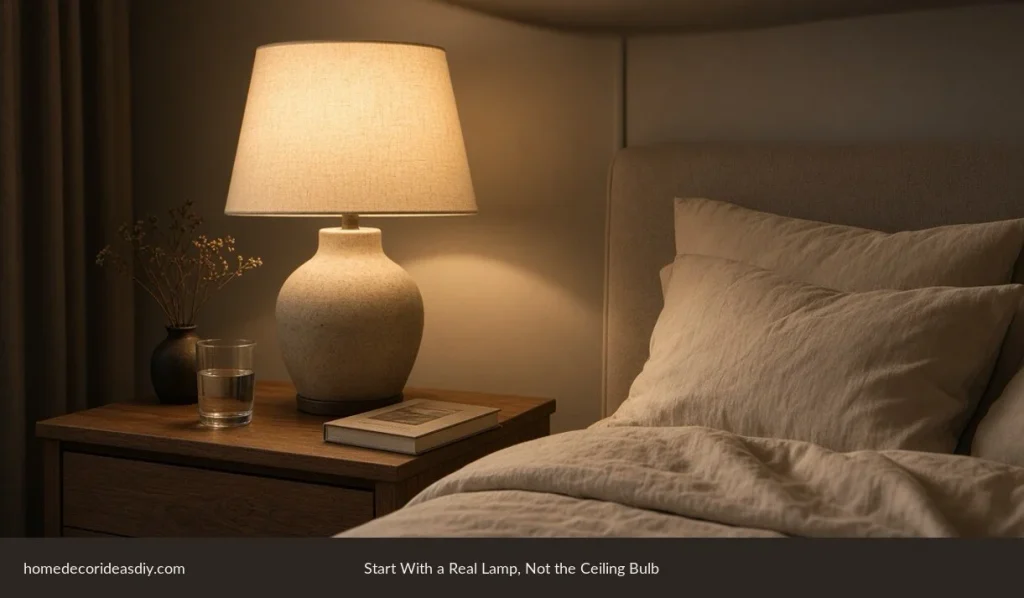
Overhead lights are fine for finding your socks and pretty bad for everything else. Put a lamp on the nightstand, hang a warm pendant next to the bed, or run a soft LED strip behind the headboard. Sarah Gibson at Room for Tuesday makes a point that sounds silly until it happens to you: you should be able to reach your bedside light while lying down. Use warm white bulbs, and dimmable or smart ones are worth the extra couple of dollars so you can turn them way down at night.
The folks at Chris Loves Julia say to buy bigger lamps than you think you need, and they’re right; a tiny lamp on a nightstand looks sad, even if it’s expensive.
2. Bedding
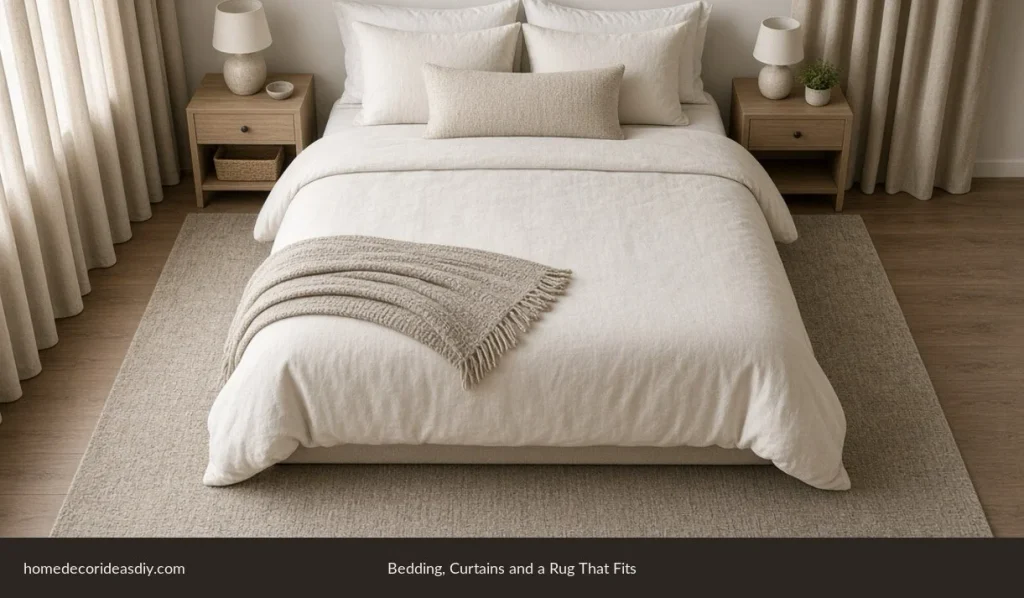
- A plain duvet cover, since the bed is the biggest thing in the room and a busy pattern takes over
- A throw blanket at the foot of the bed
- Two to four pillows, or a long lumbar pillow if you want the hotel look without ten pillows you’ll throw on the floor every night.
- Curtains with blackout or privacy lining you’ll sleep better, and they look nicer than blinds alone.
3. A rug big enough for the bed
Most bedroom rugs are too small. Bassett Furniture says the rug should stick out at least 18 inches past each side of a queen bed, and they like a 9×12 so it goes under the bed and the nightstands too. That’s a lot of rug, and a lot of money. A cheaper trick is two runners, one on each side of the bed, so your feet hit something soft in the morning.
4. Art and a mirror
Skip the ten little frames. One big print or canvas above the bed looks much better, and Chris Loves Julia says it looks good in small rooms, too. Big mirrors are also a good option, but you have to be careful where you put them.
5. A plant or two
A snake plant or a pothos can live in a bedroom with not much light, and they’re hard to kill. That green-and-wood look has a name too: biophilic design, which is about putting nature into the spaces you live in. One thing if you have pets: the ASPCA lists golden pothos as toxic to cats and dogs, and snake plant is on their toxic list too, so put them up high or pick something else.
Step 3: Where to Shop Without Spending Too Much
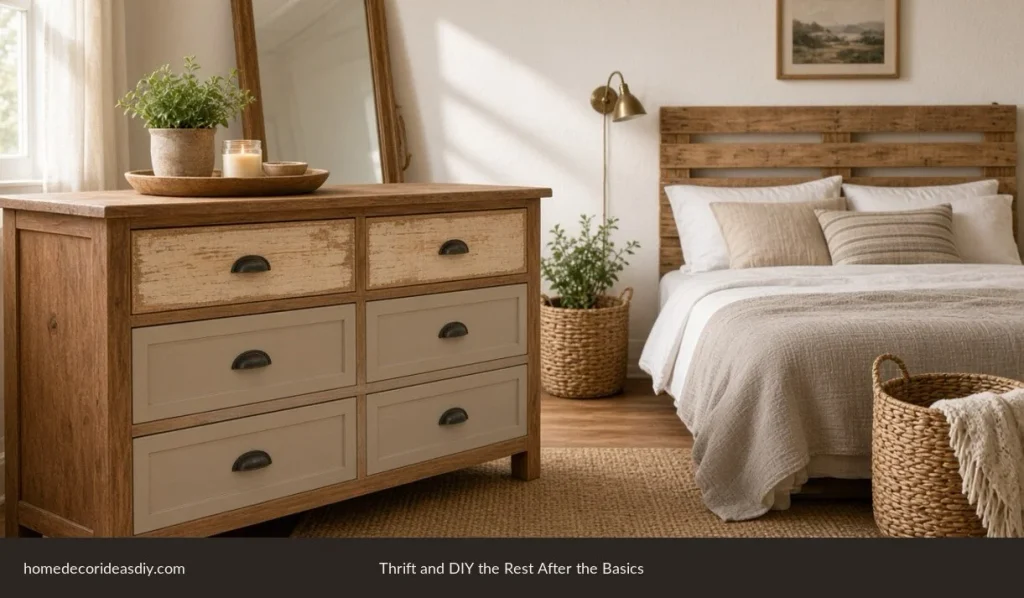
New isn’t always better here. Some of the best bedroom stuff is secondhand.
- Thrift stores and flea markets are good for wood nightstands, old mirrors with nice frames, trays and baskets. If you see a solid dresser with a good shape and ugly paint, grab it; you can sand and paint it over a weekend.
- Facebook Marketplace and local buy-and-sell groups are where you find bed frames and headboards. People moving out of town sell good stuff for almost nothing because they don’t want to haul it.
- I’d get the things I want new from online stores, like sheets, pillows, curtains, and bulbs: used bedding, no thanks.
- DIY it. A painted canvas, a pallet wood headboard or a couple of small clay pieces for the nightstand cost very little. If you’ve done any of the easy DIY projects around the house, a pallet headboard is a pretty good next one.
When you thrift furniture, pull out every drawer and check underneath for water stains before you pay. You can paint over ugly. You can’t really fix wobbly.
Step 4: How to Decorate Your Bedroom When It’s Small
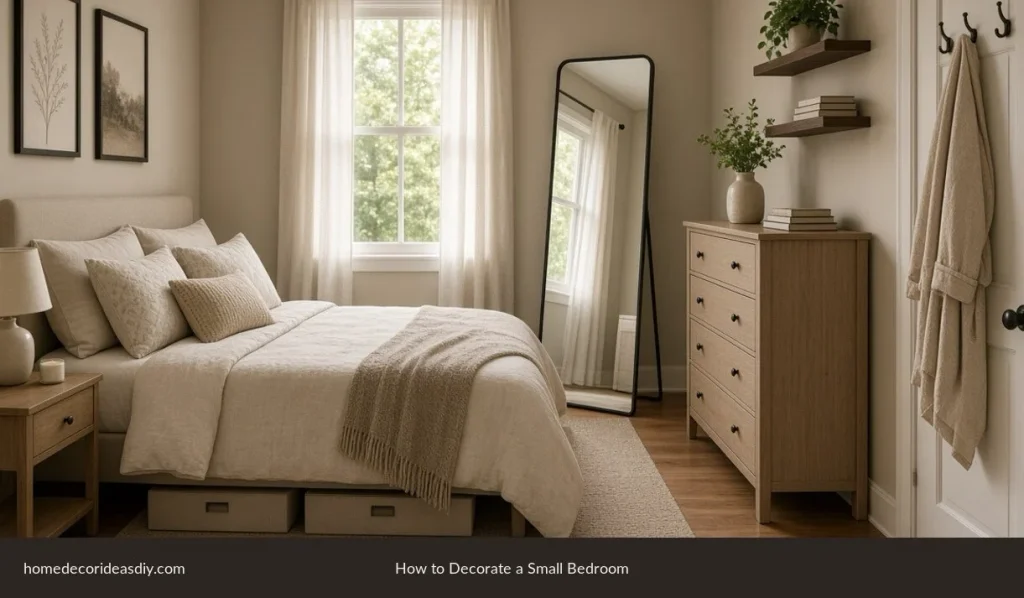
A small bedroom needs the same things: a lamp, a good bed, a rug, just fewer extras around them.
Watch what the mirror faces. Put it across from the window, and it throws daylight back into the room, which makes it feel bigger. Put it across from the closet, and now you’ve got two messy closets. I wrote a whole piece on where a mirror works and where it doesn’t, but the short answer is to check what’s on the opposite wall first.
Build up instead of out:
- Floating shelves over the dresser or desk instead of one more piece on the floor
- A tall, skinny dresser in place of a long, low one
- Hooks on the back of the door for bags and robes
- Flat boxes under the bed for winter clothes
Clear off before you add. Take everything off the nightstand and dresser, and put back only what you use daily, plus maybe one thing you love. When a surface is full, you don’t notice any of it. Some people keep a basket for “stuff with no home yet”, and that works as long as you empty it once a week, because otherwise the basket turns into the clutter.
Let the bed do the work. A good headboard and nice bedding already make a small room look done. You don’t need something in every corner, and the empty corner is the point.
If I could do only one thing from this list, it’d be the lamp. A plain room with a warm lamp on looks better than a fully decorated room lit by one ceiling bulb, and it’s the cheapest thing here.
What’s the first thing you’d change in your bedroom? Tell me in the comments.