The first plant hanger I tied looked right for about five weeks. Then the pot sat a little lower than it had on day one, lower again after the next watering, and by the end of the summer the whole thing hung at a tilt with the ceiling hook doing most of the work. Nothing snapped. The cord just stretched, the way cotton does, and the tutorials skip that part because the photo gets taken on day one. So most diy macrame home decor advice you’ll find is a gallery of finished pieces at their best possible moment, twenty-eight ideas deep, with no warning about which ones are still hanging straight in March.
These are the seven I keep coming back to, plus the one I’d tell you not to bother with.
Cord first, pattern second
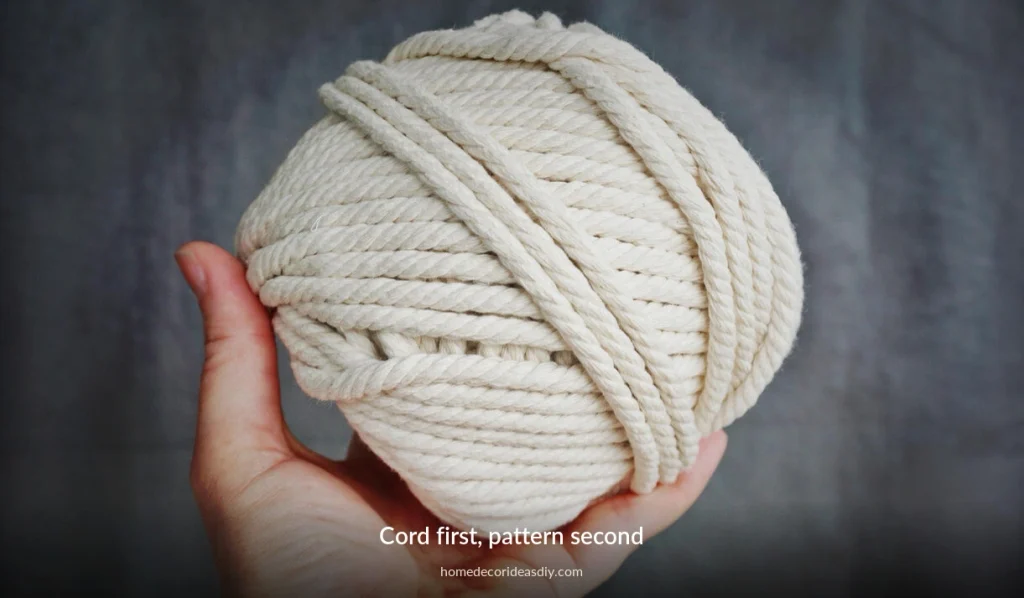
Pick the wrong cord and the pattern doesn’t matter. There are three kinds worth knowing, and they behave completely differently once they’re on your wall.
Three-ply twisted
Three separate strands wound together. This is the one that unravels into that soft, wavy fringe everybody wants at the bottom of a wall piece, and you get there by untwisting the plies and brushing them out. A pet slicker brush works better than any comb sold for crafting, which I found out after buying the comb.
Braided
Tightly woven around a core, holds its shape, won’t fringe no matter how long you brush it. Good for plant hangers and anything that needs to hold weight. Bad if you wanted the shaggy look.
Single strand
One continuous twist, soft, cheap, sheds fluff all over the floor. Fine for practice. I wouldn’t put it above a bed.
For sizing: 3mm for coasters, tie-backs and small hangings; 4mm to 5mm for anything wall-sized. The cord math that most beginners get wrong is length. Cut four times your finished length, then double it again if you’re folding cords over a dowel, and add extra on top if you want long fringe. Running short halfway down a piece means starting over; there’s no neat way to join a cord mid-row, which is the kind of thing you only learn once.
If this is your first weekend craft of any sort, there are easier DIY home decor projects to warm up on before you commit twelve dollars of cotton to a wall.
Which diy macrame home decor projects are actually worth making?
The ones that hang flat, or hold nothing heavier than a napkin. Weight and water are what ruin these pieces, so the ranking below goes roughly from safest to riskiest.
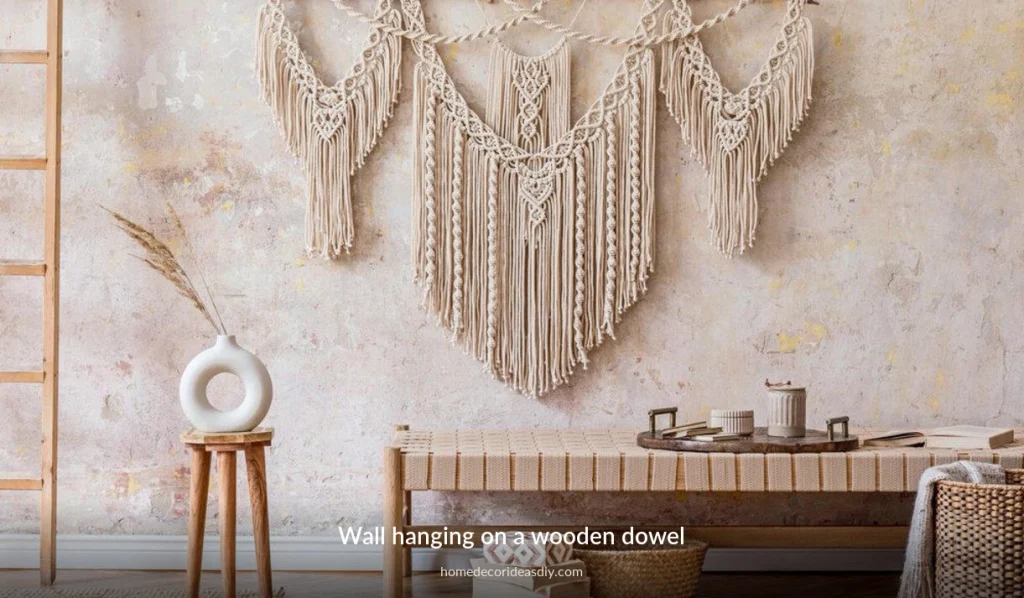
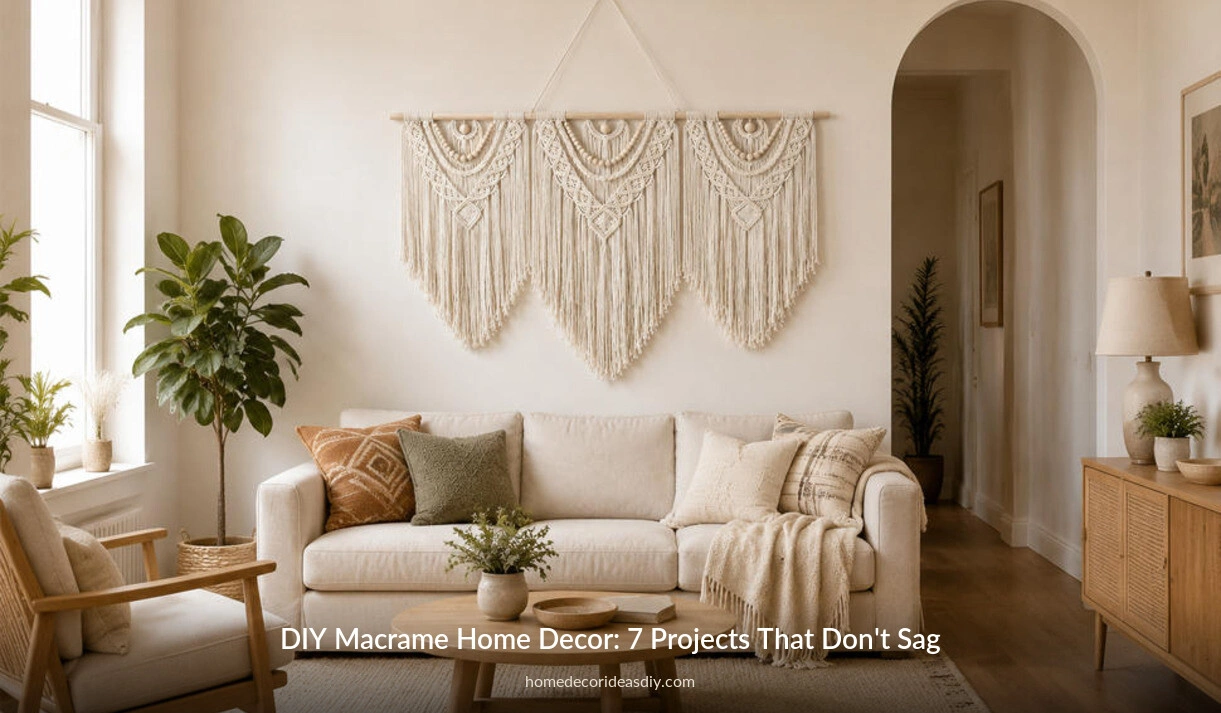
1. Wall hanging on a wooden dowel. The classic, and the one I’d start with. Nothing hangs off it except its own weight, so stretch doesn’t matter, and a beginner pattern of alternating square knots plus a V-shaped fringe takes an afternoon. Use a dowel about two inches wider than your knotted panel on each side so the ends read as deliberate. Sand the cut ends, or they’ll snag the cord. If the knots end up uneven, and on a first attempt they will, hang it anyway and make a second one. The second is always noticeably better. And if knotting isn’t your thing, paper flower wall decor fills a big wall faster, though it has its own drooping problem.
2. Curtain tie-backs
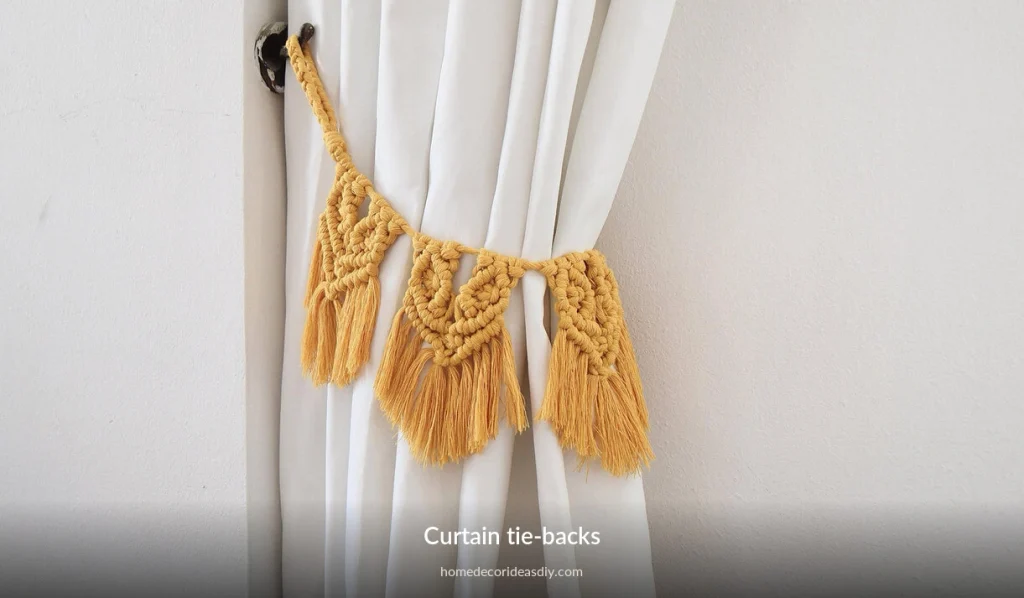
Two hours, barely any cord, and they take almost no strain. Spiral knots look good here because the twist catches the light down the length of the curtain.
3. Table runner. Prettier than it is practical. Cotton drinks up olive oil and wine instantly, and a runner sits directly under both, so I’d keep it to a side table or a console rather than the dinner table. Placemats have the same issue with a hot bowl.
4. Mirror surround. Not a band that wraps a round mirror and lets the fringe hang below it. Tie it on rather than gluing it, because glue on a mirror back is permanent and you’ll want to redo this one.
5. Plant hanger.
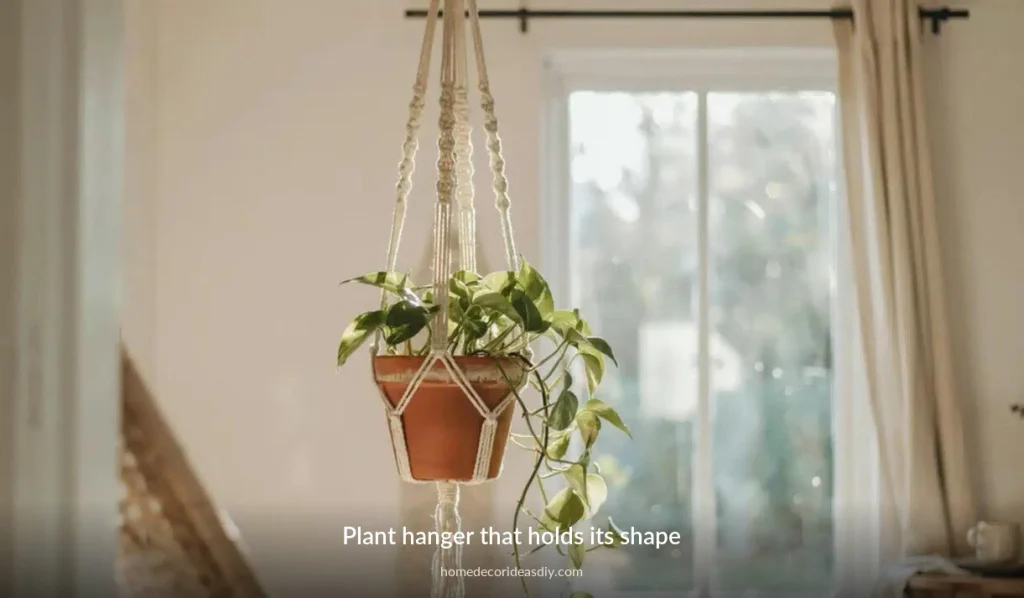
Where my sagging story came from. A pot of dry soil and a pot of just-watered soil are different objects, and the wet one is roughly a third heavier. Braided cord handles it better than twisted. For anything outdoors on a balcony, use polypropylene rather than cotton, because cotton holds rain, develops mildew, and weakens exactly where the knots are tightest. Check the hook, not the knots: the knots rarely give first.
6. Pendant light cover. Looks incredible, needs care. LED bulbs only, and keep the cord away from the bulb itself, because a cotton shade sitting close to a hot incandescent is a real fire risk. A wide cage frame with the knotted work on the outside is the safe version.
7. Coasters. I’d skip them. A coaster’s job is to absorb a wet glass ring; cotton does that beautifully and then stays damp underneath for hours, and a fortnight later the pale ones have grey rings you can’t wash out. Make them as gift tags if you want the practice. Don’t put a cold drink on one.
Two knots do almost all of it.
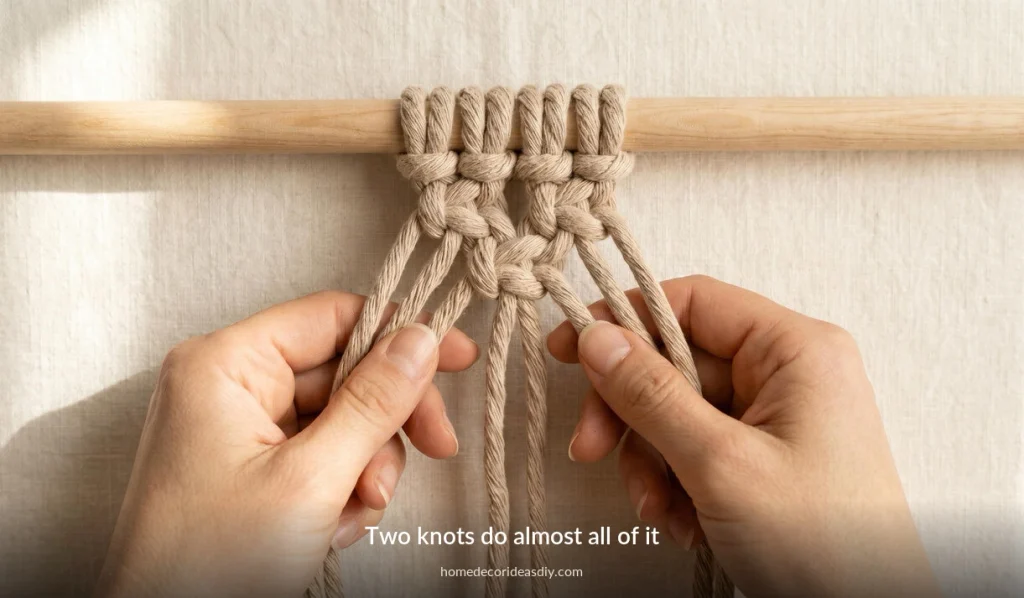
You can build every project above from the square knot and the double half hitch, with a lark’s head to mount your cords on the dowel in the first place. That’s it. Everything that looks complicated in a pattern is one of those repeated at a different angle.
This isn’t new, either. Macramé is a textile made by knotting rather than weaving or knitting, and nineteenth-century British and American sailors made hammocks and belts this way at sea, calling the whole craft “square knotting” after the knot they used most, and sometimes McNamara’s lace. It faded, came back hard in the 1970s, and came back again about six years ago. Same knot each time.
The half hitch is where beginners get frustrated, because it only creates a clean diagonal line if the tension on your holding cord stays consistent, and tension is a feel thing rather than an instruction. Ten rows in, it clicks.
Hanging it without pulling the plaster out
A knotted wall panel weighs more than it looks, somewhere around one to three pounds for a medium piece, which is fine for a plasterboard wall as long as you use a proper anchor and not a picture hook pressed in with your thumb. Plant hangers are a different conversation. Pot plus soil plus water can easily hit fifteen pounds, and that needs a ceiling hook screwed into a joist, not into the plasterboard between joists. Adhesive strips are rated for flat, static weight on a smooth surface, so they’re okay for a light hanging and wrong for anything with a pot swinging off it.
It will go grey, and that’s mostly dust.
Natural cotton yellows in direct sunlight over a year or two, which you can’t really stop; it’s just the place around. Dust is the bigger issue, and it’s fixable. A vacuum brush attachment on low suction, held slightly off the surface, pulls most of it out. A lint roller works on fringe. For a mark, spot-clean cold with a little mild soap and let it dry flat, because machine washing a knotted piece tightens every knot and shrinks it unevenly, and there’s no undoing that. I’ve lost one that way. It came out of the drum looking like a smaller, angrier version of itself.
Boho, coastal, Japandi, whatever the room is called this year, all of it looks better with one knotted piece in it than with three. Hang two on the same wall, and it starts reading like a craft fair stall. One good wall piece, a hanger in the window, and stop there.