An accent stays in this house only if its color or its material shows up somewhere else in the same room. That’s the whole test. A lot of home decor accents fail it while looking perfectly good under shop lighting, and the fault is rarely the object; it’s that the object ends up being the only one of its kind in the space. Your eye lands on it, finds nothing related anywhere near it, and the piece reads as leftover instead of chosen.
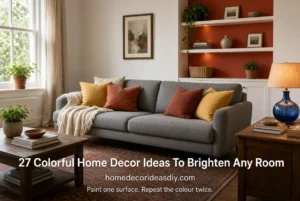
A mustard cushion sat on my grey sofa for about four months looking like something a guest forgot. Then a mustard-glazed bowl went on the shelf across the room, and the cushion started looking deliberate. Same cushion. Same sofa, same lamp, same wall color.
Two Repeat Rule for Home Decor Accents
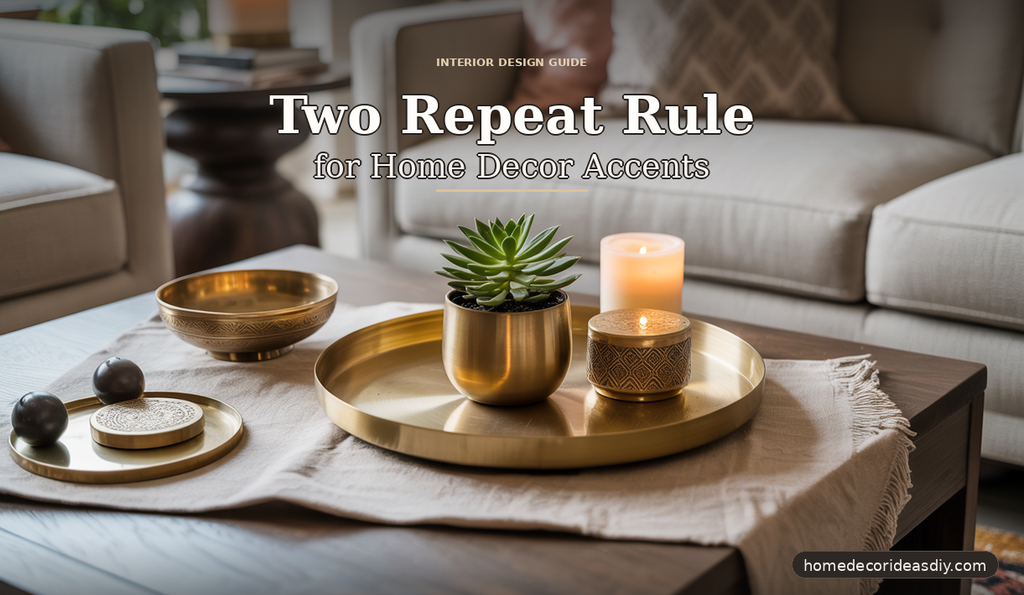
Every accent has to appear twice before it counts.
Two is the floor. In a larger room, you want three, spread far enough apart that the eye travels instead of clustering. The repeat doesn’t have to be the same object or even the exact shade; it only has to be close enough that your brain files the two things together:
- Color. A rust throw wants a rust-ish frame, a book spine, a dried stem, anything.
- Material. Brass tray on the coffee table, brass pull on the sideboard drawer. That’s the repeat done.
- Shape. Round mirror, round tray, round planter. Weaker than color, but useful in neutral rooms where there isn’t much color to echo in the first place.
Paint brands have been teaching a version of this for decades with the 60-30-10 split, where the accent color is capped at roughly a tenth of the room and spread across small pieces rather than dumped in one corner. Color combination guide sets out the ratio version clearly. I don’t measure percentages. I count appearances, which is the lazy version of the same idea and much easier to do while standing in an aisle holding a candle holder.
Does the second appearance have to be visible from the first? Not directly, no. But it does have to be in the same room. Repeating your green out in the hallway does nothing for the living room, and I’ve watched people talk themselves into that one.
Why Size Matters More Than Price
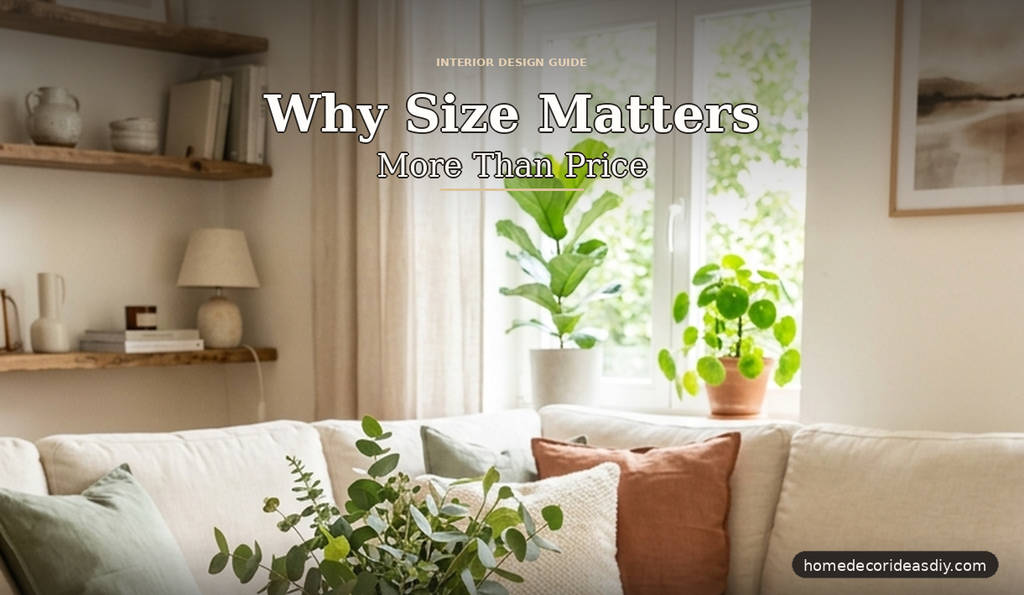
Most home decor accents are too small for the surface they land on. This is the second failure, and it costs more, because small pieces are cheap, so people buy five instead of fixing the size problem.
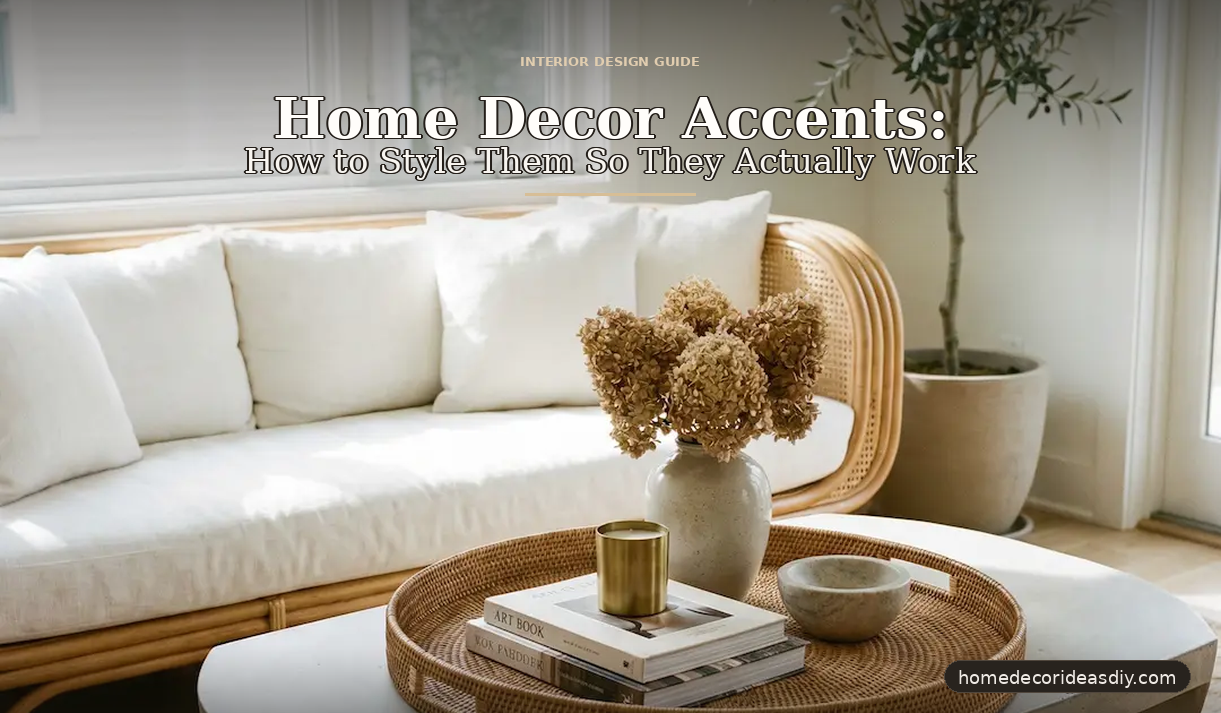
The numbers I work with, roughly: on a five- to six-foot console, the main piece shouldn’t drop below ten inches tall. On a coffee table, the tallest item sits somewhere near twelve to eighteen inches, tall enough to register, low enough that two people can still see each other across it. Then leave real space bare. Z Gallerie’s coffee table styling guide puts the empty share at thirty to forty percent, which sounds precious until you sit in front of a table with something on every square inch and feel your shoulders climb.
Five small objects scattered across a surface read as mess. Those same five sitting on one tray read as a single object. Cheapest fix in decorating, and it costs whatever a tray costs.
I fell down a hole with vase mouths at one point and measured every opening in the house, inside edge to inside edge, which turned into a whole separate piece about decorative vases. Short version: a wide mouth needs a fistful of stems, or it looks abandoned; a narrow one needs three and no more.
Three Material Limit
Three materials on a surface, then stop.
Wood, ceramic, metal. Or glass, linen, stone. Pick three and hold the line, because the fourth material is usually where a shelf starts looking like a flea market table. In a neutral room, texture is carrying most of the load anyway. Hence, a matte ceramic beside raw wood beside something that catches light gives you contrast without adding another color you then have to repeat twice.
Metal is the one people hesitate over, and I understand why, since it can read cold sitting on its own. It doesn’t stay cold once wood and a soft fabric are touching it, which is more or less the argument I made for cheap aluminum pieces after finding a dented vase for three dollars and expecting to hate it.
Small Rooms: Go Up, Not Out
Where do accents go in a room that’s already tight?
Up the wall, not on the furniture. Every horizontal surface in a small room is already doing a job, so accent pieces there compete with keys, mugs, remotes, and the general debris of a lived-in place. Wall pieces cost you nothing in floor space. A mirror does two jobs at once, though only if you check what will end up sitting inside the reflection, and that part gets skipped constantly.
Plants are the one exception I’d make on floor space, and even then: one large plant in a decent pot beats four small ones spread around the room. Four small ones is just four things to keep alive.
What I’ve Stopped Buying
Matching sets. A coordinated three-piece accent set photographs beautifully and lands flat in a real room, because every piece already agrees with every other piece and there’s nothing left for the eye to catch on.
Cheap filler too, the eight-dollar ceramic thing bought because a shelf looked bare. Bare is fine for a few weeks. That’s how you end up with nine objects on a console that you assembled one impulse at a time.
What survived, in my own place: one heavy ceramic vessel, a wooden tray, two frames, a table lamp with a warm bulb, and a brass bowl I’ve moved between four rooms and still haven’t got bored of. That whole group came in well under two hundred dollars across a couple of years of buying slowly.
I’d take four home decor accents that agree with each other over twenty that don’t, every single time. Most rooms I walk into have the twenty problem, and the person living there usually senses something’s off, which is exactly why they keep buying more.