
A US queen mattress is 60 inches wide and 79.5 inches long, and if you centre one in a 10×10 room, you get 30 inches of floor on each side and about 40 at the foot, and that’s before the frame and the nightstand, and before the door swings in and takes a bite out of one corner. Most small bedroom ideas with queen bed setups skip that math and go straight to the throw pillows. It’s tight, but it works, and a 10×12 gives you more to play with than you’d think, as long as the headboard goes on the right wall.
Those numbers come from the bed dimensions the International Sleep Products Association uses for the US. Odd little detail from that same chart: what Americans call a queen is close to what a British store sells as a king, 60 by 78 inches, which explains a lot if you’ve ever ordered sheets from a UK site.
This is how the floor shakes out in the two room sizes most apartments hand you:
| 10×10 | Centered on any wall | 30 in | 40 in |
| 10×10 | Pushed into a corner | 60 in on the open side | 40 in |
| 10×12 | Centered on a 10 ft wall | 30 in | 64 in |
| 10×12 | Centered on a 12 ft wall | 42 in | 40 in |
Those are mattress numbers. Simba’s bedroom layout guide says to add roughly 2 to 4 inches to each dimension for the frame, more for a chunky headboard, so knock a little off every figure up there.
You Need About 24 Inches To Walk Past A Bed Without Turning Sideways
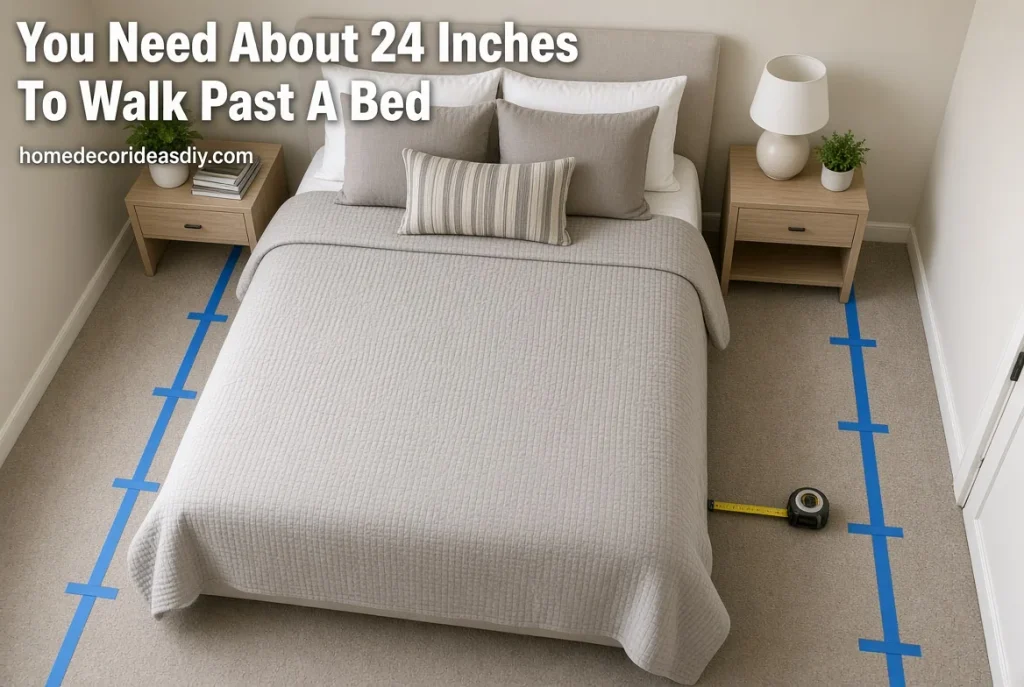
Most layout guides draw the line in the same place. 24 inches is the minimum for a path you use every night, and 30 starts to feel normal. Simba puts it at around 60 centimetres for each side someone gets in and out of, which is that same 24 inches, and a bit more at the foot if it doubles as the path to your closet.
So a centred queen in a 10×10 passes, with a few inches to spare even after the frame. You won’t be shuffling sideways. You’ll probably clip your shin on the frame corner a couple of times in the first week anyway, because 28 inches feels a lot smaller in the dark than it looks on a tape measure.
Before buying anything, tape the frame’s outer size on the floor with painter’s tape and leave it for a day.
Push The Bed Into A Corner If You Sleep Alone
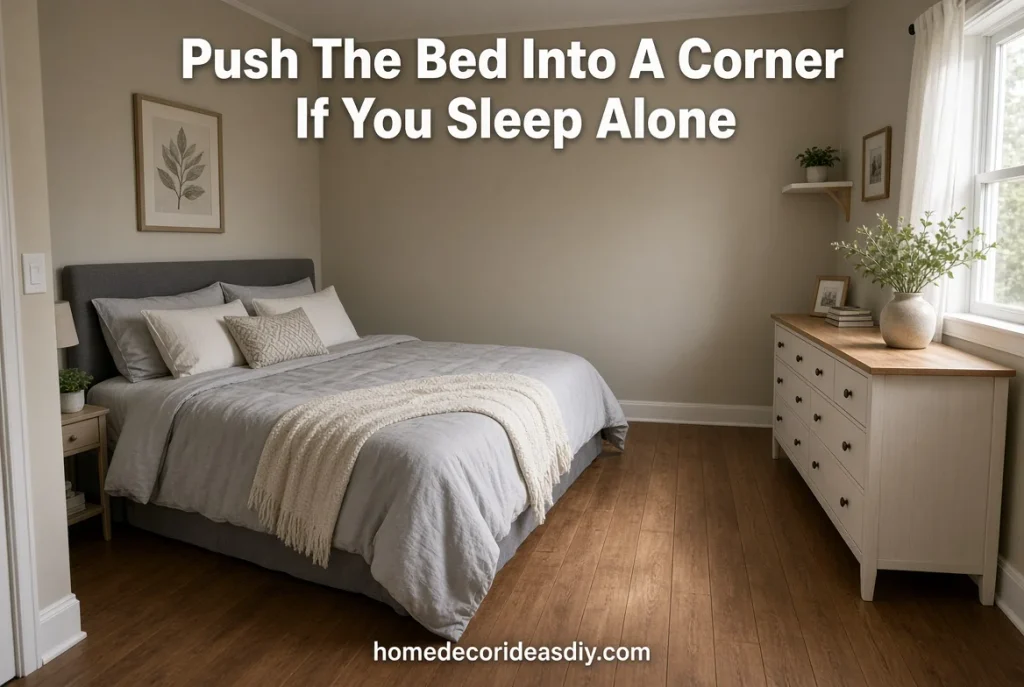
I’d do this for most single sleepers, even though it sounds backwards. Two 30-inch strips on either side of the mattress are too narrow for a chair or a dresser, so they mostly turn into the place where laundry lands. Push one long side against the wall, and they become one 60-inch strip, enough for a dresser with the drawers pulled all the way out, or a desk, or a reading chair.
If you’ve been scrolling through our living room decor ideas, you’ve seen the advice to pull the sofa off the wall so the room can breathe. A 10×10 bedroom wants the opposite, with everything pushed back as far as it’ll go.
The downside is making the bed. Tucking a fitted sheet on the wall side means dragging the mattress out every time, and it gets old fast. A zip-on bedding set, or a duvet with no top sheet at all, takes most of the pain out of it.
Sharing the bed with someone? Then centre it. Climbing over a sleeping person to get to the bathroom gets old even faster than the sheet thing, and 30 inches a side is fine for two people as long as nothing else lives on those sides.
A 10×12 Room Makes You Choose Between Side Space And Foot Space
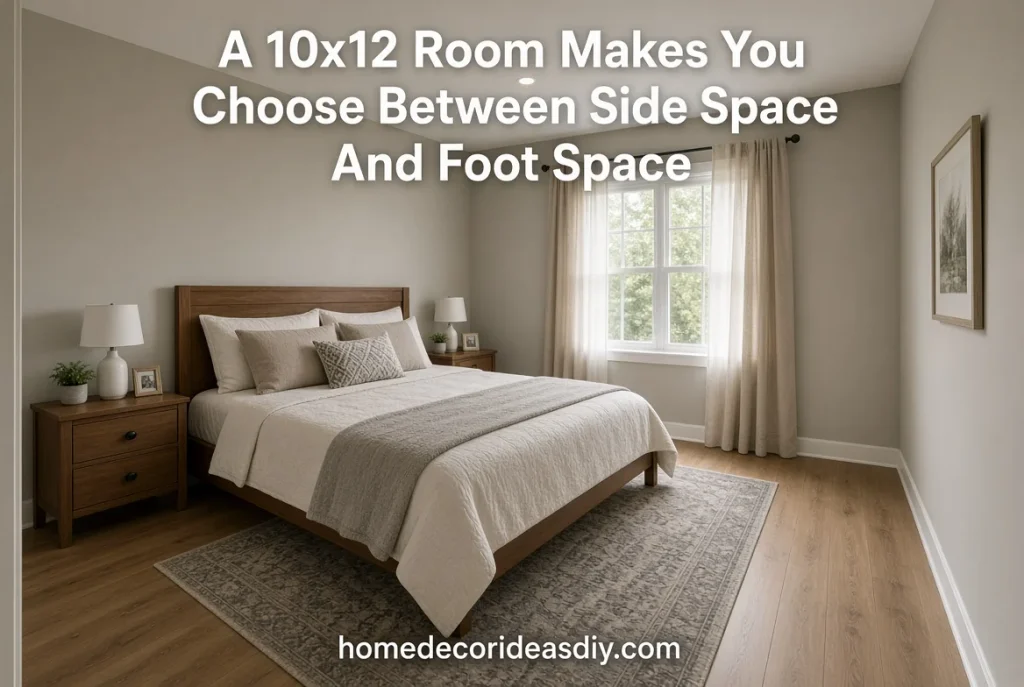
This one’s sort of a trade, and the right answer depends on where your door and closet are, not on which layout looks nicer in a photo.
Headboard On The 10-Foot Wall
You get the same 30 inches per side as a 10×10, but the foot opens up to about 64. That’s room for a dresser facing the bed with plenty of space to pull drawers, and it works best when the closet sits on the wall across from the headboard.
Headboard On The 12-Foot Wall
Now the sides grow to 42 inches each, which fits real nightstands and still leaves a walkway, but the foot drops to 40. That matters if your closet has hinged doors at that end. Simba’s guide wants about 90 centimetres (roughly 35 inches) in front of hinged wardrobe doors, so you’d fit with a little left over.
I lean toward the 12-foot wall in most rooms, since you spend way more time getting in and out from the side than standing at the end of the bed. Check one thing first: a door swings a quarter circle as wide as the door itself, so measure yours and hold that arc against the frame corner in both layouts before you commit.
Small Bedroom Ideas With Queen Bed Frames Work Better Without A Footboard

The frame changes those numbers more than paint colour or mirrors ever will.
- No footboard. It adds length you can’t use, and a solid block at the end makes the bed look bigger.
- A slim headboard, a wall-mounted one, or none at all. Some padded headboards stick out several inches, and every inch cuts into your foot space.
- Check the outer size on the product page, not the mattress size. A frame sold as “queen” is always bigger than the mattress it holds.
- Lift-up storage beats drawers here. Drawer beds need side room to pull them out, and with 30 inches, an open drawer pretty much closes your walkway. A lift-up (ottoman) bed opens from the top, so the sides stay clear.
The cheap version is a plain metal frame with bed risers and flat bins slid underneath. A bed skirt hides the bins, and it costs a fraction of a storage bed.
Swap The Nightstands For A Shelf And Plug-In Sconces
A regular bedside table is 16 to 20 inches wide, according to Simba, and in a 30-inch gap that’s most of it. A floating shelf at mattress height holds a phone, a glass of water, and a book, which is honestly all most people keep on a nightstand anyway, and the open floor underneath makes the room feel wider.
Plug-in wall sconces also get the lamp off the shelf. Run the cord inside a paintable cord cover, one of those small budget home hacks that makes a cheap light look wired in. If you rent and can’t drill, adhesive-mount shelves exist, though I’m not sure how well they hold up past a year, so I’d keep anything heavy off them.
Under 9 Feet Wide, A Full Bed Is The Smarter Buy
Run the same math on a room that’s 9 feet across, and a centred queen leaves 24 inches on each side on paper, closer to 22 once the frame goes in, which is under the line most guides draw. A full is 53.5 inches wide and hands you back about 3 inches on each side.
Giving up the queen feels like a downgrade, and for two adults it is. I’d still take the full in that room and put the money I saved into a better mattress.