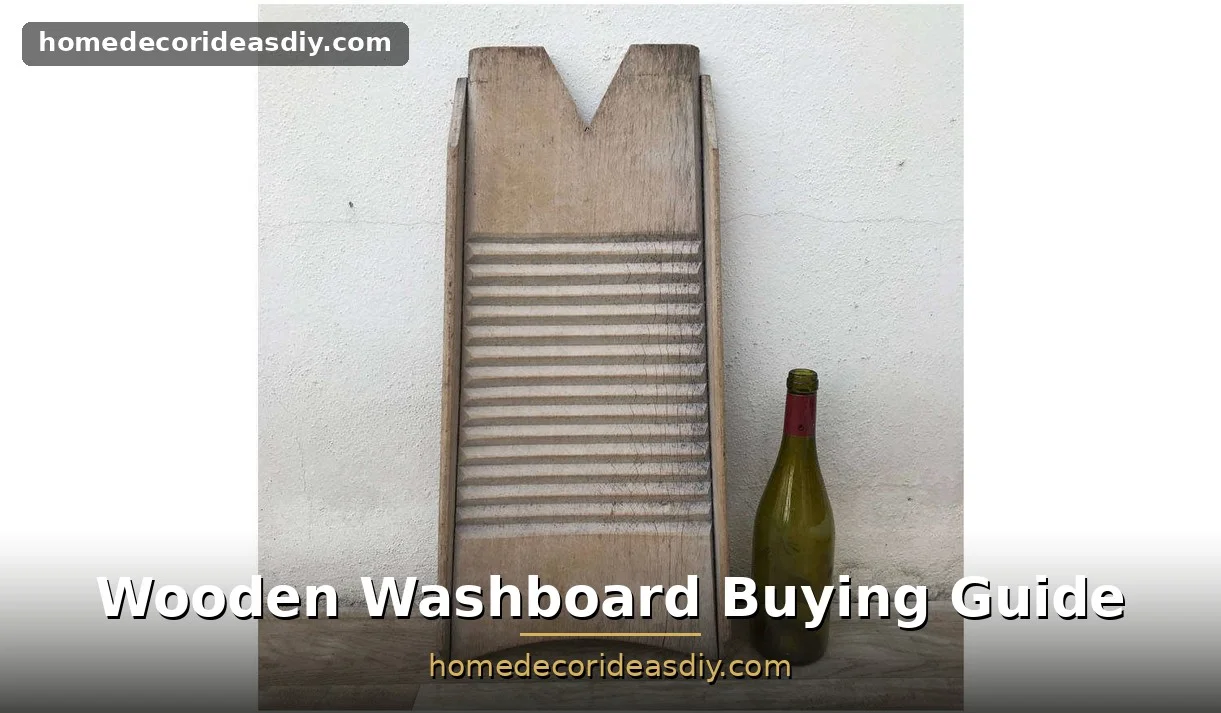
I found mine at a barn sale outside Lancaster for six dollars, half-rotted but with ridges tight enough to scour my shirt collars. That’s the thing about a wooden washboard the things that make it worth owning don’t show at first glance.
Most people buying a wooden washboard fall into one of two categories. They either want a working piece for camping or off-grid laundry, or they want a decorative item for their farmhouse. The checklist for the two is often mixed up, which is how you end up with a forty-dollar $decoration that can’t scrub anything, or a real antique ruined by soap and water.
Wood Vs Metal, Glass, And Brass
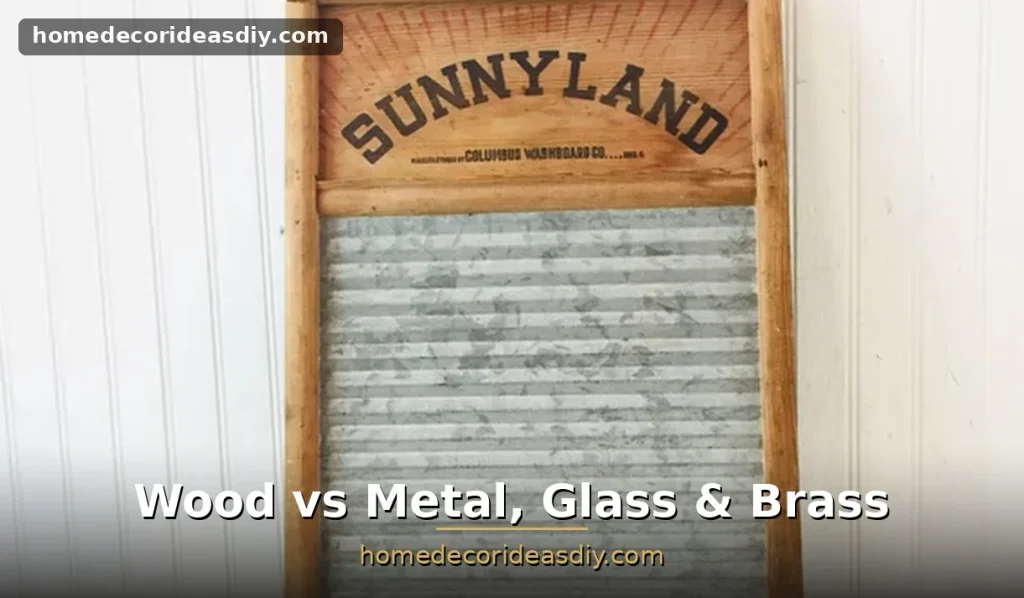
There are a few types of washboards out there besides the wooden kind the corrugated metal sort showed up in the early 1900s and started replacing wood in everyday use, since metal ridges hold up better to wet friction. Next came glass boards, used for more delicate materials, and brass examples sit at the top. Collectors consider the glass and brass variations to be most desirable, sometimes selling for $300 to $1,500-plus at auction, according to antique dealer references such as History Tools washboard guide.
Wooden-frame boards run a bit cheaper, typically $50 to $500 depending on the age and maker, but that’s exactly what makes them easier to counterfeit. No one fakes a $1,200 brass Champion board and sells it at a yard sale, but plenty of people try passing off a plain old wood frame with artificially aged corners.
What the Wood Itself Tells You

Run a thumb along the frame edge before checking anything else.
- A real board should have more uneven blackening at the hand grips than at the untouched parts.
- The grain should not look patchy.
- Old wood has a slightly musty smell, not of fresh varnish.
- Water damage is never uniform, so a corner that warps inconsistently is a tell.
A board with inconsistent frame grain compared with the rest of the wood usually had part of it replaced at some point, which knocks the value down, even if the other parts are in good condition.
A Quick Comparison Table
| Wood grain | Consistent, aged evenly | Patchy or freshly stained |
| Ridges | Worn smooth in the middle from use | Sharp, uniform, barely touched |
| Hardware | Hand-forged nails, uneven spacing | Machine screws, perfectly even |
| Maker’s stamp | Faded but legible, sometimes patent dated | Crisp new lettering, or missing entirely |
| Smell | Musty, old wood | Varnish, fresh sawdust |
Real vs Fake Wooden Washboard
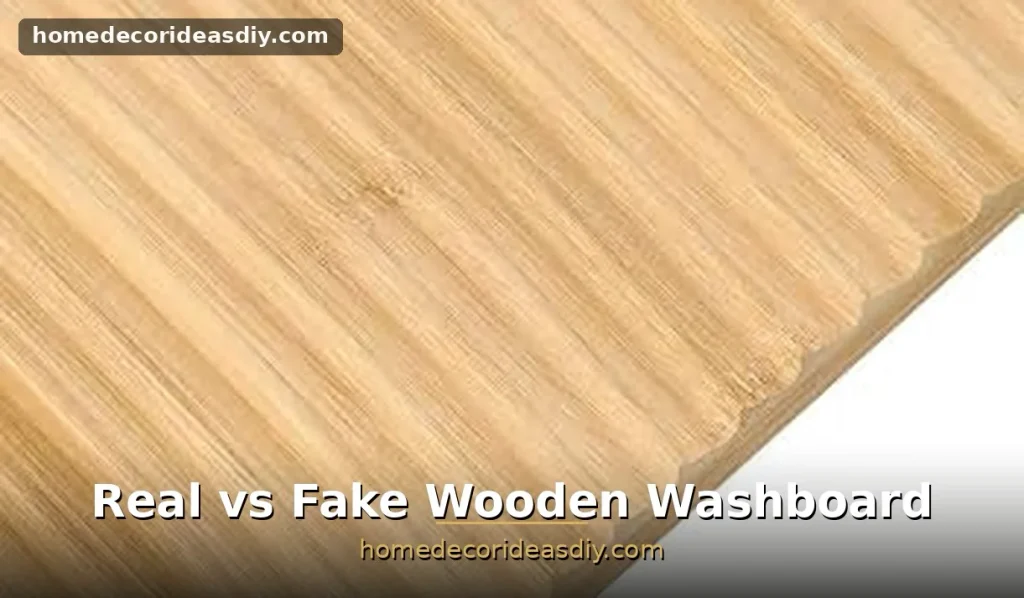
Flea markets don’t have time to deliberate on every listed item, and many sellers inherited a collection and are just as unsure as you about anything’s age. The tell is more common on resale sites, where a seller takes a picture of a board at a nice angle and declares it “antique” without qualifying what that means.
Pro tip ask the seller directly whether they know the manufacturer. A real collector or honest seller will say “no idea” rather than pulling a random name out of thin air. If someone automatically replies with an example of a rare board, that’s something to check against a reference guide before paying a premium.
Mistakes To Avoid
Buying based on the label. Labels are often added to plain boards intentionally, so check the wood and hardware first, and treat the label as a bonus.
Assuming “wood” automatically means old. Many decorative wooden washboards are manufactured to look old on purpose.
Soaking a decorative-grade board in water to see if it’s real. Water will ruin most glued-on modern boards faster than anything. Instead, do a water-resistant test on a hidden part of the edge, not the whole frame.
Overpaying for rust. Rust on the metal ridges of a wood board isn’t always a good sign, and it can hide damage underneath the visible part.
Using One For Laundry
If you want a functional wooden washboard, you want a ridge section tight enough that it doesn’t move when you press on it. A loose ridge section means the wood under it has rotted, even if the surface looks fine.
I camped off-grid with one and used it for laundry this past weekend; since it needs no electricity, it works with any soap, and it’s pretty quick for smaller loads. But I wouldn’t try to use a washboard for laundry regularly not for towels, but maybe for a few shirts at once.
FAQs
Are wooden washboards worth any money?
Most are in the $50 to $500 range, depending on age and condition. Rare branded boards with their original frames can go higher, but plain, unmarked wood ones sit at the bottom.
Can you still use a wooden washboard for laundry?
If the ridge section is still snug to the frame, you can use it for light laundry, but not for anything heavy like towels.
How do I tell if a wooden washboard is really old?
Look for uneven blackening at the hand-grip parts, consistent grain in the wood frame, hand-forged hardware, and a musty smell rather than a fresh, varnished one.