I used to treat decorative planters as packaging. Plant first, pot second, whatever was on the nursery shelf. The room looked unfinished for months, and I blamed the plant. It was not the plant.
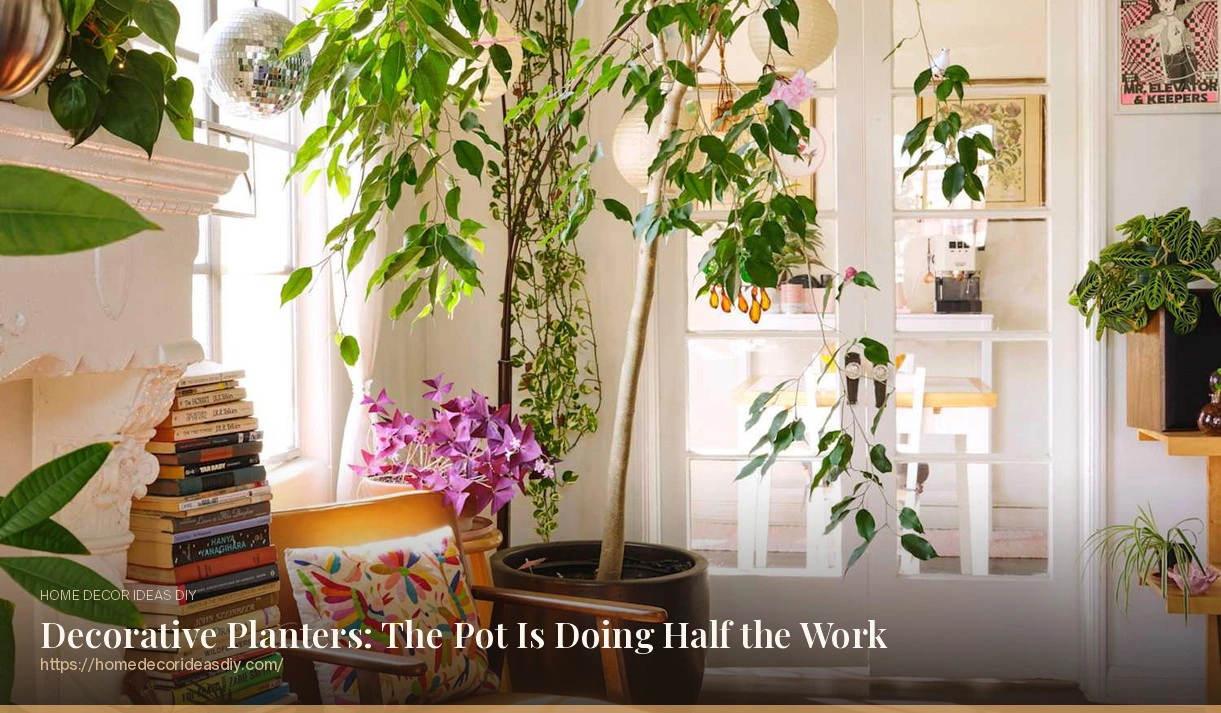
A decent plant in a black plastic sleeve still looks like a job you have not finished. The same plant dropped into a heavy ceramic pot, a weathered terracotta planter, or even a painted tin you already owned, suddenly reads as furniture. That is the whole point of decorative planters. They are not there only to hold soil. They are there to finish the corner.
I’ve already written about home decor pots and choosing plants by the window. This piece sits in the gap between those two the container you can see. The one guests notice before they notice the leaves.
What decorative planters are actually for
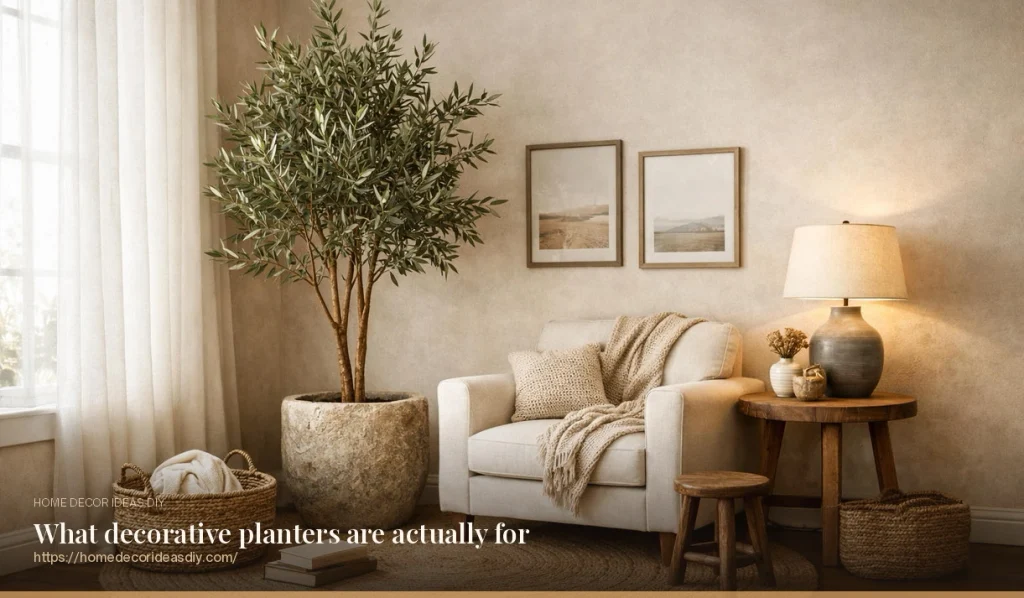
Most people buy them backward. They fall for a trailing pothos, then grab the nearest pot that fits. Six weeks later the pot is still the cheap nursery one, or worse, a glossy thing that fights the room.
Flip the order. Look at the surface first. A bare corner wants height. A windowsill wants a low, heavy pot that will not tip when you open the pane. A console that currently holds keys and a charger wants one object with enough presence to make the rest look like it belongs there.
If you already think in showpieces rather than clutter, the same logic applies. One strong container does more than five little ones. I made that argument in the showpiece for home decor piece, and it holds here too.
Empty decorative planters are allowed. A wide ceramic bowl with nothing in it still holds a table. Dried branches work. So does a single snake plant that you rarely water. The job is visual weight, not a greenhouse.
Materials that change how a room reads
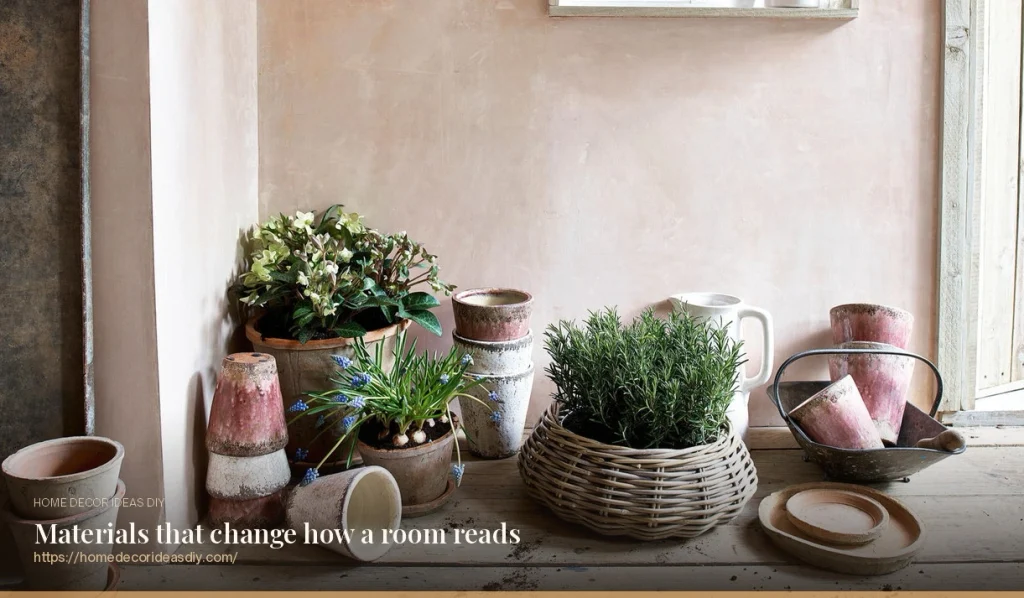
Material is not a style quiz. It changes how the pot behaves, how often you water, and whether the thing still looks decent in two years.
Terracotta planters
Unglazed terracotta breathes. Water leaves through the walls as well as the soil, so it dries faster than glazed ceramic. That is useful for succulents and a nuisance for anything that sulks when thirsty. It also picks up that white, chalky bloom people either love or scrub off every month. For the longer history of clay pots, the Wikipedia entry on flowerpots is a surprisingly readable start.
I rub a cheap terracotta pot with a little olive oil when I want it darker and less raw. Takes five minutes. Looks a year older, which is the point.
Glazed ceramic planters
These hold moisture longer and come in colors you can actually match to a cushion or a wall. Matte glaze disappears into a room. Glossy black or deep green makes a statement, which is fine if you only have one. Two glossy pots on the same shelf start competing.
Handmade ceramic is worth hunting if you like an irregular rim. The cheap tell is a perfectly even wall and a seam. I wrote about spotting the difference in handmade home decor items.
Concrete, stone and resin
Concrete and cast stone give you the weight indoor planters need so a tall plant does not lean. They are cold to the touch and they stain if you overwater. Resin and fiberglass mimic those materials and weigh a fraction of them, which is why they win on balconies and for anyone who has to move a pot twice a year. Outdoor planters in thin plastic fade. The slightly more expensive resin usually does not, at least not in one season.
Baskets, wood and metal
A woven basket planter warms a room the way a tray of books does. Line it. Do not plant directly into the weave unless you enjoy a wet ring on the floor. Wood looks right next to other wood, then rots if it sits in a saucer of water. Metal, including the dented aluminum pieces I keep finding in charity shops, works if you treat it as an accent, not a theme. That is the same rule I use in cheap aluminum decor.
Indoor planters versus outdoor planters
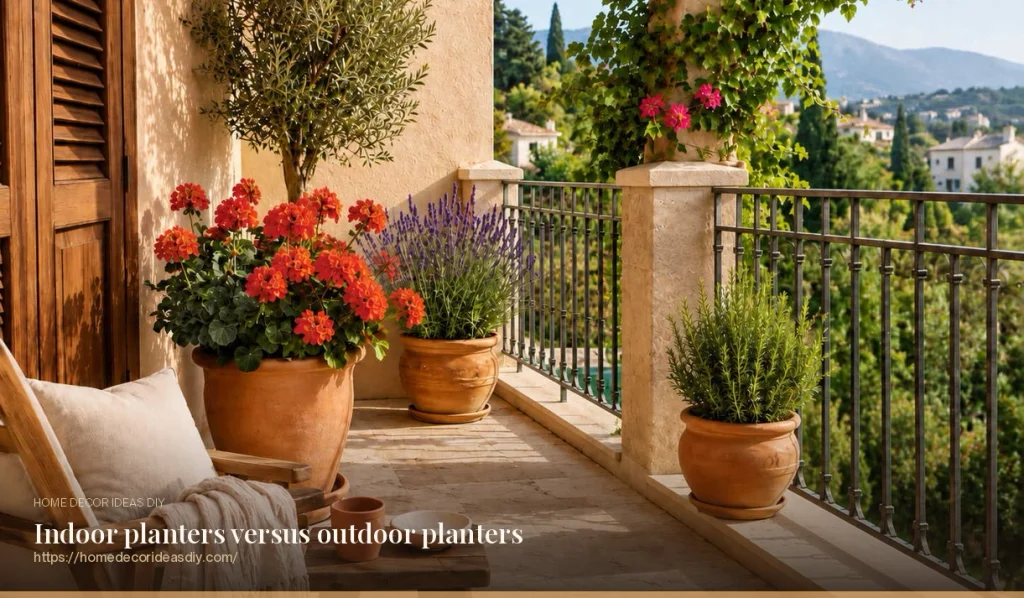
The same pot is not always happy in both places. Frost cracks cheap terracotta. Thin ceramic chips if you knock it while moving it inside for winter. Outdoor planters need a drainage hole you can trust, and a pot that will not blow over on a balcony.
The Royal Horticultural Society’s notes on growing houseplants in containers are dry and useful: match pot volume to root mass, do not sit pots in a dish of standing water all week, and remember that containers dry out faster than beds. That last point is why a small outdoor planter on a hot patio needs watering far more often than the same plant in the ground.
Hanging planters earn their keep when floor space has already gone. I like them on a porch hook or from a ceiling hook over a reading chair, not lined up like bunting. One or three. Not seven.
Large floor planters belong either side of a door, in a dead corner, or next to a sofa arm where a lamp would also work. They should be heavy enough that a cat cannot walk them across the room.
Where decorative planters belong in a room
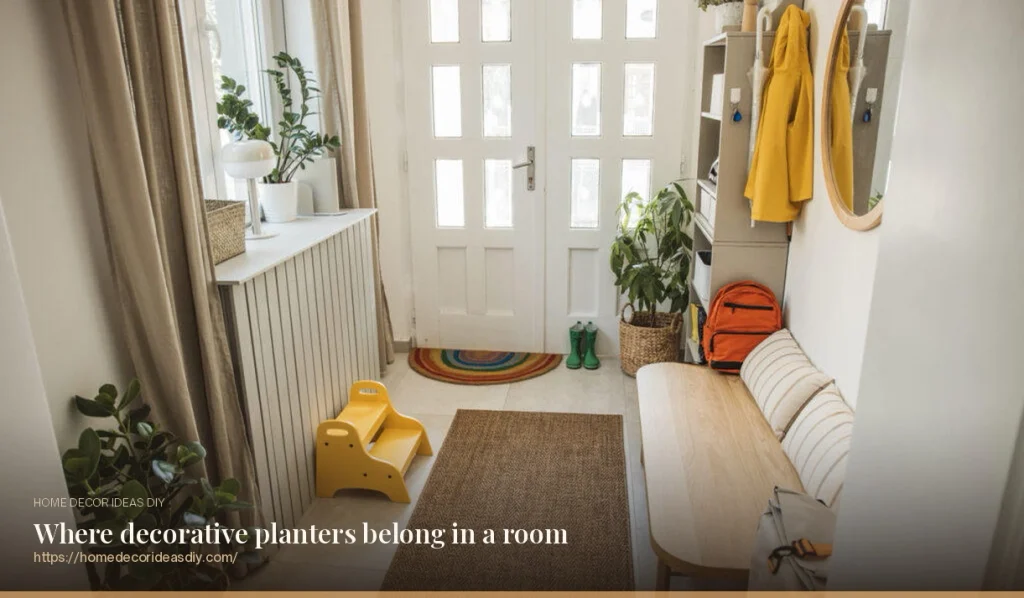
Not everywhere. That is the mistake.
Entry. One pot, roughly knee to hip height, on the floor or on a low stool. People walk past it. It should look finished from the door.
Beside a mirror. The pot and the glass bounce off each other. If you are already working that wall, read the mirror home decor note first and place both in one go.
On a shelf, not only the floor. A small ceramic planter next to a stack of books does more for a shelf than another framed print. Group in odd numbers and vary the height. The budget living room list covers the same idea with plants taken out of their nursery pots.
Windowsill. Low, heavy, drainage sorted. South-facing sills cook terracotta dry in a day in summer. North-facing sills forgive almost anything.
Bathroom. Only if you have a window or you have accepted that this is a snake plant and a prayer. Glazed pots handle splashes better than raw clay.
Size, grouping, and why five tiny pots look like clutter
I am going to keep saying this until the habit dies. Five tiny terracotta pots on five different surfaces is not a collection. It is clutter that happens to be alive.
One large floor planter beats four six-inch ones. Two medium pots on a plant stand, different heights, will do if you cannot stretch to a big pot this month. Succulent planters can be small because the plants are small. Everything else wants more soil than you think, both for roots and for the visual mass.
A useful check: stand in the doorway. If you cannot see the pot as a shape, it is too small for that spot. Move it to a shelf or stop buying that size.
Drainage, cachepots, and the nursery pot trick
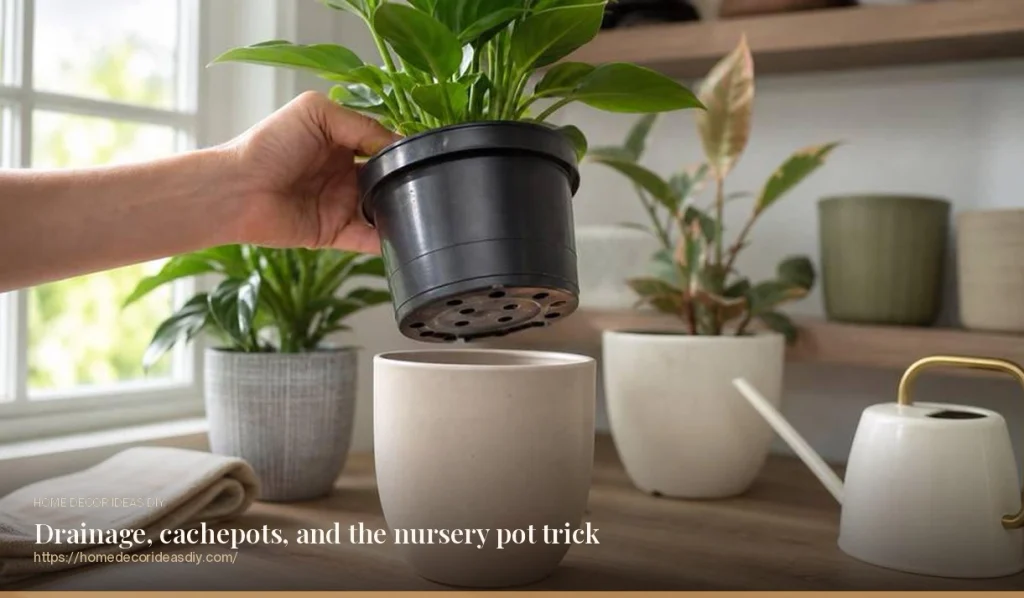
No drainage hole means a drowned plant, eventually. Some decorative planters are sold as cachepots on purpose a pretty outer pot with no hole, designed to hide a plastic nursery pot inside. That is fine. Lift the inner pot out to water it in the sink. Do not water it in situ and hope.
If the decorative pot has a hole, use a saucer. If it does not, keep the plant in its plastic grower’s pot and drop that inside. Put a layer of pebbles in the bottom of the outer pot only if you understand that pebbles do not create drainage. They create a tiny swamp under the roots if you overwater. I still see that advice everywhere.
Weight matters indoors a tall plant in a light pot tips. Add a few stones in the base of the cachepot, under the nursery pot, if you need ballast.
Cheap decorative planters I actually keep
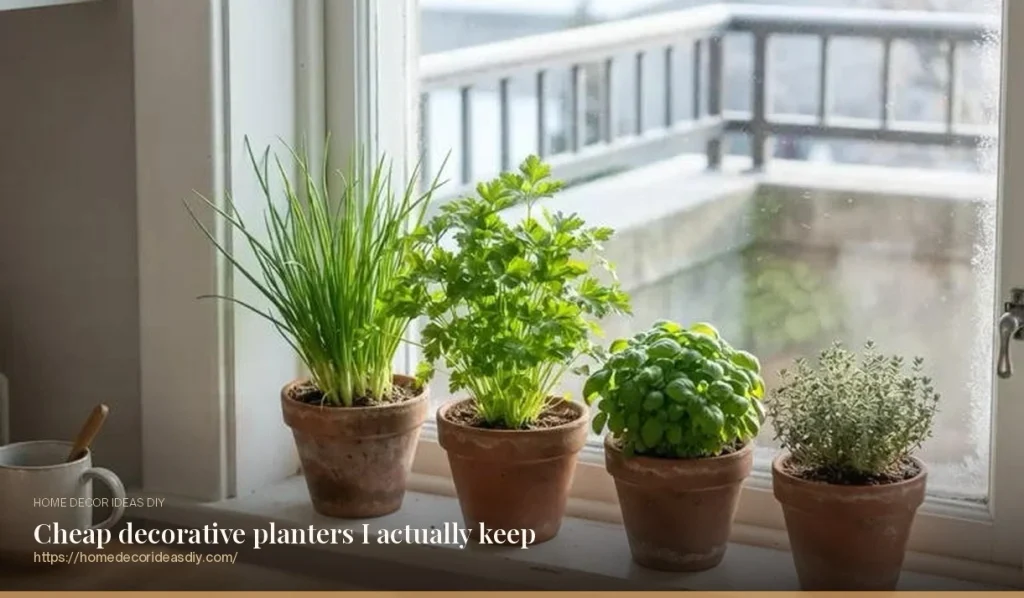
You do not need a design shop. Some of the pots still out in this flat cost almost nothing.
1. Old paint tins and coffee cans, lids off, two coats of matte spray paint. Drill three holes in the base if you want to plant directly. Or use them as cachepots.
2. Charity shop ceramics. I look for weight, a decent glaze, and a mouth wide enough for a nursery pot to drop in. Same hunt as thrift store home decor.
3. Plain terracotta from a hardware shop, left raw or oiled. Group three in different sizes rather than buying one ornate pot.
4. Glass jars as tiny planters for cuttings and herbs, which is the reuse trick already on the homepage. Add gravel if there is no hole. Do not pretend a sealed jar is a long-term home for anything that likes dry feet.
5. A wide-mouthed jug holding a branch instead of a plant. That sits closer to vase territory, which is why mouth width matters as much here as it does for flowers.
If you are arranging stems rather than soil, the decorative vases piece is the one to read next. Opening size does more work than height.
Mistakes I keep seeing
6. Leaving the nursery pot on show. A six-dollar plant in a two-dollar terracotta planter looks like decor. The same plant in black plastic looks like a task.
7. Matching every pot. A set of six identical ceramics reads as a shop display. Mix one glazed, one raw clay, one basket.
8. A pot that is too tight. Roots need a little room. So does the look. A plant jammed in a pot with no soil showing at the rim looks stressed even when it is not.
9. Water sitting in the saucer for days. Roots rot quietly. Empty the saucer after twenty minutes.
10. Buying novelty face pots and animal pots as the main event. One is a joke. Three is a theme park.
Frequently asked questions
Do decorative planters need a real plant inside?
No. Plenty of the best ones in this house hold dried stems, a single branch, or nothing. If the shape and glaze do the work, the plant is optional.
Can I use the same pot indoors and out?
Sometimes. Frost-proof terracotta and decent resin can travel. Thin glazed ceramic and raw terracotta that has never seen a winter often cannot. Bring them in before the first hard frost, and you will keep them.
How many decorative planters does a living room actually need?
Fewer than you think. One floor planter and two smaller ones, placed with a bit of space around them, is plenty for most rooms. Add a hanging planter only if the floor is already spoken for.
What about self-watering planters?
Useful if you travel or you forget. They still look like plastic unless you drop the whole thing inside a cachepot you actually like. I do that more than I admit.
Where should I start if I have almost no budget?
One hardware-store terracotta pot, oiled. One charity-shop ceramic that already has weight. Move the plant you already own into one of them this weekend. That single swap does more than a basket of new cuttings. If you want more low-cost moves around the same room, the budget living room decor ideas list is next door.
That is really all of it.
Pick the surface first. Then the pot. Then the plant, if you even need one. Get the water out of the saucer. Stop scattering tiny pots like confetti.
Decorative planters are home decor that happens to hold soil. Treat them that way and the room looks like someone lives there on purpose. If you want the plant side of the same decision, go back to plants for home decor. If you want the empty-vessel version, the vase piece is waiting.
Send a photo of the corner you are stuck on if you want a second pair of eyes. Happy to talk it through.